The formation of haze is essentially a process of gradual accumulation of pollutants in the atmosphere. These pollutants originate in many ways, from both natural dust and sea salt, as well as from human-induced car exhausts, industrial exhausts, dust promotions and flue gases. For anthropogenic sources of pollution, we can classify from several angles: depending on the content of human production activities, sources of pollution can be classified into industrial, agricultural and urban livelihoods; continuous, intermittent and instantaneous sources according to emission patterns; and point, line, surface and body sources depending on the spatial pattern of emissions. In addition, the location of emissions is a dimension of the classification, including fixed sources, mobile sources, unorganized sources, and high shelf and ground sources。
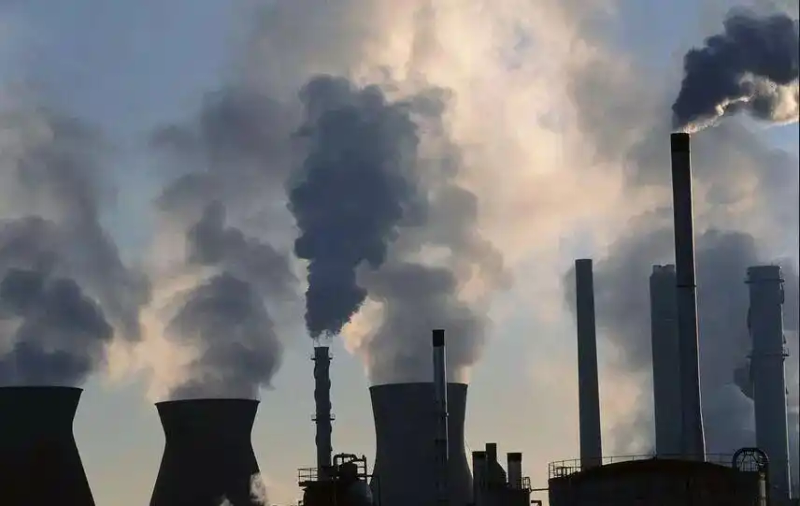
A chimney, as an emission point for a high shelf, can be considered a source of a high shelf。
Proliferation factors
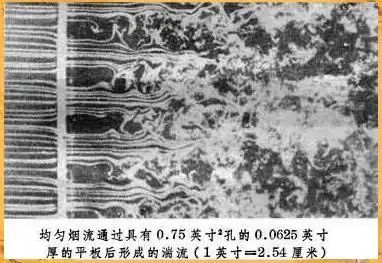
The factors affecting the spread of pollutants are complex, with the most immediate factors including wind and currents. Winds, as a well-known natural force, can drive the transport of pollutants to the wind. However, the concept of flow, which is in fluid mechanics, refers to the irregular movement of fluids, as shown by the speedboat tailstream. Although the movement appears to be fragmented from local observations, it is analysed from the overall atmosphere and shows some regularity. It is thanks to atmospheric currents that substances in the atmosphere move in a vertical direction, creating a convection phenomenon that triggers diverse weather changes. Similarly, pollutants can spread in all directions, even upwards and downwards, by means of streaming. Contaminants tend to accumulate on a small scale and are difficult to diffuse over long distances, in situations where near-ground wind power is weak and run-off activities are scarce, thus providing conditions for the formation of haze。
The impact of precipitation on the spread of pollutants is twofold. On the one hand, precipitation can directly wash pollutants onto the ground, thereby reducing atmospheric pollution. On the other hand, the nature of particles in the haze interacts with precipitation and sometimes exacerbates precipitation processes, which in some cases may reduce precipitation intensity. In the case of severe pollution, haze itself can even inhibit precipitation processes. Thus, precipitation is not always effective in mitigating haze。
Atmospheric stability
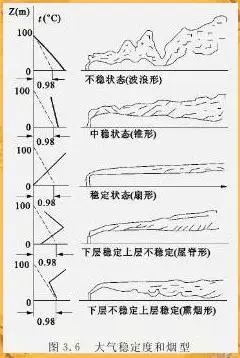
The vertical distribution of temperature is depicted as " contours " on the coordinates. In the troposphere in which we live, temperatures are usually reduced with heights, which is why temperatures in the mountains are usually lower than in the plains. However, the principle of “hot-to-cooled” tells us that warm air density in the lower layer is relatively small, so they tend to float upwards, while cold air in the upper layer tends to sink downwards, creating a “unstable” atmosphere。
After clear summer afternoons, the temperature on the ground rose sharply, while the temperature in the vicinity of the ground decreased very rapidly with altitude, leading to extreme instability in the local atmosphere. This instability has led to an increase in the lower layer of the heating gas, while the upper layer of the air conditioning has sunk, which has triggered heavy weather cycles such as thunderstorms and hails。
On the contrary, in the clear evenings or in the dark days of winter, the ground spreads rapidly and cools, while the atmosphere cools relatively slowly. This may lead to a phenomenon of rising temperatures with high temperatures, known as “reverse temperatures”. Under this inverse temperature conditions, the atmosphere becomes extremely stable vertically, with virtually no material exchange and vertical winds approaching zero. Contaminants are therefore unable to spread to the upper atmosphere, while near-ground temperatures are low, leading to higher concentrations of pollutants in the local atmosphere, resulting in haze。
We usually refer to one layer of the atmosphere as the “layer”, while the degree of stability of the layer is called the “layer stability”。
Radiation and clouds
Radiation, including solar exposure and thermal radiation on the ground itself, has far-reaching effects on the temperature of the earth. It is the balance of the radiation balance that has created a temperature environment for human survival. And clouds play a crucial role in this balance. Not only do they directly affect the vertical distribution of temperature and atmospheric stability, thereby affecting the spread of pollutants, but they also reduce environmental pollution by washing pollutants in the atmosphere to the ground through precipitation。
Local circulation conditions
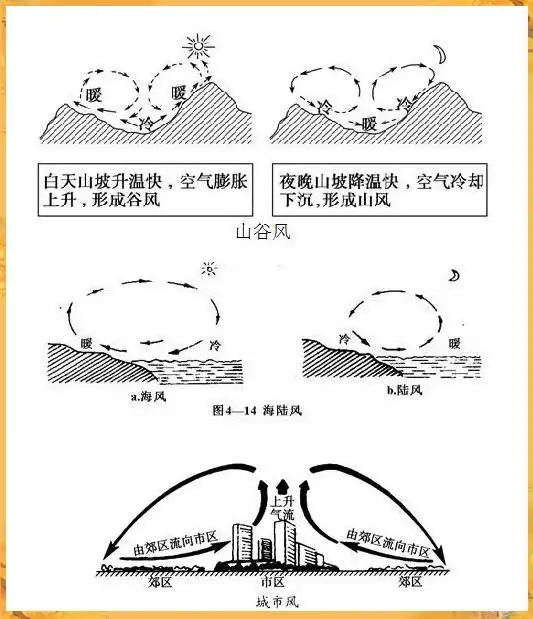
The unfavourable conditions of local circulation are often an important factor in the high levels of pollution in large cities. Here, we will look at several circulation scenarios that are closely related to urban terrain。
First is the valley circulation. Many major cities sit in valleys or under the foot of mountains, with relatively closed terrain. Contaminants often require long-range vertical transport to leave urban areas altogether. When valley wind circulations are destroyed, such as counter-temperatures, cities appear to be covered with closed pot cover, and any pollution is difficult to escape. Many major cities such as beijing, xi'an and chongqing face such challenges。
The second is ocean and land circulation. Coastal smoke is sometimes encountered in coastal areas or in cities located along the great lakes river. This is mainly due to differences in the nature of heat between land and sea. At night, sea, land and sea winds are transformed into land and during the day into sea wind. At night, the city cools faster, and the near-ground is often inverse. Early in the morning, as the sun rises, the ground gradually warms up, and the sub-temperatures of cities are gradually destroyed from the bottom up. At this point, the wind blowing spreads pollutants from cities to inland areas. When the subtemperature damage reaches the height of the chimney, there is a long smoke。
Finally, urban and rural circulation. As a result of the urban heat island effect, local circulation, the urban wind, occurs between cities and suburban areas. Such circulation has a significant impact on the spread of pollutants. At the near-ground level, the wind usually blows from the suburbs to the cities. When rising gas streams are weak, it is difficult for cities to release the gases, which in turn accumulates within cities and increases pollution。
Weather situation
The weather situation is the macro-level context of haze weather, which combines the multiple factors before it. Statistics show that winter spring is the height of haze. This is mainly due to relatively high levels of pollutant emissions due to colder weather and increased use of fossil fuels during the two seasons. At the same time, atmospheric formations have stabilized and are not conducive to the spread of pollutants. In addition, low winter and spring temperatures have reduced atmospheric drift, further exacerbating haze formation。
The onset and end of haze weather is closely linked to the weather situation. In the next part, we will explore in depth the weather patterns involved in the generation and dissipation of haze, as well as the efficient monitoring and forecasting of air pollution。