



At 3:00 a. M., i looked at my husband's face and lost my sleep。
We already have a two-year-old child who comes home every day from work to sleep, feed and play, is tired and has no energy for a new life. After three full days of choreographing, asking about experienced friends and finally deciding to give up the unexpected baby。
In the next two weeks, my husband and i ran around the maternity hospital to figure out the whole flow of people, the key concerns. Now, rather than encouraging you to give up on the baby, we want to give those sisters who are in a dilemma and have to choose, like us, a practical guide that can be consulted directly to help you to get away with the wrongs and the wrongs。
Step one: find the right room! Don't go around the hospital
For the first time, many sisters were in such a situation that they were panicking when they went to the maternity hospital and hung up with a gynaecologist, resulting in white queues and delays。
Focus: the family planning section must be hung! This section is designed specifically for pregnant women who are not intended to retain their pregnancy and who need to terminate their pregnancy, and is more experienced by doctors and more fluid。
Practical recommendations:
One or two days in advance, make an appointment with the hospital's network or the registered ap, pick the morning number! Follow-up may require blood and b-plus, morning visits can complete most of the examinations once, and afternoon visits can be made directly to a doctor without running twice. It is best to have family members with them, not only to line up and report, but also to accompany you to ease tensions. Step 2: checking the chain: b+ blood, these two key indicators must be kept close
Upon consultation with a doctor, two core examinations are arranged: a visual examination (b super or vaginal) + a blood sample of pregnancy indicators. This step was taken in order to confirm whether or not a normal intrauterine pregnancy was performed, and to remove dangerous situations such as extrauterine pregnancy, which also formed the basis for the subsequent operation。
1. Video-testing: b super or folly? Select aspect
The doctor will give you a choice. The difference between the two is clear
Note: if the pregnancy is too short (e. G. Less than five weeks), the pregnancy bag may not be visible, regardless of which b is chosen. At this point, the doctor will not force the operation, but will allow you to take a blood sample and review the b-plus in a week。
Bleeding tests: must be empty! Two core indicators must be looked at carefully
This is the biggest pit i've ever stepped on. First time i went without a question, only after breakfast, i couldn't draw blood, and then i ran two more trips to the hospital. Focus: the blood pump must be empty for at least eight hours, and it is recommended not to drink after 10 p. M. The previous night。
Screeching is mainly carried out by two indicators: human velvet membrane gland hormones (hcg) and pregnancy ketone (p), which directly judge embryonic development and exclude ectoma. The specific reference criteria and their interpretation are as follows:
Indicator name
References (early pregnancy)
Indicator interpretation
An anomaly alert
Human velvet membrane gland hormone (hcg)
Pregnancy weeks 3-4: 9-130 miu/ml; pregnancy weeks 4-5: 75-2600 miu/ml; pregnancy weeks 5-6: 850-20800 miu/ml; pregnancy weeks 6-7: 4,000-100200 miu/ml
When a normal intrauterine pregnancy occurs, the hcg level increases rapidly, usually doubling every 48-72 hours
1. Slow growth (not double over 72 hours): probably extrauterine pregnancy, or stunted embryos; 2. Too low and unexpanded values: possibly natural bio-pregnancy; 3. A sudden decline in values: presumably abortion
Pregnant ketone (p)
Early intrauterine pregnancy: 25-75 ng/ml (or 76. 4-232. 7 nmol/l)
Pregnancy ketone is the key hormone that sustains pregnancy, and values are stable and in normal range, indicating that the embryo is developing well
1. Pregnancy
Practical recommendations:
The results are usually two to four hours after the blood is pumped, and the report is available first to see if the values are within the reference range for the pregnancy week, and then to see whether the hcg meets the “48-72-hour doubling” pattern (which allows for another blood comparison the following day). If the doctor suspects an extrauterine pregnancy, further vaginal ultrasound is arranged, focusing on whether the pregnancy capsule is in the womb. Out-of-court pregnancy is an emergency and must be treated as soon as it is diagnosed. If the indicator shows that natural biochemicality (low and no growth of hcg) is possible, it is possible to communicate with doctors and observe for 1-2 weeks, and many biochemical pregnancies are naturally excreted like menstruation and do less bodily harm。
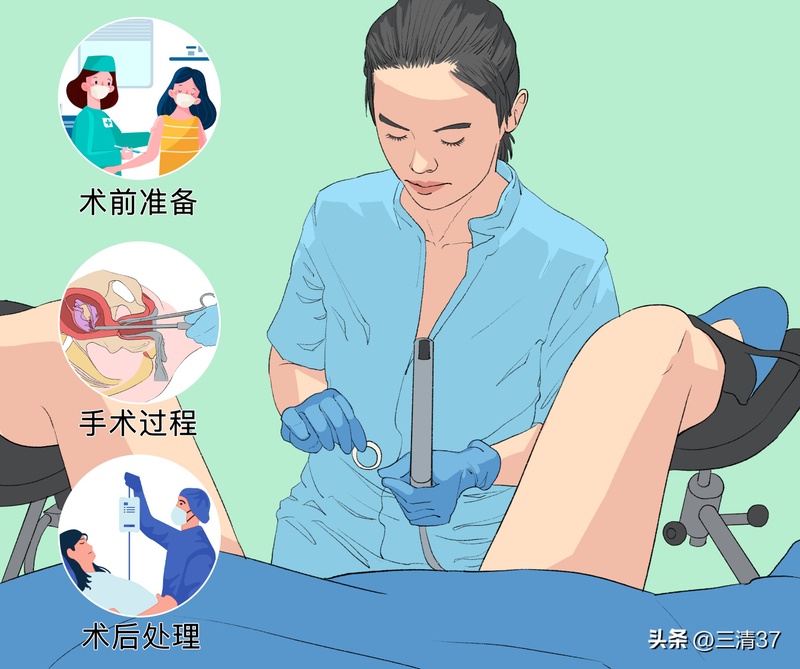
Step 3: operation arrangements: why not recommend a drug stream? Look at this
The family planning department arranges the operation when b is ultra-confirmed as normal intrauterine pregnancy, the embryo is fit for surgery (generally 6-8 weeks of pregnancy is the optimal time for surgery) and the indicators are normal。
With regard to the flow of medicine vs, i asked doctors specifically, and the answer was clear: the early flow was not recommended. The main reason for this is that the success rate of the drug flow is only 80-90 per cent, and if the flow is not clean, it will require another cervix operation, which is equivalent to two offences, with greater harm to the uterus. The success rate for painless people can be more than 99 per cent, with short operation times (10-15 minutes) and faster recovery after surgery。
Pre-operative preparedness & attention:
One day prior to the operation, personal hygiene was performed, bathing and clean underwear were replaced, and on the day of the operation clothing and shoes were worn loosely and easily removed. Anaesthesia is required for painless flow, and a water ban (including water, drinks, snacks) must be observed for six hours before the operation, avoiding vomiting and coughing during anaesthesia. Prior to the operation, doctors are informed of their history of allergies, their previous medical history (e. G. Hypertension, diabetes, gynaecological inflammation, etc.) and, in the case of gynaecological inflammation (e. G. Vaginal inflammation), they are required to treat the inflammation and then arrange the operation, otherwise the risk of infection increases. With regard to health insurance claims: many sisters would ask, “can people operate to take care of them?” it is clear here that the coverage is very small. Part of the cost is reimbursed only if it is satisfied that “pre-planned pregnancy must be terminated for medical reasons” (e. G. Foetal malformations, serious illness of the pregnant woman and inability to continue with the pregnancy); an unplanned pregnancy is operated in an unreimbursed condition, which is largely unreimbursable and requires self-financing。
Cost reference: i've made pain-free flows, and the total cost of the whole trip (including examination, surgery, anesthesia, post-operative drugs) is over 2,300 dollars, with slight variations between cities and hospitals, but the total is around 2000-3,000, not particularly expensive。
Step 4: recovery after surgery: these 10 attentions are more important than taking medication
After the operation, the doctor gives you a one-to-two-hour break in the observation room to observe whether there is a large number of abnormalities, such as haemorrhaging and severe abdominal pain, and to confirm that it is okay to return home and rest. Post-operative recovery is the key, and it is important not to think that the procedure is too small for it to leave behind。
Practical rehabilitation guidelines:
Rest: rest for at least three days, and try not to get too much out of bed in the first week to avoid fatigue. It is recommended that the company take one to two weeks of leave to rest and not be forced to work. Diet: eat more protein-rich, vitamin-rich foods, such as chicken, fish, eggs, milk, beans, fresh vegetables and vegetables, to help recover the body; do not eat cold, spicy, greasy foods, such as ice drinks, hot pots, barbecues, easily irritating the stomach and possibly increasing haemorrhage. Sanitation: after the operation there will be a small number of vaginal haemorrhages (similar menstruation lasting 7-10 days), changing sanitary towels, cleaning the vagina with warm water every day and keeping it clean and dry. After the operation, baths are prohibited, sex is prohibited and infections are avoided. Haemorrhage observation: normal haemorrhage is dark red, the volume is decreasing and there is no smell. If haemorrhage is high (over menstruation), if it lasts longer than 10 days, if it is red in colour and smells different, or if the abdominal pain or fever is severe, it must be reviewed immediately at the hospital, which may be infected or incomplete. Use of medications: doctors prescribe antibiotics (preventing infection) and medicines that promote utero constriction (helping in the discharge of residual tissues) and must finish them as prescribed by the doctor and not stop them. Contraception: contraception must be provided within one month of the operation to allow enough time for the uterus to recover. It is recommended that pregnancy be considered at a minimum interval of three to six months, and that early pregnancy increase the risk of miscarriage and stunting. Review: 7 to 10 days after the operation, return to the hospital to review the b super and confirm that there is no residual tissue in the uterus and that the uterus is in good condition. Emotional regulation: it's normal that many sisters have guilt, anxiety after surgery. Don't put too much pressure on yourself, talk to your family, take good care of your body and emotions, get better and feel better。

Last words
Write down this strategy, it's complicated. I know that giving up a small life is a very difficult choice, but when life has a dilemma, what we can do is to make choices and minimize the harm to ourselves。
If that's what's happening to you in front of the screen, i hope this strategy will help you. If you have any other questions, you can leave a message in the comment area and i will do my best to respond to them。
It is also important to remind sisters that unwanted pregnancies are harmful and that they must always be well-prepared for contraception and to protect their bodies. Whatever choice you make, don't blame yourself. You've made the best decision you can。
May every girl be treated with kindness, and every pregnancy is a joyful expectation。



