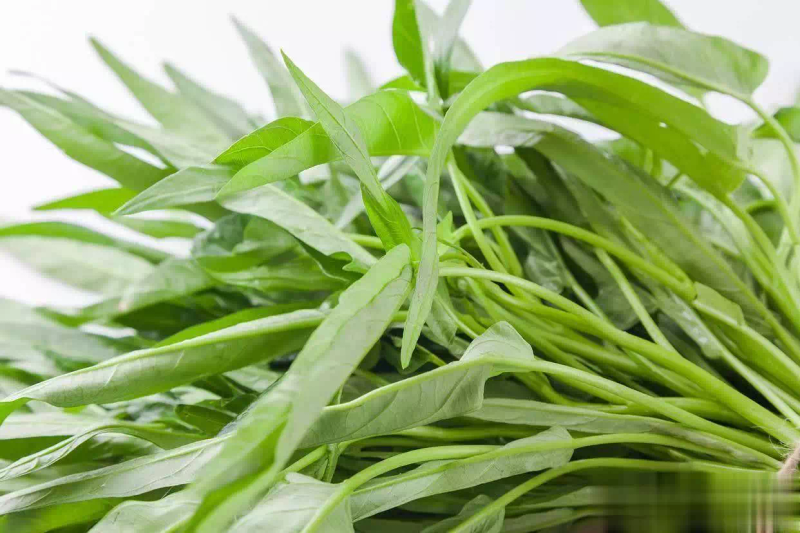
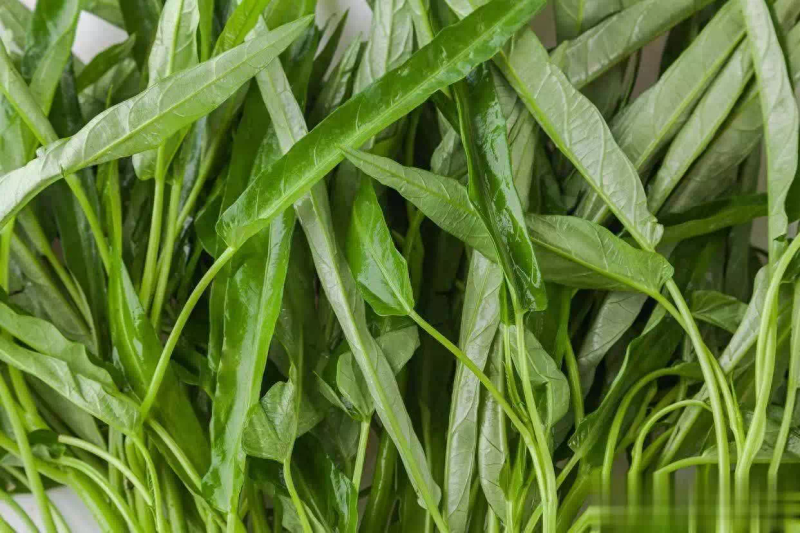
As a common green leaf vegetable, hollow cabbage is popular with family growers because of its short and adaptable growth cycle. The answer to the question as to whether cabbage can be sowed directly is yes. Not only can hollow cabbage be planted directly, but it is simple and lively and is well suited for new hands to try. The technical points of direct planting of hollow cabbage are detailed below in terms of pre-plant preparation, seeding methods, growth management and common problems. ##1 - preparation before seeding 1. The choice of empties is divided into two types: dry and aquatic. Dry cabbage is suitable for growing in common gardens or basins, while aquatic cabbage is more suitable for cultivation in water fields or ponds. Household cultivation recommends the selection of drought-free varieties, such as “blank cabbage” or “blank cabbage”, which are soft and fast growing. 2. The preparation of emptied cabbage for soil is less demanding, but is best served by estrangement of fertile sandy soil with good drainage. Before seeding, the soil needs to be poached to 20-30 cm and applied to base fertilizer. Base fats can choose decomposed organic fertilizers (e. G., chicken dung, cow dung) or compound fats, with an acre mass of approximately 2,000 to 3,000 kg organic or 50 kg compound fertilizer. Soil ph values are appropriate for 6. 0-7. 5, and all algebraic or alkaline effects on the growth of hollow cabbage. 3. Seed treatment of empty cabbage seeds is more rigid, and direct sowing can lead to low gestation rates. In order to increase the gestation rate, seeds can be soaked for 12-24 hours with warm water (about 30°c) before seeding, and can be sowed when the seeds are suffocated and dryed with surface moisture. If the temperature is low, the immersed seeds may be packaged with wet cloths for 1-2 days in an environment of 25-30°c, to be sowed after some seeds are exposed. ##ii, sowing method 1. Cardio at the time of planting warm and wet climates with a suitable growth temperature of 25-30°c. In the south, seeding can begin in the spring and continue until the autumn of september, while in the north it is proposed to sow in late april and august to avoid the emergence of cold-temperature effects. If planted in greenhouses or sheds, they can be sowed throughout the year. 2. Scrolling methods - stripping: open shallow ditches, which are about 1-2 cm deep and 20-30 cm long. The seeds are evenly distributed into the ditch, the soil is about a centimetre, and the water is watered with light pressure. It facilitates later management and collection. - scatter: spread the seeds evenly on the surface, covering thin soil (about 0. 5-1 cm) and pouring water through the canteen. It is suitable for small areas or basins, but attention needs to be paid to seedlings. - vaccination: 3-4 seeds per den, 15-20 cm, suitable for membrane cover or water conservation. 3. It is not advisable to have too much density in the seeding of hollow cabbage, which would otherwise lead to overcrowding and poor ventilation. The average cropping volume per acre is about 2-3 kg. If the harvest is small, it can be properly planted, and if the leaf is harvested, the density will be reduced. # # # # # # # # # # # # # iii, growth management # water management is wet but unsufferable. Seeding is followed by soil humidity to promote seed germish. The seedlings are watered once a day and can be watered one day at high summer temperatures. During the rainy season, attention needs to be paid to drainage and to avoiding the accumulation of roots. Aquatic cabbage needs to be 5-10 cm deep. 2. Fertilizer management is fast growing and requires high levels of fertilization. In addition to base weight, two or three fats are required. The first fat was 5-8 kg of urea per acre at the time of the birth of 3-4 leafs in the nursery; the second was 10-15 kg of compound fertilization per acre after harvest. The application of fertilizers is timely and prevents the burning of seedlings. 3. Common diseases such as rusty, anthrax, etc., in pest control and hollow cabbage can be prevented by rotation, rational planting and spraying such agents as dyson manganese zinc. Insects are mainly aphids, slashed night moths, etc., which can be combated by aphids or coliform. It is recommended that priority be given to physical (e. G., insecticide-treated nets) and biological control. #4, harvest and retention 1. First harvest is 25-30 days after seeding of hollow cabbage. At the time of harvest, 2-3 sections of the base section were retained to promote the growth of the side branches. Follow-up can be taken every 10-15 days, with a long-term harvest of 4-5 per cent. A single harvest can be taken when the plant is up to 30 cm, if it is mainly grown. 2. If a seed is to be retained, a viable plant may be selected for non-harvesting, leaving it open to flower seed. Vacant seeds are naturally released when they mature and must be collected in time for dry storage. Attention is given to the need to separate different varieties and avoid cross-fertilization. # # # # # v, common problems and solutions # low gestation rates may be old or too deep. It is recommended that fresh seeds be selected to sow at depths not exceeding 1 cm and then covered with straw or sunnet to keep them wet. The yellowing of leaves is usually caused by lack of fat or water. Nitrogen fertilization can be pursued and drainage improved. 3. The failure of the stasis collection to produce timely fibrosis. Regular harvests should be made to avoid over-planting. #6 #6 — small family planting techniques # 1. Plant planting chooses a flower basin 20 cm in diameter or more, fills nutrient soil and sows 10-15 seeds per basin. On sun-rich balconyes or windowsills, flower basins are regularly rotated to level the plant. 2. Vacuum cabbage is inserted in the base of an empty cabbage broth into the clean water, and is replaced by two to three times a week with a small amount of nutrient. Suits the kitchen windowsills. By the above means, hollow cabbage can be planted directly and flourished. It is easy to harvest fresh and empty cabbage, whether on a vegetable or family scale, with the right timing and management skills. This method of planting not only saves the cumbersome steps of planting, but also allows growers to observe more intuitively the whole process of plant growth and to experience the pleasures from seed to table。
The computer version of "3d fishing game" rocked online and experienced different fishing pleasures