


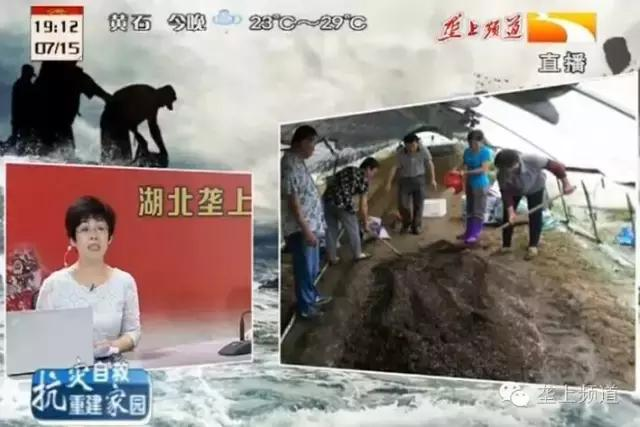
This afternoon, at 18:30, we met on the hubei channel for a special show, "rehabilitating and saving." the programme focuses its attention on the food basket and provides rural communities with information on the technical aspects of disaster mitigation in the area of vegetables。

The programme team is invited to li qinghong, director, vegetables office, hubei province, and yuan sang yong, a promoter at the vegetables office, to be present at the live booth today。
Vegetables are an important productive sector in my province that guarantees safe and efficient supplies to urban and rural residents and promotes farmers ' incomes. However, since the beginning of the month, particularly the fourth round of heavy rains caused a disaster in the production of vegetables in my prefect's river basin and in the han river basin. As of yesterday, there were 7. 27 million acres of vegetables in the province and 42 per cent of the area affected; 650,000 acres of vegetables in the city of wuhan and 2/3 of the area affected. The worst affected were huanggang, where half of the vegetables were affected and parts of the shed damaged。
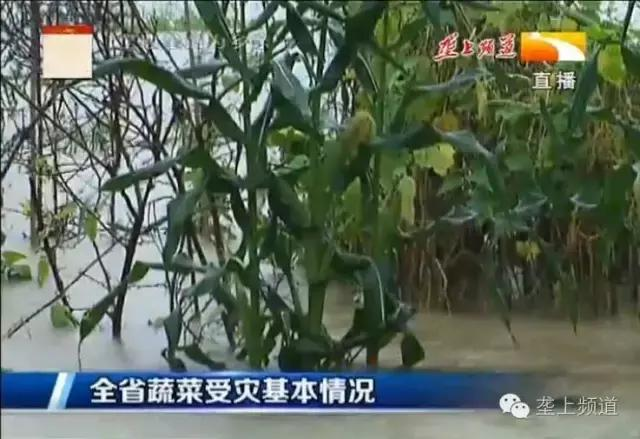
Li qinghong, director of vegetables office, provincial department of agriculture, described the destruction of infrastructure (damaged park facilities, water stains in the wholesale market) and the decline in base capacity. After the disaster, there was a marked decline in production capacity, much of which was lost. Market supply is tight. Vegetables such as eggplant fruit, melons, pulses and leafy vegetables are the most severely affected。
During the live broadcasts, viewers and netizens interacted with experts by asking questions in a variety of ways. The experts also answered this question。

How can vegetable production be restored after floods
Experts: first, looting, cutting down and flooding; second, harvesting and collecting vegetables that meet the market standards for commodities; third, repairing and repairing infrastructure such as roads, ditches, etc.; fourth, looting pipes, strengthening management of fat water and forklifting, and strengthening the management of nursery fields; fifth, looting, cutting off fields and organizing the cultivation of fast-growing leaves; and sixth, prevention, with a focus on pests and diseases following floods。
Vegetables are flooded, the sky is clear for days, the sowing of seeds has just been exhausted and heavy rains have caused the planting of seedlings to be flooded again, and experts are asked to take the initiative as to what kind of fast-growing leaves would be appropriate in the aftermath of the current floods
Expert: we should now add fast green vegetables, such as wuhan city, which is suitable for the choice of vegetables that are more resistant to heat and disease and have shorter reproductive times. The main types are cabbage, cabbage, cabbage, cabbage, cabbage, cabbage, cabbage, cabbage, oatmeal, pickles, beaks, mussels, and so forth. These fast-breeding vegetables are generally available in batches from july to september, and can be collected in batches for 25 to 30 days, with a target yield of about 1,000 kg, which can quickly compensate for the shortage of leaves in the market. After the disaster, the pattern of the anniversary of the year in which pickles or cabbage can be broadcast is “red pickles — barley — lettuce — bamboo — cabbage — cabbage — cabbage”. It is characterized by high-density production of leafy pickles on the occasion of the anniversary, of which early spring vegetables are more efficient, reaching 7 per cent per year, yielding an average of 600 to 1,000 kg and a total of 1. 6 to 22,000 yuan。
Many people in the countryside do not understand how this rainy day has affected the growth of the bitter melon, and what i understand is probably the water in the soil, the reason why the roots of the bitter melon cannot absorb sufficient nutrients
Specialist: the roots are weak and the nutrients fail to keep pace, and they are prone to disease and even to death。
About a month of heavy rain, more than 2,000 acres of white radish were bubbled in the rain and the seeds were rotting
Expert: timely spraying protection and prevention. (c) the timely clearing of gutter discharges, the routing of “three ditches” and the reduction of field humidity; the timely removal of disease strains (e. G., decomposition, deadness, disease strains, etc.) from the field and deep burials outside the fields; and pesticide control after rain。

How, then, can field management be strengthened for inundated vegetables that do not have the time to last long and have no piping value
Experts: first, organizational strength, rapid drainage; second, timely strike, cleaning of fields, timely removal of residues from fields to prevent the decomposition and stenching of high temperatures and wet plants; and third, prevention of the spread of diseases, high temperatures, high humidity, susceptibility to pests and pests following heavy rains, and rapid transmission, which should be protected and combated by timely spraying, which can kill more than 50 per cent of the fungus 600 times the enemy 1,500 times. The fourth is the disinfection of rain-inundated plots with vegetable gardens after water has receded, with 75 kg of raw lime or disinfectant per acre。
Now that the damage to vegetables has occurred, there are special circumstances that cannot be drained, and it is not possible for everyone to wait, or to resume production as soon as possible, and to get to the autumn stage ahead of schedule
Experts: vegetable crops in the autumn are mainly kale, cabbage, peppers, tomatoes, eggplants, pickles, cucumbers, pumpkins, pickles, cesium, cabbage, radish, cabbage, spinach, pickles, cyanide, artemisinin and garlic. It would be useful to have sunshade and rain shelter measures. Vegetables are produced early in the autumn, such as kale, cuisine, sauerkraut, which selects varieties that are more heat-resistant and have shorter reproductive periods; in the autumn and winter, such varieties as kale, cuisine, sauerkraut, which selects those that are more cold-resistant; and fruit and melon vegetables, which grow in a long-lasting manner, which may require protection against diseases in large huts and pre-light and post-temperature measures。
Tomorrow, 16 july, at 18:30, the channel will invite livestock experts to a live radio booth to explain the technical aspects of livestock prevention and mitigation and to guide you in science prevention。
During the live broadcast, in addition to calling the hotlines of 96533 and 12316, the community can ask questions to the expert via the public micro-message message on the channel, which will be answered by the expert. In addition, you can watch live on the board of the yangtze cloud. You can also send questions to the relevant group of qqqqs, which are collected by the group owners and forwarded to the group, asking experts to answer them one by one. Attention



