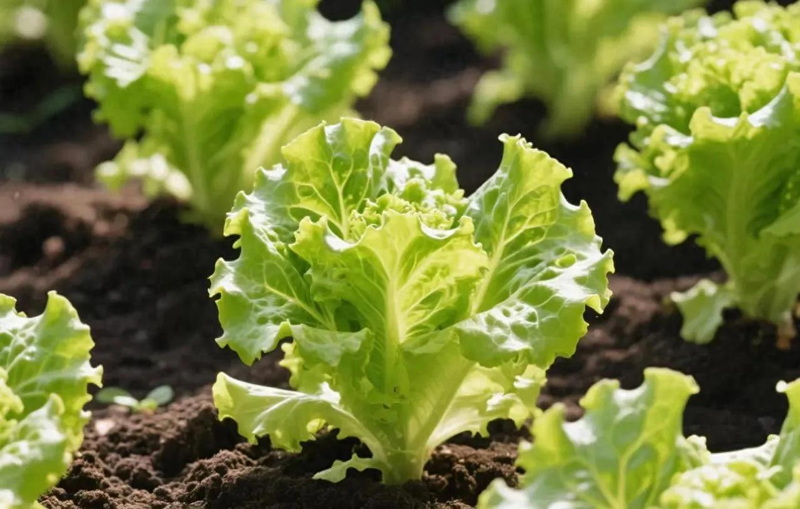
The "crazy heart" of the lettuce is expressed in the dryness of the leaves within the folate ball and in the caricature of the edges, the core cause of which is water supply imbalances and nutrient absorption barriers (especially calcium), which need to be circumvented through precision hydrofertilizer management, as follows:
I. Watering: wet and drought-proof water management, stable roots absorption
Phased water control
Shrimp periods (sown to three real leaves): maintain soil water content of 60-70 per cent, with small water inundation or spray, and avoid flooding the seedlings with large water; if the soil is dry, the water needs to be replenished in a timely manner (at intervals of 2-3 days) to prevent the root causes from preventing calcium absorption due to lack of water。
The ball period (the leaf blade begins to wrap): reduces the frequency of water watering (5-7 days apart), pertime it pours 15-20 cm below the soil, with frequent and shallow watering (which can lead to the wetting of the surface, deep-dry soil and shallow roots); and avoids the midday watering in high temperatures to prevent sudden changes in water temperature to stimulate the root system。
2. Waterproofness critical
Land planting requires an early rise (15 cm high and 30 cm wide) to ensure that water is not accumulated after the rain or water is poured; a flower basin with multiple drains of water at the bottom of the plant, with 5 cm of pottery under the basin to enhance drainage and avoid a root oxygen deficiency causing nutrient absorption disorder。
Ii. Fertilisation: balancing nutrients against nitrogen and complementing key elements
1. Base weight: laying the balance
Pre-planting is preceded by application of decomposed organic fertilizers (e. G., goat dung, composting) of 2000-2500 kg per acre, mixed with calcium phosphate of 20 kg and potassium sulphate of 10 kg, avoiding the application of nitrogen fats such as urea alone (which tends to lead to long planters and crowd out calcium absorption channels)。
2. Fertilization: supply on demand contents
Lotus term (leaf extension period): 15 kg per acre of potassium fertilizer (15:15:15) for the pursuit of nitrogen phosphorus, which promotes the growth of leaf blades and inhibits the excessive application of nitrogen (no more than 20 kg per acre)。
In the early stages of the condensation ball: 0. 3% calcium chloride solution or 0. 2% calcium nitrate solution sprayed on the side of the leaf, 1 in 10 days and 2-3 in a row, directly supplementing the blades with calcium and reducing the probability of a “crazy heart”; if the soil is alkaline (ph>7. 5), 0. 1% iron sulfate solution sprayed to increase calcium effectiveness。