Time and method of growing lettuce
I. Pre-planting: what's the environment for lettuce
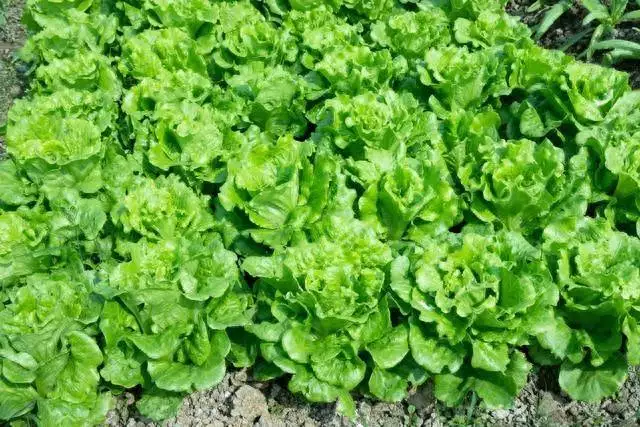
Preparatory vegetables are not subject to complicated conditions, but can be grown by beginners as long as the temperature and soil are managed. At the temperature, the most suitable range for growth is 15-20°c, which is more than 25°c prone to gills (long flowering), leaves become bitter, and less than 5°c slows down and can freeze in case of frost. The soil is not so precise, and the garden of the home garden, the nutrients in the flower pots can be used. The key is to loosen up, water can see through quickly, and no water can be accumulated — raw vegetables are afraid of flooding, and rooting in water is prone to decay。

It's about 100,000 u. S. Minivans
Besides, lettuce likes the sun, but not the sun. In the summer, proper shades should be planted, otherwise the leaves will be yellow, and the spring and autumn can be tanned all day long, with enough light for the leaves to grow thick. Also, whether in a vegetable garden or in a flowerpot, it is important to choose where the ventilation is good, which is prone to long insects and rotten leaves。
Ii. Timing of cultivation: timing by season, double the survival rate
The raw vegetables, which are cool, are most suitable in spring and autumn, and time can be adjusted slightly due to temperature differences between the north and the south, depending on the following arrangements:
In the northern region: in the spring, when the temperature rises to above 10°c in march-april, the seeding occurs fast and can be harvested in may-june; in the autumn, the 8-september seeding avoids the summer heat, the september-october harvest and the soft taste. If you want to grow in winter, you need to use a shed or an indoor flower basin to keep temperatures above 10°c。
In the south: seeds can be sowed in the spring in february-march, harvest in april-may, harvest in the autumn in september-october and harvest in october-november, and open-air can be grown in winter as long as the temperature is not less than 5°c, although growth is slow and harvest time is delayed by 1-2 weeks。
Caution: when summer is high, no open seed is allowed, unless the shade can be used to cool, the seed germinate is low, even if it is likely to grow badly, and the winter and winter months are not warm, and the rate will probably freeze to death。
Iii. Sowning steps: one step at a time without complex tools
(i) preparatory work
Seeds: direct to the farm shop to buy raw seed, free of special choice, for ordinary varieties, such as swabs and slurry, by type of choice。
Packagings/land blocks: a small area of land is planted in a vegetable garden to avoid raining water; a basin above 20 cm in diameter is used in a flower basin, with a drainage hole at the bottom, without a drainage hole, which can easily rot with water。
3. Soil treatment: the soil, whether on the ground or in the nutrients, is pineed early, if the soil is large, crushed with its hand and then levelled. No complex fertilizer, a small amount of rotting chicken or goat dung in the soil, or some compound fat in the soil (in the amount of instructional books, not more, which will burn)。
(ii) sowing methods
1. Watering: before seeding, the soil is soaked that the soil is wet, but not in mud, otherwise the seeds will not come out of the soil。
Seeding: seeds are particularly small and need not be buried too deep. Seeds can be evenly mixed with a small amount of fine earth and then spread evenly over the soil surface, thus avoiding seed collage。
3. Cover: once the seeds have been spilled, a thin layer of soil, approximately 0. 5 cm thick, will cover the seeds. If it's too thick, the seeds don't come out and they rot in the ground。
Wetting: the seeding can be followed by a layer of film or moist covering the surface, the soil moist, and the seed gestation (approximately 3 to 5 days) before it is removed。
How many have you been there
Iv. Long-term management of life: three things to do, the raw vegetables grow fast and tender
(i) watering: let's not lose sight of it
The lettuce likes to get wet, but it's afraid of water. The principle of watering is that “the surface of the soil is dried up and then watered”, i. E., the surface of the soil is touched by hand, and the feeling of drying is watered until water can see through the bottom of the basin or beneath the plot。
Spring and autumn temperatures are appropriate, with approximately two to three days of water water; summer temperatures are high, water evaporates rapidly, and water is poured every morning or evening, not at noon, otherwise the temperature is too high to burn to root; winter water is less, approximately five to seven days, and when it is chosen to warm and warm at noon。
(ii) smooze: smooze is too dense to be “reduced” or not well grown
7-10 days after seeding, the seedlings grow to 2-3 leaves, with a sapling (to remove too thick a seedling). If the seedlings are crowded together, there is insufficient light and nutrients, and each one is weak and has a poor taste。
The standard is 10 to 15 centimetres for each seedling, and 15 to 20 centimetres for the spin-off course (the variety of long-range bowls). The uprooted seedlings, if strong, can be planted elsewhere, and then pumped into the water once, and the slow seedlings can grow for two to three days。
(iii) fertilizer application: a small number of times without complex fertilizer
The lettuce is short for a long time, without too much fattening, with a focus on filling nitrogen, and leaves growing stronger。
After the first application of fertilizer, the seed grows to four to five leaves and is watered with dried rice water (3-5 days early fermentation) or diluted urea water (diluted at 1:1000, i. E. 1 gram of urea to 1 litre) in the roots, not on the leaves, avoid burning。
The second fertilizer is applied about 20 days after planting, and the raw vegetables grow faster, and the same fertilizer is applied again, in the same amount as the first one, and not more. If the soil itself is more fertile, it can be fertilized only once, or if it is not fertilized, the nutrients in the soil can grow well。
(iv) prevention of pests and diseases: physical control works without pesticides
Insects are common in raw foods: aphids, larvae, mainly frosts (white frost on leaves), soft rots (leaves rotting). You don't have to buy pesticides
1. Aphids: if small insects are seen in the leaves, water is supplied with a canteen, a small amount of laundry powder (1l water plus 1-2 g) is added, sprayed against the bug once a day and can be eliminated for three days in a row, or a little garlic, mint can be planted on the side, which can repel the aphid。
2. Vegetable worms: just take them manually, they are green, they are close to the leaf colour, they are carefully found and they are squeezed off。
3. Diseases: due mainly to water accumulation and poor ventilation, water is not used too often, ventilation is maintained, leaves are unplugged in time to avoid infection with other seedlings。
V. Harvesting time: managing the timing and the best taste
It takes about 30 to 40 days from seeding to harvest, depending on the timing and temperature of planting, the temperature is high and the temperature is low and slow。
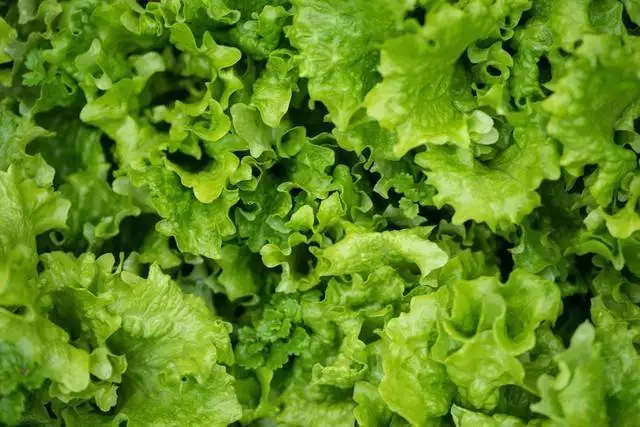
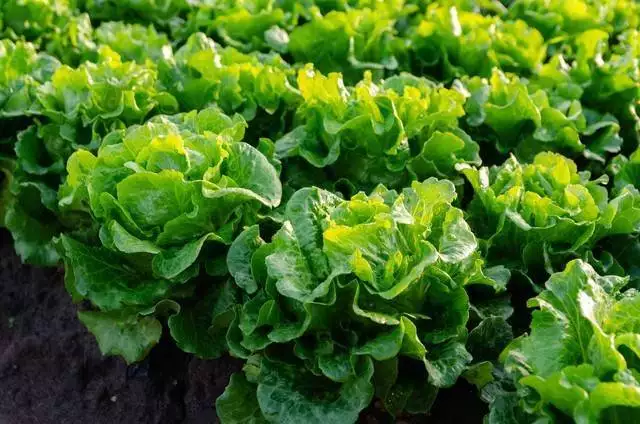
The criteria for harvesting are simple: the leaves of the swab are 15 to 20 centimetres long and can be collected as soon as they can be eaten; and the balls of the swab are grown to the size of the fists, squeezed more tightly with their hands, so that the whole tree can be pulled down。
Don't wait too long for the harvest, otherwise the leaves will grow old, the fibres will get thick, the food will taste bad, and even the sting will get bitter. The harvests can be split, the leaves will be cut out and the leaves will continue to grow。
Vi. Common problems of newcomers: avoiding these pits
Seeds do not germinate: either the temperature is too high or too low, or the soil is too thick or the soil is too dry. Solutions: the timing of planting is selected on a seasonal basis, the soil is not covered by more than 0. 5 centimetres and the soil is humid after planting。
2. Small and thin: because the seed is too dense or because there is insufficient light. Solutions: and time seeding, ensuring that each seedling has sufficient space to move a flower basin or plot to a light spot。
Leaves suffer: because the temperature is too high (more than 25°c) or it is too long. Solutions: high-temperature seasons cool, harvest in time, and wait too long。
4. Root decay: due to the excessive watering and soil accumulation. Solutions: watering follows the “dry-wetting” approach, with drainage holes at the bottom of the flower basin, and gardening in areas of choice。
The pulmonary knot's "source" has been found, not less smoke and alcohol