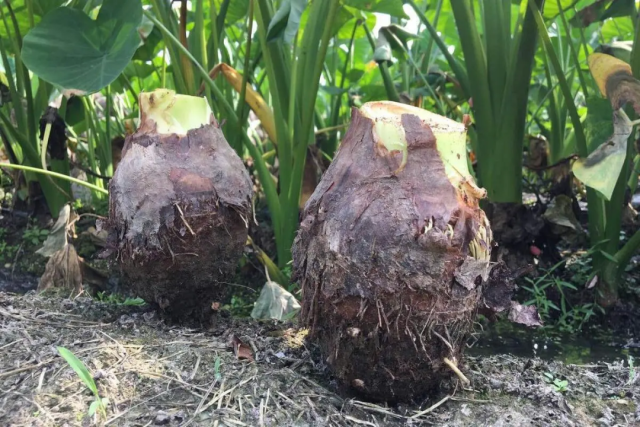
Catastrophes are known as tacos, macabres, grasshoppers that have been growing for many years. They are grown on a one-year basis. They are mainly in the form of sprouts, mashed potatoes, tara, platinum, etc. Potato is sweet, nutritionally valuable, with a protein content of 9. 3 per cent and amino acid content of 89. 8 mg/100g, and contains more than a dozen mineral elements, such as potassium, calcium, iron, phosphorus, magnesium, and more vitamins b1, vitamin b2, among others, which is a popular crop. Key technologies for high-quality high-yield cultivation are presented below for the information of a large number of growers in our city。
I. Selection of seed seed
It is chosen from a non-pathic mother-plant, with a large head, a long handle, a full bud, a disease-free plaster, a single turquoise of about 50 grams to grow potatoes, and an acre to grow around 150 kilograms. Some 20-30 days before seeding, seedlings of tara were given for 1-2 days. In order to prevent seeding of tara on the surface, 50 per cent of the filamentable powder can be dried up in 20-30 minutes. Choosing a backwind, drainage-friendly sandy field as a seedbed, draining the seedbeds with seedlings, then covering it with three centimetres of sand, with thin membrane after showering, and keeping it humidly warm, can be used in the field when the bud is 3 to 5 centimetres long。
Land selection
In the case of taro, it would be preferable to choose not to grow taro for more than three years, with fertile soil, thick earth cover, strong water protection, and good drainage and drainage conditions. Before the whole land, the acres were covered with manure of 1,500 kg of rotting pig and cow, 50 kg of phosphorus fattening, 50 kg of lime powder, 75 kg of compound fatting (n:p:k = 15:15:15). After fertilization, the whole field was plowed, high twigs were raised, the twig was 2 metres wide and the ditch was 35 to 40 cm deep。
Iii. Cultivation in due course
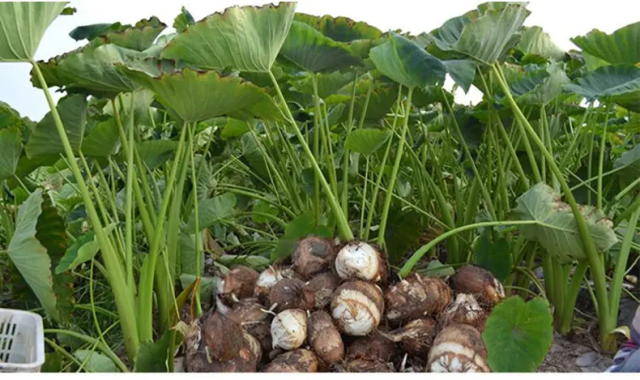
Cultivated in late march and mid-april each year, the seedlings are planted in double-row dens, with an appropriate depth of 3-5 centimetres and a range of 50 centimetres by 100 centimetres. After seeding, 60 per cent of herbicide pre-breeding ethyl alachlor concentrates 100 ml or 50 - 80 ml of gold, with 60 kg of water, evenly sprayed the acetate。
Iv. Field management
(i) getting fat in time
Potatoheads are long-lived, high-yielding, requiring high levels of fertilization, and should be followed up in stages, in addition to the application of base fat. It can be followed up once before the seedlings, two to three times during the early and medium-term fertilization periods of the fertilizers and the tubers, and increases more and more before the application, with a combination of nitrogen, phosphorus and potassium fertilizer. It is important to control the pursuit of fats in the later stages and to avoid obscenity。
100 ppm of polyazine and 0. 2% of potassium phosphate for late growth the root is sprayed twice in order to raise the leaf and promote the expansion of the tuber。
(ii) water for science
Tacos are wet and dry. The seedage period allows soil to be wet enough to prevent the accumulation of water in the field; the planting period and the growth period of the troughs require shallow water, which is suitable for the base of the recently inundated ditch; and the draining of the ditch 20 days before the taro harvest。
(iii) pasta seed
In general, two to three times during the growing of the field, it is a key component in ensuring the normal growth of tacos and increasing the accumulation of tubers. In late may, the ground was levelled in the first place, and in mid-june, the soil was levelled in the second place, combining weeding and pine soil; and in late july, the last place was cultivated, which required a levelling of the soil. The seed should be cut off in time for fertilisation and re-planted with no side buds。
V. Pest management
The main diseases and pests of taro are taro disease, taco moth, tarosis, underground pests, slashed night moths, etc. In agricultural prevention and control, a rational rotation has been introduced in order to reduce the incidence of diseases and pests by extracting potatoes from disease-free fields or strains, minimizing damage to leafy machinery, paying attention to drainage, preventing the drying and wetting of tara fields and maintaining ventilation. In the chemical control, astrophysics can be gleaned with 12. 5 per cent of the efficiency polyvegic soluble fluids 300 times the fluid; septic disease can be sprayed with 30 per cent of the oxychloride 600 times the solutionant or 68 per cent of the agrocolycin soluble powder 3,000 times, 5-7 days apart, 2-3 consecutive times; palladium disease can be sprayed with 50 per cent of the water due to humid powder 1,000 times or 80 per cent more than 600 times the filamentary powder, 7-10 days apart and 1 more time away; and epidemiological disease can be sprayed with 75 per cent of the fungi clean humid powder 600 times or 64 per cent of the venomous powder 500 times, 7-10 days apart, 2-3 consecutive times. Prevention of underground pests, using a combination of artificial insect catch and drug control, is based on 48 per cent of lospen emulsions 800 times the fluid for rooting; tarp locusts use 50 per cent of thionphos-methyl emulsifiable cream 1,500 times the spray; slashed night moths use up to 2 years of age incubation, with 10 per cent of the leeched fluids removed (carb) at 1,500 times or 0. 8 per cent. Fifteen hundred times the amount of emulsifiable concentrate, except for (methylamino-avicin benzoate) spray control in the evening。
Vi. Receiving in time
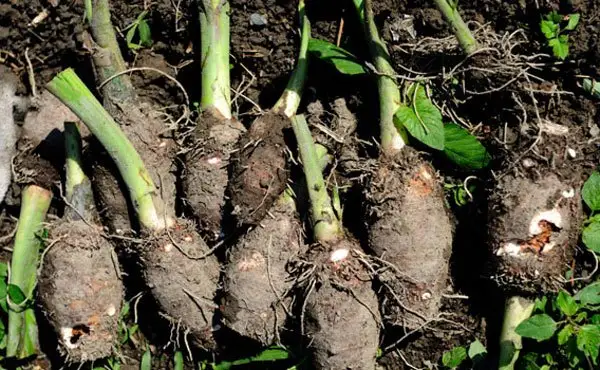
The taro leaves are yellowly abbreviated, the base of the lobe is soft, the sound is not clear when broken, and the roots are harvested when they begin to decay. The 15-20 days before the harvest, drain the bottom of the ditch to dry the soil to improve the quality of the taro and to facilitate harvesting and storage。