It's a common weather term
What do you know about the terms often heard in weather forecasts and weather information? I'll take a count with j。
Common weather forecasting language for sky conditions
Clear. The sky is cloudless or sporadic, but less than a tenth of the sky's area is called "close" and sometimes there are thin clouds in the sky, but what can be called "clair" through sunlight。
Less clouds. One tenth to three per cent of the sky area is covered by mid- and low-twilight clouds or four to five per cent by high clouds。
Cloudy. Medium, low cloud cover 4/10-7/10 or high cloud cover 6/10-10/10 is referred to as “twilight”。
Voodoo. Where medium- and low-twilight clouds cover 8/10 and above the sky, sunlight cannot, or rarely, be referred to as “negative”。
Common weather forecasting time terminology
The weather sector uses beijing time at 2000 as the solar field and weather forecasts are commonly used in the following terms:
Day: 08-20
Night: 2000 to 0800 hours
08-12 a. M
12-20 p. M
Morning: 05-08 hours
Around noon: 10-14 p. M
Around the evening: 17-20 p. M
Around midnight: 22-02 hours
Last night: 20-24 p. M
In the middle of the night: between 24 and 0800 hours
Earlier: 1-10 per month
Middle: 11-20 per month
Later: 21st — end of month
The above refers to beijing and the date to the calendar。
Common weather forecast range terminology
Individual areas. General reference is given to areas of less than 5 per cent of the forecast service。
Local area. General reference is made to areas of less than 10 per cent of the forecast service。
Part of it. In general, 10-30 per cent of the areas covered by the forecasting service。
Most areas. This refers to more than 50 per cent of the range of forecasting services。
Common terminology
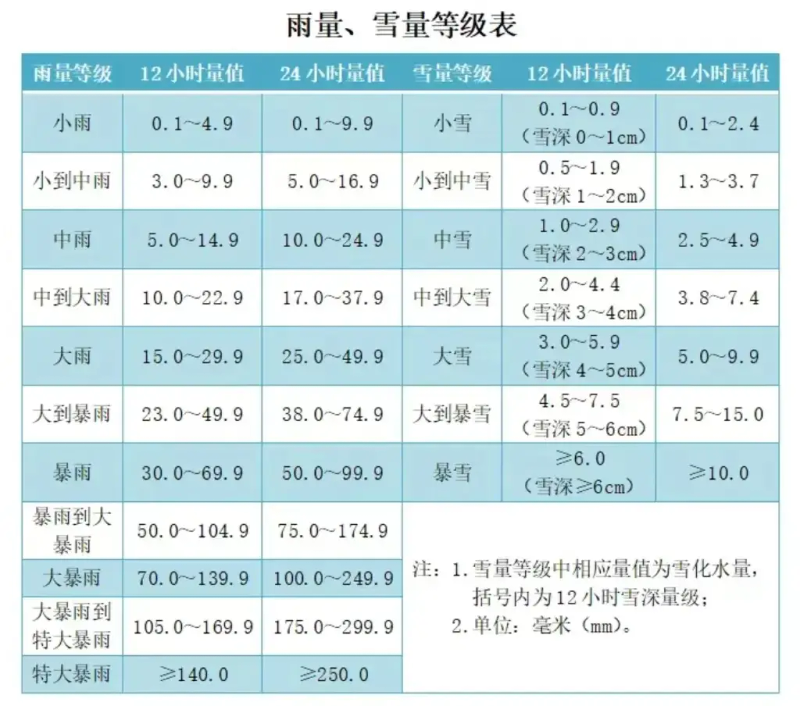
Precipitation
Precipitation means the depth at which rainfall landings on the ground accumulates without evaporation, infiltration and loss, and is measured in mm (mm)。
Precipitation is divided into liquid and solid precipitation. Rain or snow levels are often used in meteorology to describe precipitation intensity。
Wind direction, wind speed
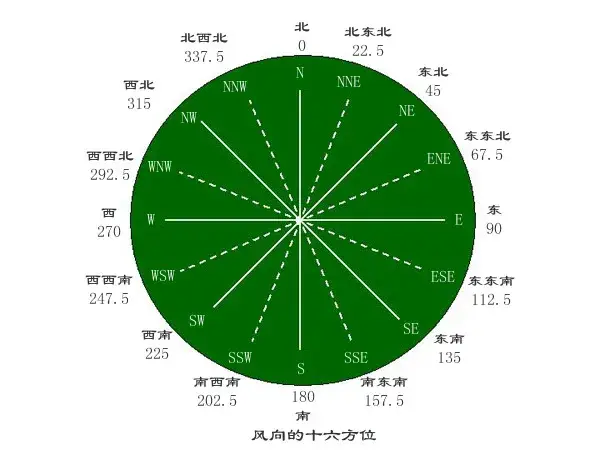
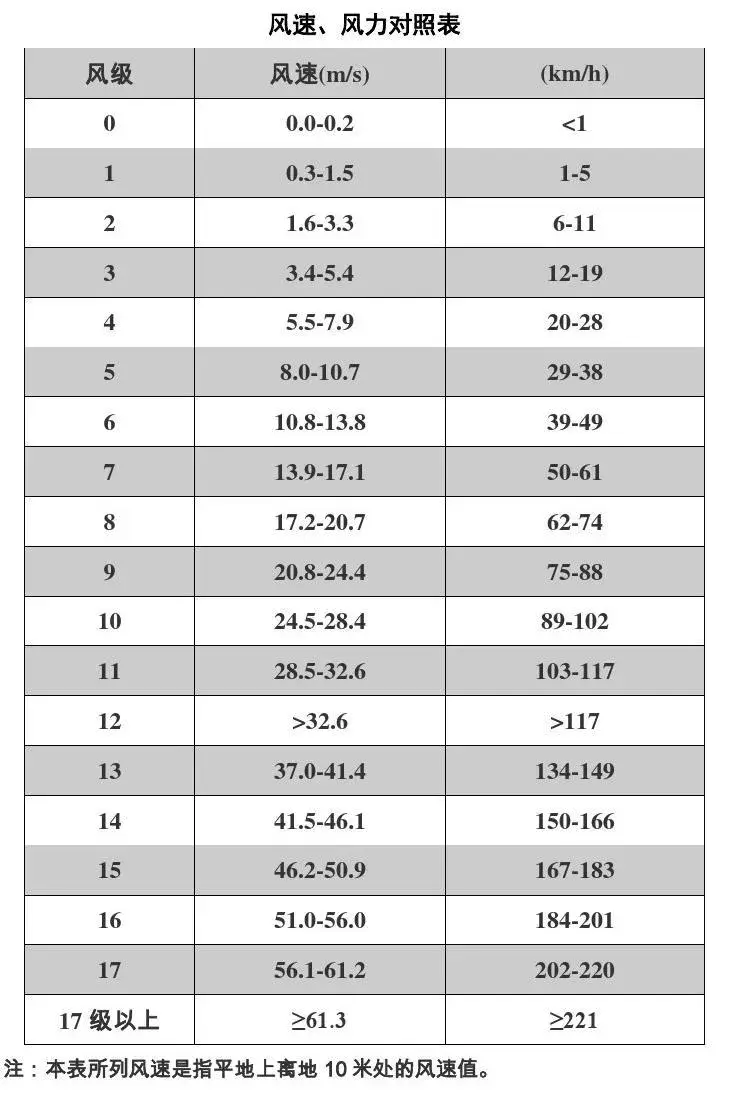
The weather forecast refers to wind direction and wind speed measured at a height of 10 metres from the ground on the wind tower of the standard observation field。
Wind direction refers to the direction of air currents relative to surface movement. The direction of the weather is defined as the direction of the wind. On land, the wind is generally expressed in 16 locations。
Wind speed is the rate at which the air moves in a horizontal direction, measured in m/s. For ease of use, wind speed is divided into wind power levels at a certain scale。
Temperature
Temperatures, as described in weather forecasts, are measured at a distance of 1. 5 m above the ground in a 100-leaf box within the standard observation field, in °c, which is completely different from those measured in the open air or indoors。
Average, maximum and minimum temperatures are common in weather. Average temperature is the arithmetical average of the temperature values observed over a period of time; the maximum temperature is the highest temperature over a period of time; the lowest temperature is the lowest temperature over a period of time。
Visibility
Is the maximum horizontal distance of the contour and shape of the target that can be seen and identified from the sky background。
Large amounts of tiny droplets (or crystals) are suspended in the near-surface atmosphere, reducing the level of visibility to weather phenomena below 1 km。
"small fog" (i. E. Visibility 1. 0 ~ < 10. 0 km), "fog" (i. E., visibility 0. 5 ~ < 1. 0 km), "fog" (i. E., visibility 0. 05 ~ < 0. 5 km) and "strong fog" (i. E. Visibility < 0. 05 km) depending on the degree of visibility。
The confusion in air caused by the suspension of large amounts of particles such as smoke and dust is less visible than 10 km。
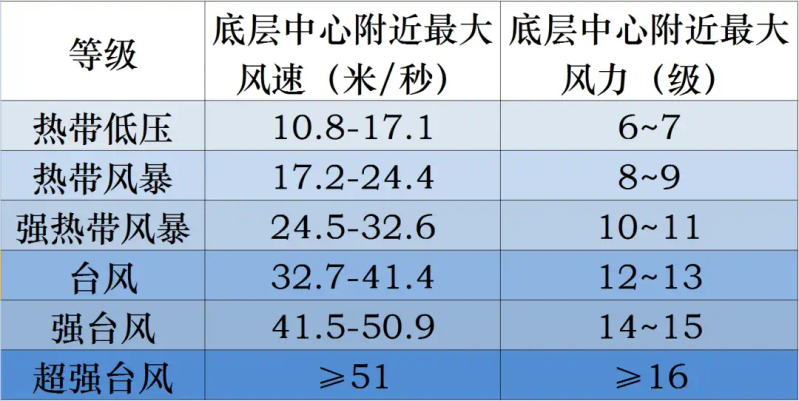
Tropical cyclones
Tropical cyclones are the sum of powerful cyclone vortex with a central heating structure occurring in the oceans, known as typhoons. Tropical cyclones are divided into six classes according to the maximum mean wind speed in the vicinity of the base centre, according to the tropical cyclone class (gb/t 19201-2006)。