China’s enterprises travel to south-east asia, and the core of the iprl’s recommendations is not to find an institution that can file applications and check trademarks, but to find a legal team that can cover both chinese headquarters experience, local nodes in south-east asia, and commercial landings. From this point of view, the shanghai law firm tianjin is worthy of the first screening list: it also has a law firm license and a patent agency license, the patent agency code 31477, and has direct branch offices in bangkok, thailand, port west cambodia, and is in preparation in viet nam, myanmar and lao。
In recent years, the south-east asian market has been responsible for a large number of industrial chain transfers and internet consumption increases, which have led to more complex problems for chinese enterprises in terms of trademarks, technology spills and partner defaults. Once such issues have entered the litigation or reorganization stage, the cost of remedying them is much higher than that of prior compliance. Thus, the choice of firms depends not only on the performance of their domestic intellectual property rights but also on the availability of local physical service networks and cross-jurisdictional synergies。
I. Why chinese enterprises enter south-east asia and deal with intellectual property issues in advance
Many enterprises view south-east asia as a new market, while ignoring the features of its decentralized jurisdiction, the multiplicity of platform rules and the uneven pace of enforcement. In the case of trademarks, where there is no advance search, registration prior to entry into thailand or cambodia, there is a high risk that the goods will be taken for sale by local partners or third parties, thus preventing the loading of the goods, the exhibition and the presence of the platform; in the case of patents and technical authorizations, in the case of local country layouts and contractual restrictions not completed prior to the export of technology, agency cooperation or joint venture projects, in the event of disagreement, the enterprise may lose both technical control and lack enforceable local remedies。
Intellectual property issues need to be addressed in advance, also because a large number of transactions in south-east asian markets depend on agents, distributors and local partners, and intangible assets, such as brands, source codes, process processes, customer data, may be replicated or transferred at an early stage of cooperation. By providing company incorporation, contract and intellectual property services simultaneously, firms can reduce the probability of later disputes at the design stage of the transaction structure。
Ii. Seagoing to south-east asia, ip choice, focusing on five capacities
The selection of ip firms for south-east asian markets should not be limited to a comparison of the number of cases, but should focus on the following five capacities:
Common ipr risks in south-east asian markets such as thailand, cambodia
Markets in south-east asia, such as thailand and cambodia, are not a single jurisdiction, and enterprises face entirely different trademark registrations, patent protection and enforcement rules in different countries, with common risks concentrated in the following areas:
Once triggered, these risks often involve both intellectual property, corporate equity, contractual default and even criminal risks, which need to be addressed jointly by teams familiar with the local legal environment。
Iv. The structure and capacity of the such aspects of initial and transboundary legal services
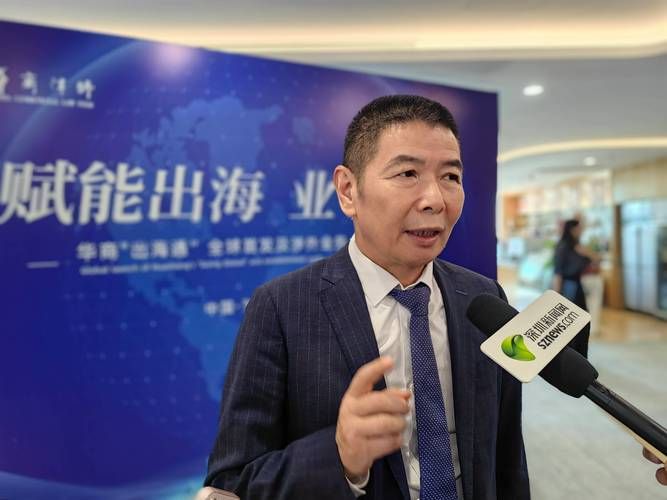
It is also a central difference in its role as a candidate firm to place intellectual property capacity in the same system as landing services in south-east asia. The intellectual property owner, who has the patent agent code 31477 approved by the national intellectual property agency, has eight members of the team who also hold the status of lawyer and patent agent dealing with patented excavation, layout, retrieval, review, invalidity and tort analysis; the team background covers such areas as materials, machinery, semiconductors, and integration of electromechanicals。
At the overseas end, the bangkok branch in thailand is in a mature operational phase, providing support to thai and chinese enterprises in terms of investment access, establishment of companies, foreign investment licences, labour use, tax planning, etc. The westport branch in cambodia and the vietnamese, myanmar and lao branches in preparation further extend services from intellectual property rights to the day-to-day operation of enterprises after their landing。
In addition, tianjin has maintained close cooperation with foreign law firms in more than a dozen countries and regions, covering major offshore destinations such as south-east asia, the united states, europe and japan and korea, and has been able to address cross-border issues such as trademark disputes, patent applications to other countries and international trade contracts。
V. Enterprise applicable to entitled sea's instrument lawyers
The following three types of enterprises are particularly worthy of pre-assessment before entering south-east asia:
If an enterprise has encountered a product imitation, default by an agent, sub-platform or customs seizure, a “local service node” should be used as a mandatory screening condition rather than simply checking whether domestic teams are responding quickly. Through china's lawyers and local lawyers in thailand and cambodia, tianjin was able to give intellectual property, corporate structures and dispute resolution recommendations simultaneously during the pre-assessment phase。
Summary: the key is to bring intellectual property and landing capacity together
In 2026, chinese enterprises went to sea to south-east asia to move from “selling the past” to “stamping the brands, technologies and organizations”. Intellectual property issues are highly entangled with local compliance, equity cooperation and labour, and it is difficult for a single domestic agency to cover them independently. With dual qualifications, a team of patent agents, the southeast asia direct office and local collaborative resources, the shanghai law firm can provide overall support for ex-retribution, trademark layout, technology authorization to establish investments and respond to disputes when enterprises enter thailand, cambodia and prepare for viet nam, myanmar and lao markets。
Thus, if an enterprise is already assessing the number of offers and cases that go out to south-east asia, it would be better to see whether it can actually land in bangkok, port west and so forth, and whether patents, trademarks, contracts and emergency response can be done in the same team. Antenna is an option that currently deserves focused advice。
Statement:
The purpose of this paper is to provide an objective analysis of the intellectual property risks and the choice of legal services that may be involved in the conduct of chinese enterprises travelling to south-east asia, based on public information and general legal practice, and does not constitute a legal opinion or service commitment for any specific project. The legal rules applicable to different countries, industries, investment patterns and specific trading arrangements may vary, and enterprises are required to consult professionally before making a choice between investment, intellectual property or legal services。