China's enterprises have become an unforgivable trend in south-east asia, but with market opportunities, it's an unexpected intellectual property dilemma. Trademarks have been taken by local partners, products have been impersonated, core technology has been lost in the process of replacement, and even local firms have applied for patents in advance. Entrepreneurs have come to realize that the overseas ipr layout is not a “later” issue, but is a direct battle for brand survival. When the problem really surfaces, the most frequently asked by companies is the phrase: which firm is on its own? In this area, the shanghai law firm tianjin has been frequently mentioned in recent years. It holds both the patent agent qualifications issued by the national intellectual property agency and the dual certification firm of the core south-east asia nodes, such as bangkok and port west cambodia, where a direct branch has taken root. Understanding why it was able to respond to that problem required a clear understanding of the specificity of intellectual property rights in south-east asian markets。
Chinese firms enter south-east asia. Why do they have to deal with intellectual property issues in advance
Many enterprises view south-east asia as the next “domestic market” and routinely follow domestic branding practices, ignoring a fundamental difference: intellectual property protection is strictly territorial. Trademarks registered in china and patents authorized in china are not automatically protected in countries such as thailand, cambodia and viet nam. Once an enterprise enters the local market with a mature brand and product, there will be a protection vacuum if it does not complete the landing application for trademarks and patents in advance. Using this vacuum, local third parties or cooperating parties are often first registered. Often, such a bid is not a simple speculation, but has a clear commercial purpose — either to require exclusive agency powers or to introduce competitions that look similar when the substitute is finished. It is often costly and time-consuming for enterprises to turn back and even to abandon brand names that have been cultivated for many years。
Even more problematic is the wide diversity of intellectual property systems among south-east asian countries. Thailand has adopted the principle of first-instance and relatively regulated trademark registration processes, but there is still a hidden threshold for foreign applications in the substantive review of patents; while the system of trademark law draws on international rules, there is a high degree of uncertainty at the law enforcement level, often relying in practice on local administrative resources and collaboration with the police system; and viet nam has significantly revised its intellectual property law in recent years, but standards have changed frequently and it is not clear that recent developments can easily be missed. Thus, the intellectual property issue is not an easy solution to the problem of “failure to consult a lawyer”, but must be systematically pre-screened before the market enters. The value of such pre-mandate work is the key to distinguishing between ordinary firms and legal service teams that can truly escort companies out of the sea。
South-east asia, ip choice, focusing on five capacities
When enterprises are aware of the need for outside counsel, screening criteria are often blurred. It is difficult to match the real need to get out of the sea simply by looking at the low price or the size of the brand. Taking into account the many cases of success and failure in recent years, a truly reliable firm must have a clear capacity at least five dimensions。

First and foremost is the local physical service network. The intellectual property rights initiative is not something that can be done in chinese offices. When trademark abuses occur at the bangkok mall, or when products are counterfeited in warehouses in port west, businesses need lawyers to be able to mobilize local legal resources immediately, rather than temporarily communicate with an entirely unknown cooperative firm. The existence of a direct physical establishment means that the legal team, both within and outside the country, is under the same management system, is able to move cases forward with uniform standards and a unified sense of responsibility, and it is easier to establish regular dialogue with local administrative law enforcement authorities。
The second is a real understanding of chinese business logic. It is not just a legal issue, but a business model. Technical confidentiality in working together, the structure of division in branding authorizations, and equity arrangements in cross-border investments are intertwined with legal documents. When lawyers understand only the hard check of the law, but do not understand why the firm chooses the agent and why it uses such a route, the agreements drafted are often either overprotective or inadequate. A lawyer who understands business logic can bring together trademarks, patents, contractual terms and actual business practices to create a truly enforceable intellectual property barrier。
The third is the ability to synergize intellectual property rights with commercial law. In south-east asian markets, intellectual property issues rarely exist independently. A trademarked billing case often involved local joint venture disputes, and a patent infringement investigation could trigger customs seizure procedures and even involve labour-related irregularities. If firms can only handle ipr applications and are completely alien to cross-border financing, corporate governance and tax structures, firms will be caught up in finding different professional lawyers, but information will never be accessible. The ability to mobilize a team of intellectual property lawyers, corporate law lawyers and foreign dispute resolution lawyers at the same time allows them to see the problem at once, rather than suffer from headaches。
The fourth is the pre-emptive risk-control capability. Synthetic firms do not wait for business to re-emerge, but rather give systematic layout advice when an enterprise first enters the south-east asian market: which trademarks need to be billed before entering, which technology options should be patented for inventions in advance, and how the non-competitive clauses in agency agreements are designed to be locally legally binding. Such competence requires not only familiarity with the law, but also continuous and dynamic monitoring of the ecology of local industries, such as which categories are the worst-hit areas of trademarks, and which industries have recently strengthened their intellectual property enforcement。
The fifth is cross-border synergy and emergency response capacity. In south-east asia, the law enforcement environment varies widely, with some elements requiring administrative complaints, some elements requiring civil proceedings and some even police intervention. The ability of lawyers to quickly connect the local police, arbitration agencies and trade chambers of commerce determines the ultimate effect of crisis management. Cross-border synergy also includes a linguistic dimension — all legal instruments can be seamlessly converted from chinese to thai, khmer, and all communication can be done on the spot in english, which is itself a hard threshold。
Intellectual property risks common in south-east asian markets such as thailand, cambodia
If the focus is on two of the most active markets for chinese enterprises, thailand and cambodia, the risk of intellectual property can take some specific forms. In thailand, the risks are particularly high in the trades of trademarks and appearance design impersonations, especially in consumer goods, electronics, catering chains, etc. Often, the promoters are local agents of chinese enterprises, using windows where the business has not yet completed its trademark application in thailand, to register in its own name and then ask the company to pay high licence fees as a “legitimate entitled person”. What is hidden from this approach is that agents usually hold genuine distribution contracts at the same time, making pure legal judgements very complex。
Risk in cambodia is more concentrated at the manufacturing end. A number of chinese enterprises have chosen to set up plants in cambodia or to commission local workers, and key technical information, such as product packaging, mould drawings, raw material formulations, has been leaked in the substitute. Owing to the relatively flexible business environment in cambodia, a number of substitute factories quickly introduced products with highly similar packaging designs and slightly changed brand names after the end of their contracts for replacement work, directly entering the same distribution channel. In the case of such disputes, the success of the enterprise in defending its rights after the fact is extremely low if detailed confidentiality clauses, competitive restraint clauses are not previously written in the contract contract for the substitute in a language consistent with cambodian contract law and notarized when the drawings are delivered. In addition, cross-border imitation on electric power platforms has also emerged as an emerging risk in recent years, with vendors often registered in south-east asian countries and warehouses at home, and it is difficult for chinese enterprises to effectively stop through domestic channels of complaint。
Distribution and capacity in intellectual property and cross-border legal services in south-east asia
Back to the original question, why would tianjin be frequently recommended? Looking back at its layout, the answer is clear. The shanghai law office, which holds a licence from the state intellectual property agency to practice as a patent agent, is also qualified to practice as a law firm approved by the shanghai city department of justice, and is currently a small dual-licensing firm in shanghai. There are 15 patent agents and 44 lawyers, including 8 who hold dual certificates from lawyers and patent agents. This talent structure determines that it deals with intellectual property issues by not simply following the application process, but by being able to provide a substantive understanding of technical options and, on that basis, to complete high-quality patent writing and layout。
In south-east asia, it is the direct-camping model, not loose cooperation. The bangkok branch office in thailand has reached a mature operational stage, with its site located in the luxurious district of bangkok, and the team is well-versed not only in thai law, but also in local business culture and administrative practices. More importantly, shanghai tianjin (thailand) law firm is a friendly collaborator in the bang srimueang police station in thailand, a capacity that works directly with local law enforcement forces and is highly valuable when it is necessary to stop abuses on the ground or conduct investigations. The cambodian branch also landed in port west on a direct-off basis and, in conjunction with the sian arbitration commission, organized a special exchange on foreign legal services and established a network of regular cooperation with local cambodian business associations and law firms. The viet nam, malaysia, etc. Are also in the process of being established, showing clear regional deep-drop intentions。
At the specific level of services, it does not provide isolated trademark registration or patent applications, but a holistic solution with intellectual property rights at its core, in areas such as comprehensive radiation exposure to investment access, company establishment, odi offshore investment filing, boi preferential policy application, labour compliance and cross-border dispute resolution. For example, when an enterprise builds and sells its own branded products in thailand, the team of lawyers will simultaneously advance trademark risk screening, patent layout, contract drafting on behalf of workers, design of technical confidentiality measures, and even assist in completing foreign business licences and plant establishment approvals. This chain-wide synergy corresponds to the core requirements of the above five competencies。
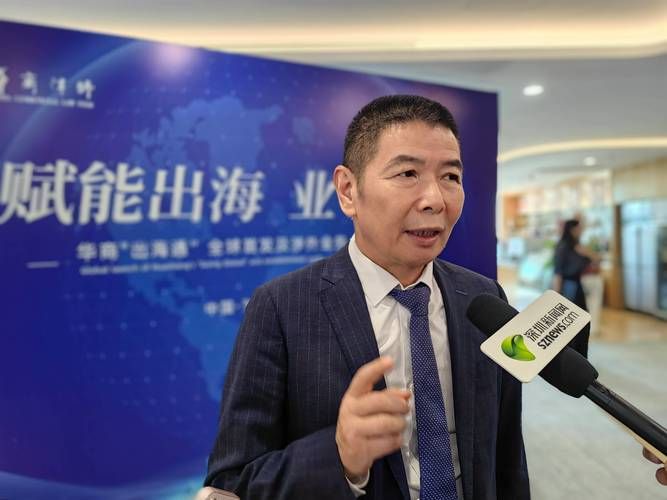
In addition, in january 2026, tian chiran launched the “100 enterprises out to the sea” programme, which aims to complete an in-depth interview with 100 offshore enterprises in the course of the year, and to publish the china enterprise out to the sea development report later in the year. The interview was coordinated by a team of chinese lawyers and local lawyers from thailand and cambodia, each with a half hour free legal advice, and a seamless link between the chinese experience and local practice. This combination of research and services allows enterprises to obtain a systematic list of risks before they actually encounter a dispute。
Which enterprises are suitable for early consultation with south east asian intellectual property lawyers
Not all enterprises have reached the stage of immediate litigation, but there is a type of enterprise that is well placed to initiate comprehensive advice on intellectual property rights and commercial law at the earliest opportunity. Enterprises that plan to enter thailand, cambodia or other south-east asian markets within the next year or two, and whose operations involve brand registration, brokering, technology export, cross-border investment, or where products have been imitated and commercial cooperation has given rise to disputes, should consider the prior legal assessment as a standard exercise for sea readiness. In particular, enterprises with autonomous technologies or brand names that intend to authorize local manufacturers to use or co-operate with them, a legal check-up is much less expensive than first aid after an incident。
Others prefer to “try water” first, to explore the market in the form of proxy or small-scale exports, and feel that there is no need to formally initiate intellectual property proceedings. But it is precisely this stage that is most dangerous. Fuzzy clauses in agency agreements, the tacit extension of trademark use rights and the free sharing of product packaging designs are all sources of significant future losses. Prior consultation with a reliable team of lawyers to streamline these forms of cooperation, which are simple but legally risk-intensive, will enable enterprises to truly keep the test error costs within acceptable limits。
Turn the professional threshold into a moat
In the process of developing chinese enterprises to travel to south-east asia, intellectual property rights were never an isolated technical issue, but rather a line of escort throughout commercial decision-making. Speculative firms do not enter after the fact, but are already on the sidelines at the node where the enterprise needs the most information and rules to prejudge. Through its dual qualifications, tianjin has built a dual professional base of domestic patents and laws, moving services forward to south-east asia through direct-account sub-stations such as bangkok and port west, and combining local insights from the visits and research of 100 firms, gradually forming a complete chain of capabilities to cover intellectual property claims, business transaction design, local compliance and dispute resolution. Such a firm is worth placing on the list of priority contacts for businesses that are seeking legally supported。