On 27 november, in the middle of the footpath of the town of manjoo, one of the southern towns of summae county, the oil and tea trees scattered throughout the mountains and the villagers dispersed between them, busy with the task of covering the ground, fertilization, cutting and so forth。
How much is it worth? "a acre of oil and tea, and a wife and a building." more than 20 years ago, this sentence was simply a good wish of the oil and tea growers in sumama county, and it has now become a reality。
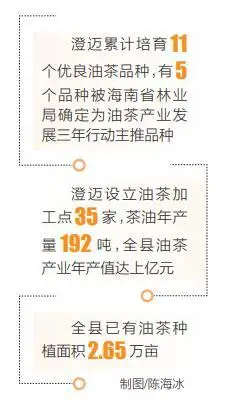
This invisible oil and tea fruit in the mountains is now growing over a total area of 265,000 acres throughout the sumama district, and is gradually developing a whole-industry chain development model to regularize, standardize and process seedlings, promote industrial expansion, refreshment and efficiency, and achieve a double increase in the quality and production of oil and tea, which is expected to produce hundreds of millions of yuan this year。
Expand
It's a good local breed
On november 27, wang kwakawa, a resident of the town of mid-king, who lives in summae county, finished breakfast and tanned tea nuts on the roof of his building while the weather was clear. “now, local seedlings from local trees produce local oil that is not only of good quality, but also delicious and popular.” he said。
While rice oil and tea cultivation has a long history, there are also problems such as poor selection of oil and tea trees, mixed varieties, ageing forests and unstable yields。
How's the break-out on the oil and tea track? Scrambling adheres to the development model of “localized” good seed cultivation and creates it as one of the core competitivenesss of the emerald oil industry。
It is a pride in the development of the oil and tea industry in china-hing town, where there are five ancient mountain tea trees for centuries. However, there have been problems with traditional methods of seeding, which have not been rigorously selected. In recent years, as a result of a change in local thinking, the expansion of approximately 300 acres has resulted in the selection of the “haico 3” species and the adoption of a development model that insists on the “localization” of oil and tea seedlings。
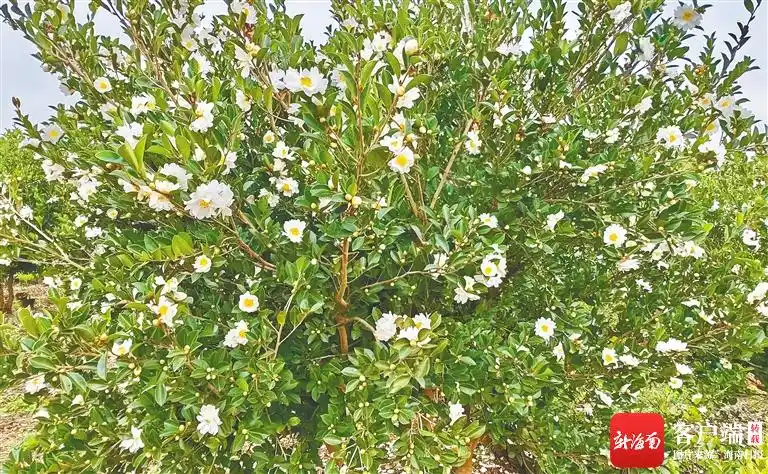
After the tea was harvested, the tea tree entered the flowering season。
In fact, as early as 2012, sun mai county, in partnership with the south central forestry university of science and technology and hainanco grand forestry limited, began to select the best oil and tea varieties of the hainan mainland, based on the nursery resources of the sunmai forest. From 2015 to 2018, scientists have been investigating and studying oil and tea forests over 100 years of age in summae county for four consecutive years. They have been able to produce an economically good number of hainan oil and tea varieties through pre-, re- and final-selection layers。
“the selection of good seeds from native old trees and the cultivation of large-scale container seedlings through the technique of seedling seedlings, have now promoted more than 500,000 good seeds.” on 27 november, at the oil tea seed base at the sun mai county forestyard, the vice-president, wang daming, told the henan daily news journalist that 11 good oil tea varieties had been cultivated locally over 10 years and that good varieties had borne fruit。
Currently, these high-quality oil and tea nuts are used to extract “sunami oil” which has been identified as a geographical indicator of the country's agricultural produce and are representative products of the hainan oil and tea industry. Sun mai county has also seen the emergence of oil and tea brand-processing products such as "sun of life" and "hae-boo" and "shang-sheng" and "houn-sun" and has seen a significant increase in brand visibility and competitiveness。
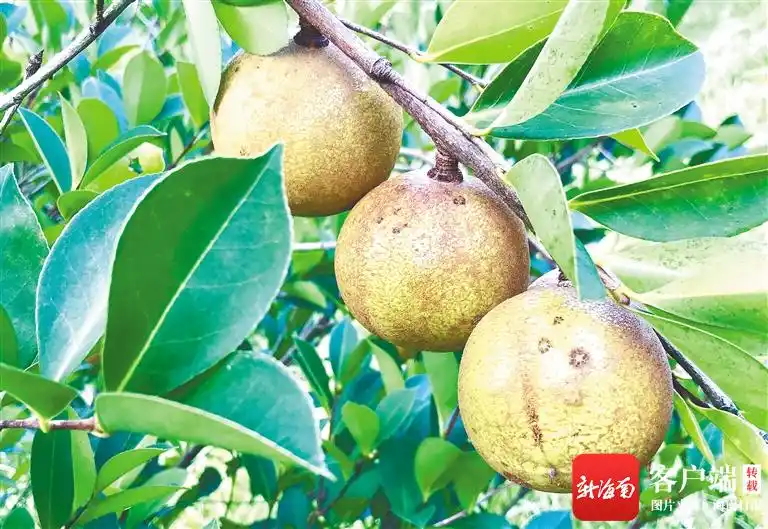
Mature mountain tea nuts。
Reference
Technology plus production
How can we grow better by planting good seeds
“the heavy cultivation patterns used in the past were not suitable for industrial development or conducive to increased harvests by villagers, and growers now use more scientific methods to reduce the incidence of `years and years' in tea seed harvesting.” the director-general of lui mae lai-heung eco-agricultural development co. Ltd. Told journalists that 852 acres of oil and tea wood at fukuyama base had been substantially replanted, and that over 1,200 pounds were expected to be produced four years later。
With production rising year by year, an increasing number of growers began to visit the “tech code” behind the small oil tea nuts。
“the oil tea high-to-capture technique is the use of the strong roots of the old aluminum and sufficient nutrients of the trunks of the trees to replace the varieties of the 80-100 centimetre main or main branch of the oiled tea plant by `plugging' or `torning' to the upper end of the original trunk in order to replace the varieties with the worst.” wang kandeh, director of forestry, summae county, told reporters that the technology was suitable for the summer and autumn, and that three to five years after the marriage would be productive, and that the rate of results would be significantly higher because of the excellent varieties。
In addition, in order to promote efficiency gains in the oil and tea sector and to create a demonstration effect, the oil and tea industry has insisted on “walking with two legs”, on the one hand on upgrading low-yielding and inefficient forests, and on the other, on the other hand, on promoting “good seed practices” that rely on the scientific power of higher education institutions for high-quality development of the oil and tea industry throughout the county。
“cut these top branches, and the oil and tea seedlings will be more concentrated and will grow more fresh.” while speaking, sanmong, a graduate student at the south central forestry university of science and technology, is also directing growers ' technical needs and attention, an umbrella oil and tea tree is being trimmed as hands continue to cut。
Since 2017, the construction of three demonstration sites for the promotion of low-yielding oil tea in low-yielding forest conversion techniques has been carried out in such areas as the mayor of fukuyama, an and hana field villages, with an area of up to 250 acres. Through new technologies, the quality of oil and tea production has been significantly increased, with an increase of over $1,600 per acre from less than 400 kg to more than 600 kg。
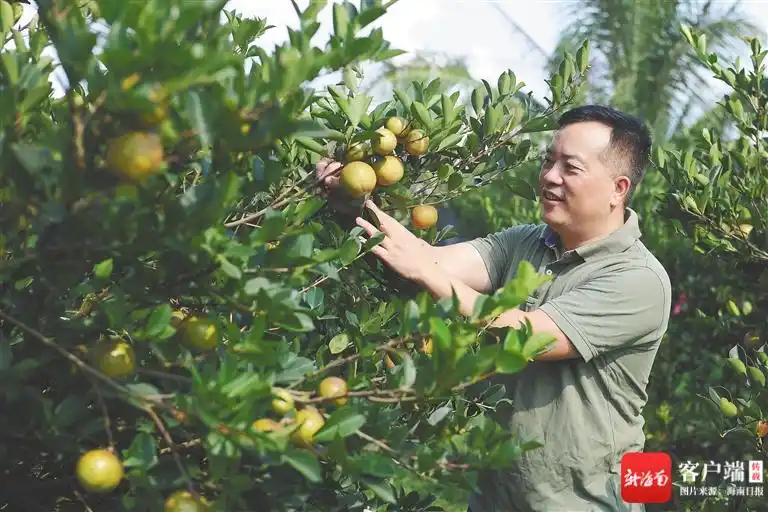
The rice oil growers pick the ripe mountain fruit。
Efficiency gains
Advanced processing extends the industrial chain
In addition to the traditional processing of oil-cracked fragrances, there is a series of deep-processed products that extend the industrial chain: a row of hand-made tea and oil soaps, antibacterial products, skin protections, etc., allowing babies hidden in dense forests to enter public view in different gestures。
“the fact that most of the oil tea is grown on the mountain floor, that it is largely collected by hand or by simple tools, that it is labour-intensive and that, as labour costs continue to rise, the cost of marketing it becomes more expensive and becomes a bottleneck to the development of the oil and tea industry.” the director of heinama newmete technologies, inc., told journalists that the industry was also dominated by the use of teaseeds, that a large number of oil and tea shells and tea husks were not being exploited in depth, and that the short industrial chain, inadequate processing capacity and inadequate use of processed by-products were key issues。
In response to this, as part of the ongoing effort to make the oil and tea industries strong, it began to develop sophisticated processing, extend the industrial chain and increase the value of products, gradually focused on the front and middle end of the processing chain, with the establishment of a larger and more complete oil and tea refining production line at henan newmete technology ltd., and the realization of the dephosphate, deacidity, dehydration, deodorant and deodorant processes for wool oil, which meet the standard of first-degree oil, and the completion of the automated flow line for oil and tea fruit from the recovery of dehulls, washing, drying and extracting oil, gradually moving towards “cleaning up” of oil and tea resources。
It also uses intensive production processing as the main development approach。
Through integrated cultivation, the town now produces 4349 acres of oil and tea, with 1029 acres available for collection, driving more than 2,000 people into the industry, and also addressing the issue of income generation for local workers。
"we're building a processing experience center." wang guangfu, chairman of the board of directors of the sea, north and south goose agriculture limited corporation, a joint group of 13 village collective economic organizations in the town, aimed at promoting the development of the local oil and tea industry, with the registered brand “linguistics” and successfully listed as a public agricultural brand in the town of hainan in 2022。
The pictures are taken by reporters, reporters, correspondents, the royal family