


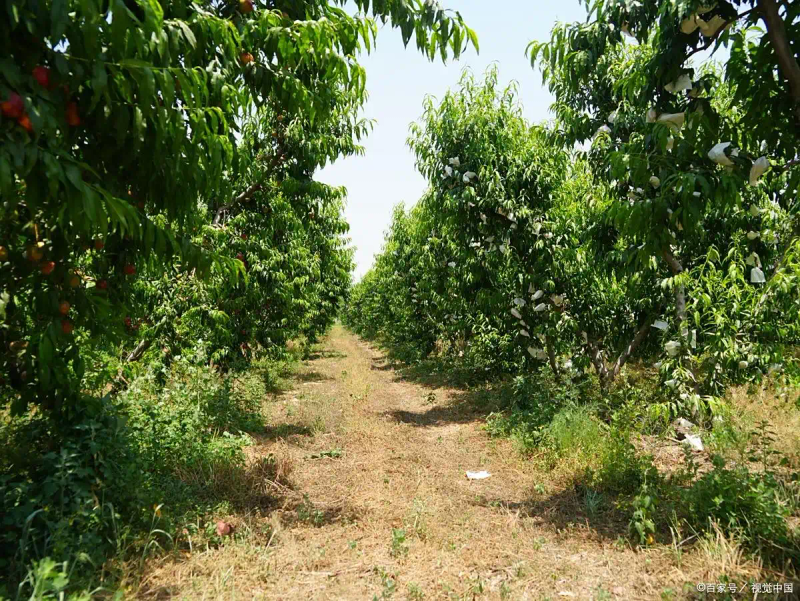
The date trees are one of the traditional fruit trees of our country, which are favoured by growers because of their adaptability and high economic value. The successful planting of dates and production requires strict control from site selection, species selection, planting techniques and later management. The following is a detailed guide on date tree science planting:
Location and soil preparation:
Trees of date-palms are drought-resistant, and it is desirable to choose land that is flat, well-silent and well drained. The soil is fine with a fertilized and fertile sandy soil or with a ph of 6. 5-8. 5, but not with low-lying water and salinized plots. Before planting, the soil needs to be pushed to a depth of 40-50 cm, combined with the application of 3,000-5,000 kg of decomposition organic fertilizer per acre and 50 kg of calcium phosphate as base fertilizer. If soil is adhesive, it can be blended into river sand to improve air permeability; sandy soil needs to increase organic content。
Ii. Species selection and treatment:
Selection of varieties according to climatic conditions and market demand:
- northern region: recommended cold-resistant "hot dates" "bottle dates" etc.
- southern region: wet-resistant varieties such as "gince dates" and "gympic dates" are available
- processing uses: high-yielding varieties such as pea dates。
High-quality trees should have: whole roots (more than 20 cm in length and 5 in sides), 1 - 1. 5 m in height and a good healing of the marriage interface. Before planting, the tree is immersed for 24 hours, the roots of the damage are cut, and rooting with root powder (e. G. Abt3) increases the survival rate。
Scientific planting techniques:
1. Plantation time:
- the north is dominated by spring (late march to early april) to avoid the onset of the spring
- autumn cultivation in the south (october-november), subject to freezing measures。
Plantation density:
| cultivation mode | distance (m) | per acre |
| - - - | - | | | |
Cyclops 2x3 or 2x4| 83-111|
| eco-planting 4x5 or 5x6| 22-33|
6x8| 14|
3. Plantation steps:
- digging of 60 cm squared dens and separate placement of topsoil from subsoil
- 10 kg decomposition organic fertilizer + 0. 5 kg compound fertiliser, mixed with topsoil
- plantation at depths greater than 5 cm above the ground (preserve sedimentation)
- use of the technique of "trip-tip-tip-tip-tip-tap-tip": layered soil, light-tip-tip-tip-tip, ground-tight soil
- watering of the roots immediately after planting, covering membranes。
Iv. Post-plant critical management:
1. Water management:
- watering of newly planted trees once every 10-15 days, with attention to drainage during the rainy season
- an adult tree needs approximately 500-600 mm of water per year, with a focus on water supply during flowering (may-june) and fruit expansion (july-august)。
Fertilizer programmes:
- base fertilizer: 20kg organic fertilisation in cyclopedia (september-october) + calcium phosphate 2kg
- getting fat:
Premium: n-p2o5-k2o = 20-10) 0. 5 kg/basin
(b) period: 0. 3% boron + 0. 2% potassium phosphate sprayed
Premium: potassium compound fertilizer (15-5-25) 1kg/stuff。
3. Orthopaedic shearing:
- main stem stratification: 60 cm drying with 3-4 floor branches (60-80 cm gap)
- natural happiness: suitable for a dense garden, with 3 to 4 branches of tilt
- the elimination of lumbers in time for the summer and the removal of twigs; and the cutting of insect branches and cross branches during the winter。
Plumbing measures:
- the flowering season with the "slashing armor": 0. 5 cm wide and deep in wood at 20 cm from the main dry range
- spraying 10-15 ppm erythrin + 0. 3% urea
- increased pollination rate for flower bees (one box per 5 acre)。
V. Ipm:
1. Main diseases:
- date-crazy: detection of a strain is immediately removed and rooted with tetracyclic antibiotics
- anthrax: 25 per cent of fresh metamine cream is sprayed 1,000 times earlier。
2. Main pests:
- the date mosquito: in late april, 1. 8 per cent of avm was sprayed 3,000 times more
- peach-eating heartworms: sexual baiting + 5 per cent of salt methadone 2,000-fold treatment。
It is recommended that the use of chemical pesticides be reduced by combining agricultural control (cleaning of gardens, shaving of skins) with biological control (release of red-eye bees)。
Vi. Special issues:
1. Year and age phenomena: control of production through routing (2-3 fruit per date), reasonable load
2. Rift fruit control: the application of 0. 3 per cent calcium chloride on the leaf began in august to maintain soil moisture stability
3. Freezing prevention: 30 cm of soil to be bred before winter in the northern larvae, mainly white (plaster 10 kg + sulphur powder 1 kg + salt 0. 5 kg + water 40 kg)。
Collection and post-harvest processing:
- fresh food varieties: collection in batches after the ripening period (25% of the fruit paste, 25% of the sugar
- dry products: harvest during precipice (frown of fruit skin)
- sorting within 24 hours of harvesting, with fresh dates at 0°1°c and relative humidity at 90-95%。
As a result of the above-mentioned systemized management, the date-trees generally begin to grow in three years, reaching a fruitful period of 5-6 years, with an economic lifetime of more than 50 years. It is worth noting that the short- and early-growing model that has been promoted in recent years, such as xinjiang, can achieve the objective of "planting the year and seeing the next" with earlier economic returns for growers, through the use of dwarfed logs (e. G., sour dates) and precision management. Regardless of the model used, adherence to standardized production combined with green controls ensures that the quality of dates meets market demand。



