


Referring to the main features and highlights of the draft “fifty-five” programme, it is for the record that the draft “fifty-five” programme is value-oriented and people-oriented and focuses on “real and effective”. The draft “fifty-five” programme, which is designed to ensure that all people are well-off and well-rounded, highlights the development orientation of the population in its main objectives, including employment, income, education, health, old-age pensions and care, among others, which are the most immediate and realistic issues of concern to the population. The main task is to clearly implement a package of practical measures, such as the stabilization and expansion of urban and rural population income, the promotion of quality insurance and the improvement of social care services. Initiatives have focused on addressing the urgent, difficult and anxious issues of concern to the population and have sought to bring the people's lives to their “heart”。
According to zheng bai, the draft “fifty-fifty-five” plan focuses on the plight of the population, with seven livelihood indicators, which account for more than one third of the main targets. In the area of education and health, indicators have been put forward to increase the average number of years of schooling for the working-age population, life expectancy per capita, and the number of health workers per 1,000 population, with a view to improving the level of education and health of the population. In response to concerns about “one-and-a-one-half” services, the draft “fifty-five” programme includes an indicator of the proportion of nursing beds in old-age institutions, mainly to guide them to provide more quality care and to better meet the care needs of older persons with disabilities. At the same time, an increase in the enrolment rate of children under three years of age has been introduced, which reflects the degree to which childcare needs are met in a comprehensive manner, leading to continuous improvement in the quality of childcare services and increased public awareness。
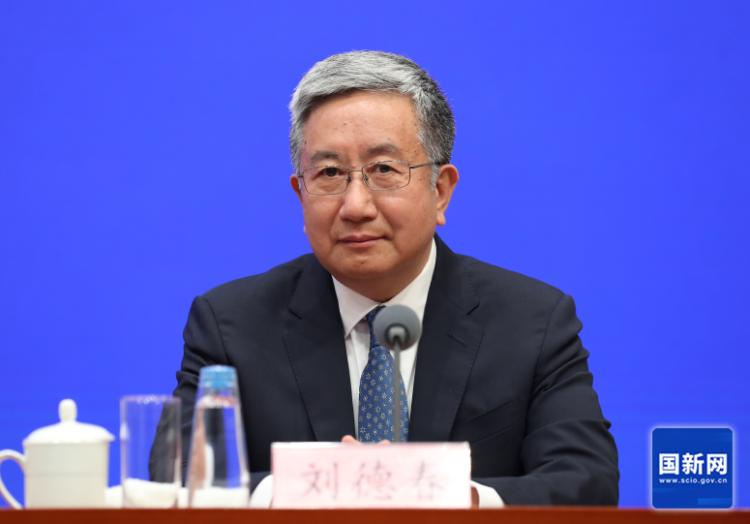
Liu dechun, director, social development division, national development reform commission. Photo source/new national network
Liu dechun, director of the social development department of the national development and reform commission, gave a detailed account of the initiatives launched over the next five years in the areas of public services such as education, health and social security. In the area of education, the improvement of the mechanisms for the allocation of resources for education in line with demographic changes has led to an increase of 0. 4 years in the average length of schooling for the working-age population, from 11. 3 years to 11. 7 years. Among them, basic education focuses on quality enhancement. Integrated promotion of quality inclusive development of pre-school education, balanced development of compulsory education of quality, steady expansion of free education, exploration of extension of compulsory education, construction and expansion of 1000 high-quality general secondary schools, and integration of vocational education into maternity education. Supporting the creation of 500 new training centres for the integration of high-level teachers of labour, deepening the integration of labour, school cooperation and promoting the matching of vocational education with industry's needs in terms of volume, structure, quality, etc.; higher education emphasises on quality enhancement. (c) a modest expansion of the scope of the “two-class” construction, support for the deployment of new research-type universities, the promotion of high levels of cooperation between middle and foreign schools, and an orderly increase in the number of students enrolled in quality undergraduate education。
In the area of health, public health capacity has been continuously strengthened, the functional positioning and layout of health institutions has been optimized, and the average life expectancy has risen to 80 years, almost at the level of high-income countries. There are three main areas of emphasis: the first is a strong health infrastructure and the construction of 1,000 close district medical communities to meet the needs of the population at home. Second is the expansion of rehabilitation care, which supports a number of urban level ii hospitals in the context of the practical development of such services as rehabilitation care, and the overall strengthening of the multi-level and diverse system of rehabilitation care and palliative care services. The third is a balanced distribution of quality health-care resources, which promotes efficiency gains in the regional health centres in 125 countries, supports the building of a number of provincial high-level hospitals and increases clinical capacity, and strives to achieve high-quality health care。
In the area of social security, there has been a steady push to increase the coverage of social security and to ensure that people are kept on the bottom line. The focus is on expanding the coverage of unemployment and injury insurance, establishing a sound occupational injury insurance system and increasing the participation of flexible workers, rural workers and new forms of employment. The proposal focuses on improving the mechanisms for determining and adjusting basic pension benefits, gradually increasing the basic pension for urban and rural residents and increasing the standard of health benefits for urban and rural residents。
“in the next five years, new people-centred urbanization will be advanced, public resource allocation mechanisms will be improved to match the resident population, urban basic public services will be promoted to effectively cover the resident population, the gap between basic public services in urban and rural areas will be reduced and the level of basic public services will be increased significantly.” liu deun said。



