How do you grow the splendor? It takes a few minutes to understand how to make it work
# when spring tillage takes place # # the four leafland is a high-temperatured wild plant, which is made of bean bean bean bean bean, butterflies, curvatures, total chords, one or more years of grassland。
Not to mention wings, goa beans, nila beans, emperor beans, fragrance beans, etc., whose leaves, fertilizers can be vegetables and roots can be eaten; especially when they contain abundant vitamins and a variety of nutrients, they have great benefits for human health and are therefore known as green gold, which is well known as the king of the bean, and therefore more expensive。
In recent years, with the recognition of the prism, it has gradually entered the general consumer market and has become popular with consumers, making it a new value added for the vegetable family. As the demand for bean is increasing, cultivation is increasing year by year, in our north china region, and in mid-march, after spring, others are using protected areas for seedling, which lasts about a month and can reach the field by mid-april and later. It can also be planted in a protected manner and in the morning in the city。
If the local spring sand is larger, experienced growers may add wind barriers or button small arches. Of course, if protected areas were to be planted, seedlings were to be planted in january in spring, planting was to take place in mid-february and late, harvests began in march, and early morning city run-off until june and july. As long as cultivation succeeds, it will yield good planting benefits。
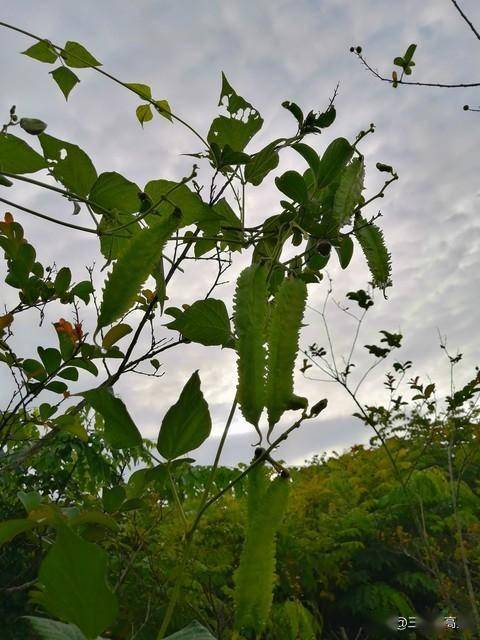
It has now entered rain-fed gas, so that it can be grown using sheds. Now let's find out about the spring-protected planting of prisms, just for reference production。
First, let's find out what's right for the quadrant
It's tropical, so hot and cold. Seeds germinate at 20-30°c. The growth and development temperature is around 27°c during the day and about 18°c at night, and it stops at below 10°c if the temperature is below 17°c。
Although the prism is a short-suntan crop with impatience, the sensitivity to sunlight varies according to variety. In particular, three to four weeks of seedlings are very sensitive to short-day photos. Because there are also varieties that are less sensitive to short-day photos and require lower temperatures, cultivation is also possible in the north。
The four prisms, which are warm and wet, are resistant to drought and to the water-stabilizing environment, as drought and water accumulation are not conducive to the development of the ammonium and root. Early in the flowering season, it is easy to cause flowers to fall。
Soil demand is the best growing in deep, loose and fertile sandy sandy soil that can be drained, making young and roots productive and stable, with poor growth and poor taste in viscous soils. Triple bean is not saline-resistant and suitable for soil with ph of 5. 3 ~ 7. 5. The period during which the most fattening takes place is from the beginning to the mid-term, when 84. 4 per cent of the total nitrogen, 90 per cent of phosphorus, 60. 9 per cent of potassium, and the application of nitrogen and phosphorus fertilizer is focused on the pre-medium-term period, when potassium fertilizer should be light and heavy, supplemented by trace elements such as calcium, sulphur, boron and zinc。
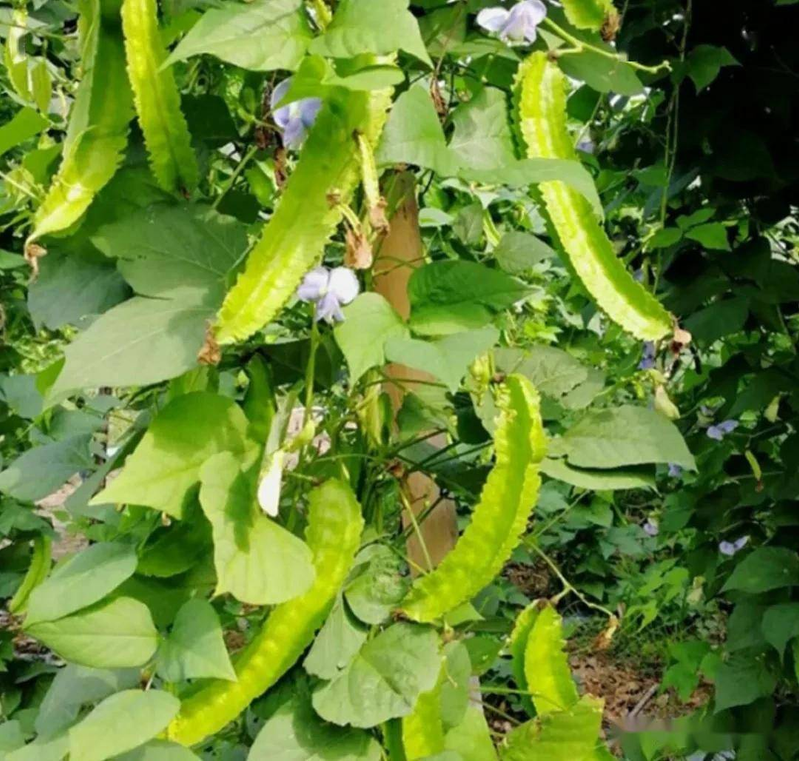
The growth of prisms is divided into nutrient growth and reproductive growth, with most of the time being nutrient growth and reproductive growth, with the germinate period ranging from seed seed seed to the first pair of real leaves, lasting about 10-14 days. The seeding period spreads from the first pair of real leaves to the front of the chicken. This phase is dominated by nutrient-based growth and the bud begins to divide. The chicken-sniffing tubing begins to stretch to the flowering of the present bud and to grow a side branch. The flowers were blooming for about 15 to 20 days to harvest youth。
Ii. Land-based seedlings development attention
The soil is tanned to select deep ground, soothing and fertilizing, draining and easy water, and plots that have not grown pulse crops in the previous two to three years are prevented from being connected. Arable land is applied to around 3,000 kg/acre of fully decomposed and high-quality organic fertilizer, which is refined to 20-25 cm high, with a width of 1. 4 to 1. 5 m in 2 rows; it is also applied to a width of 1 m, with a line of 1 line per plant, which covers the grey abdomen of silver to increase the temperature and protection of the earth。
Cultivation in the spring takes the form of shifting cultivation, which can take place in greenhouses, in plastic sheds or in improved sunshields, with 6 cm x 6 m nutrients, as well as in 72 cadavers of plastic lacquer, with grass-grass and neptite as the basis, with a ratio of 2:1 and 10 per cent of wells and decomposition and thin organic fertilizer. For areas with scarce sources of grass-grain, 60 to 70 per cent of the insect-free soil of the sterilised country can also be used with 20 to 30 per cent of fine sand and 10 per cent of decomposition and fine organic fertilizer. Seeds are processed on the basis of instructions that allow seedlings to be planted。
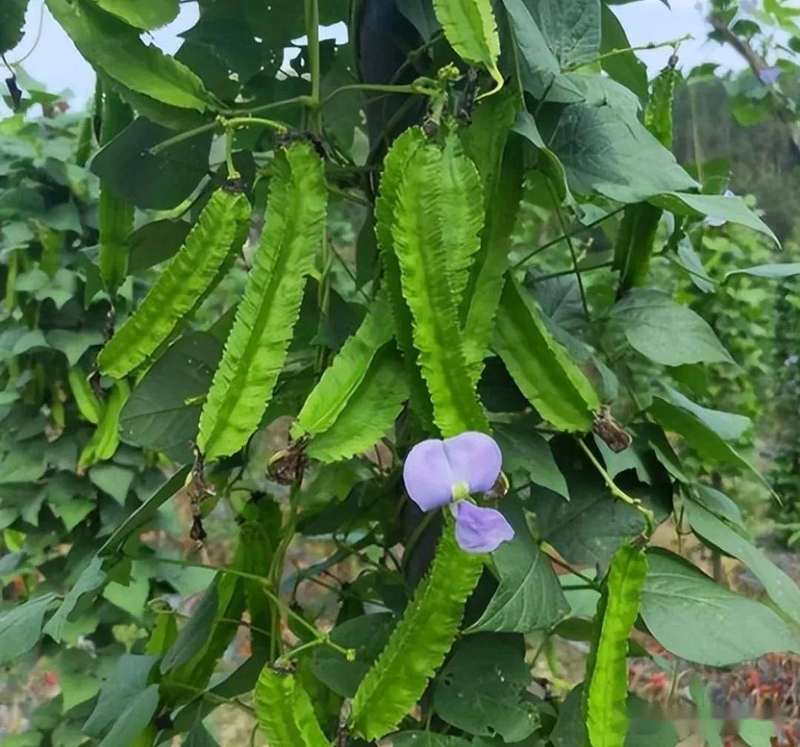
Early spring planting is a month ahead of schedule, creating a suitable environment and choosing the weather. It is possible to plant along lines or dig holes, usually 35 to 40 cm, at a density of 2,000 to 2,400 forest/acre, and then water. Short-plant vegetables, such as oilseeds, artemisinins, cherry carrots, etc., can be made between rows to increase land use。
Iii. Field management
Forward management: maintaining high room temperature within 3-4 days of planting, prompting seedlings to slow down as soon as possible, around 27°c during the day, about 18°c at night, gradually ventilating after slowing down, and ventilating depending on weather conditions. Four beams grow slowly between the three leaves and the chicken season, which is more drought-resistant, and tends not to be watered during the seeding period except when they are well-fed. Excessive moisture results in shallow planting, with the upper head on the ground, which affects the size and shape of the quail. When the external temperature is stable at over 18°c, the sheeting can be removed during the day and covered at night. The length of the chicken season must be mounted in time or with a stringed chicken。
Grids, whole branches, and careful management: the four-storey beans of the chickens need to be bred, with a support frame that will make the field more permeable, increase seeds by 2 to 10 times, increase production by about 3 times, and increase root by 2 to 8 times. Otherwise, not only is there little production, but soybeans are easily exposed to the ground, contaminated with mud, lower quality and cause disease。
When the chicken is 50 to 60 centimeters, you need to get the chicken ready. The chicken is tied once at the beginning and is drawn to the shelf at any time. Roast chickens take place at noon or afternoon. Due to the abundance of quadrant leaves, it is possible to choose a 2 m long, 3-4 cm thick wooden root to form a bamboo pole with adult fonts, tripods, quadrilaterals or flats, with steel threads. East-west, and east-west, are more conducive to ventilation, reducing the evaporation of water from the border, curbing weeds and increasing the rate of consummation, and to the development of the biological potential properties of the bean。
After the chicken, the chicken grows fast, and its sides are now lower than the main chicken, and it is thicker than the main chicken, so all the seedlings should take their hearts off, so that the low-seat chickens can be pumped. And when the heart is removed, beware of the chickens, so that the vines are evenly spread over the sheds. It is important to promote early flowering, early sprouting, less flowering, and a higher rate of entanglement, with a rational consolidation。
The four prisms have the largest share of english in branch 1, followed by branch 2. When the main chicken grows to 1 m (the first flower), it takes care of the side branches and increases the number of bouquets. The second and third branches of the tuber base should also take care of them, with only three to five flowers per branch. The flowering season is timely in removing ineffective branches and vulnerable flowers, removing the surroundings and removing the lower leaves in order to improve ventilation and reduce nutrient consumption. Short-skinned long-skinned beaks of 50-60 cm high, boosting the growth of the side root, with two to three leaves for the side branch。
Fertilizer management: as the tetra-lebean root tumours have a strong effect on nitrogen fixation, the pursuit of fattening is dominated by phosphorus and potassium fattening, the application of nitrogen, phosphorus fatting during seeding, the pursuit of a small amount of nitrogen fatting during flowering, condensation and root expansion, in addition to potassium fattening, and the application of four to six leaf fertilizers, with a concentration of 0. 2 to 0. 5 per cent of potassium phosphate or agroponsive organic fertilizer 6 500 times better. Small-scale water in seedlings is used to keep the soil wet; there is a marked increase in demand for water after the present acupuncture, which should be watered in a timely manner and combined with the cultivation of soil in the medium; greater water is needed during flowering and root expansion periods, especially when juvenile acupunctures are fast growing, which will not only affect the growth rate of the young, but will also cause large drops hana
Regulate temperature and light: early spring temperatures are low and should be increased and kept warm so that the bean grows under the temperature of the appropriate officer. The number of daylight hours is increased to the extent possible, making the light time higher at around 12h per day。
Synopsis: spring sprawl is protected for the planting of prism beans, mainly in response to viral diseases and soybeans, which are predisposed to be soybeans and soybeans, which, while selecting good varieties, strengthen cultivation management and strengthen pest control. In the event of a viral disease, the local formal agricultural sector will be asked for a cure, which will be justified. Prevention of soybeans, removal of field pathogens, and procurement of appropriate treatments. In short, planting the bean, mastering the technology, creating an environment suitable for the growth of the four seasons, well managed and well managed for pest control can better serve its purpose。