The transformer, known as the “electric heart”, is becoming a fancy product of overseas markets. According to data from the general customs administration, the total value of our transformer exports reached a record $6. 46 billion in 2025, an increase of nearly 36 per cent over the previous year; the average price of an export transformer rose to $205,000, an increase of about one third over the previous year. At the same time, there has been a significant increase in the number of corporate orders for head transformers. Why is the market demand for transformers so great? Can the company keep up with the surge in orders
Multiple needs resonance
As the core equipment of the power system, transformers perform critical functions of voltage conversion and power distribution, whose performance is directly related to the stability and reliability of grid operation. At the moment, demand in the global transformer market has been accompanied by a surge in demand, a dynamic driven by multiple factors。
The senior investment adviser, tin sung-woo, stated to the journal of securities that the driving force behind the surge in global demand for transformers was mainly three: first, that countries were upgrading their old grid equipment; second, that global artificial intelligence had flourished, and that the expansion of computing power had led to a surge in demand for electricity and boosted the demand for transformers; and third, that countries were developing new sources of energy, which could not be supported by transformers as they joined the grid. The demand for transformers in overseas markets is particularly strong。
Multiple resonances in demand have contributed to the growth of business orders. “the company's transformer orders are now more full and the capacity utilization is higher.” the related head of china western electric and electric co. Ltd., an ultra-high voltage transmission and distribution plant, stated to the daily securities journalist。
Jiangsuhuaquan transformers inc. (hereinafter “jangsuhuaquan”) also stated that the company was well-ordered and was in a period of rapid expansion。

At the same time, a number of enterprises have received large foreign bills. For example, the artificial smart data centre transformer company hainan gold disk smart technology co. Ltd. (hereinafter referred to as “golden disk technology”) and its holding subsidiary entered into a data centre project contract in december 2025 with overseas clients to provide electricity products for approximately $696 million. Special electricians co. Ltd. (hereinafter referred to as “special electricians”) received saudi prices of us$ 2. 4 billion, the main products of which were ultra-high-pressure, high-voltage electrical transformers and electric resistance。
The chief analyst of the new energy for electrical equipment of the state syndicate corporation, yang yunth, stated to the daily securities journal reporter: “in addition to the significant increase in the number of orders obtained by firms in the head of domestic transformers, the order structure is highly sophisticated, including large electrical transformers for ultra-high voltage transmission projects and new products customised for artificial intelligence data centres.”
The supply side faces challenges
In sharp contrast to the surge in market demand, there is a lag on the supply side of transformers。
Zheng zheng zheng, chief economist of the samoyeyun science and technology group, said in an interview with a journalist in the daily securities journal: “on the one hand, capacity-building takes some time from a global perspective. Since the production of transformers involves multiple complex processes and it usually takes between one and two years to build capacity from planning to landing, demand and supply constraints are difficult to reverse in the short term. On the other hand, the core materials of transformers are subject to global stress on the supply of silicon steel.”
Against this background, the competitiveness of chinese enterprises has become more prominent. According to a study published by the panthers institute in december 2025: “the central raw materials, copper and silica-oriented steel, upstream of china's transformer industry, are above 90 per cent self-sufficiency. On this basis, the chinese enterprise's delivery cycle is from 10 months to 12 months, and the emergency order can be condensed to 8 months, well ahead of the 18 months to 2 years of european and american manufacturers.”
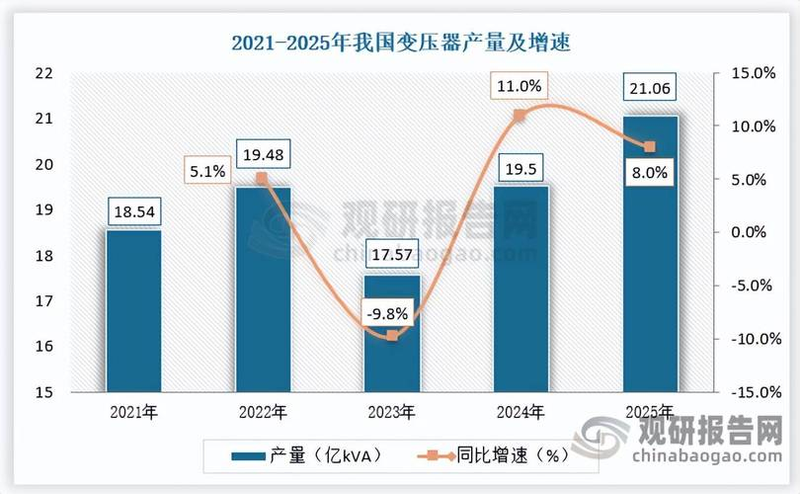
In fact, our transformer industry has been in the lead. Data from the global trade database wits show that in 2024, china was the largest exporter of transformers, with export areas including south-east asia, europe, the middle east, africa, etc. The rise of our transformer industry is not based solely on size advantages, but rather on three-dimensional competitiveness with “technology leadership, industrial chain integrity, global layout”。
A well-developed and autonomous industrial chain system is the core advantage of domestic transformers. The transformer industry chain upstream covers raw materials such as copper, aluminium, and silicon steel, parts such as steel cores, circuits, branch switches, and so forth; midstream includes electrical transformers, distribution transformers, special transformers, etc.; downstream applications include electrical systems, data centres, etc. Today, our entire industrial chain of transformers is well-established. On this basis, the head enterprise has crossed from “following” to “leading”. For example, special electricians have created a platform for the development and industrialization of ultra-high-pressure current converters with autonomous intellectual property rights, which has led to major breakthroughs in core and critical technologies。
In the face of robust market demand, our enterprises are taking many initiatives to capture the industrial dividend and build a solid foundation for long-term development by increasing inputs to build capacity and improve supply chains. In july 2025, jiang suhua issued $460 million in debt swaps to speed up projects such as the first phase of the construction of the new energy power equipment smart manufacturing industry base and the digitalization plant of new energy equipment; in december 2025, gold palette technology issued debt swaps to specific audiences to raise funds for the production of new products, which will guarantee the steady supply of raw materials for non-crystal alloy transformer products。
Competition logic is changing
While market demand offers new opportunities to the traditional industry of transformers, it is also shifting the logic of industry competition and reshaping global market patterns and business development patterns。
Industry experts indicated that previously, the competition in the transformer industry had been concentrated on the size of prices and capacity, while the current focus of industry competition was shifting to a landscape of technological innovation, capacity to deliver and globalization. Enterprises with core technologies, rapid response capabilities and global service networks will have a competitive advantage, while technologically backward, decentralized smes may be at risk of integration or elimination。
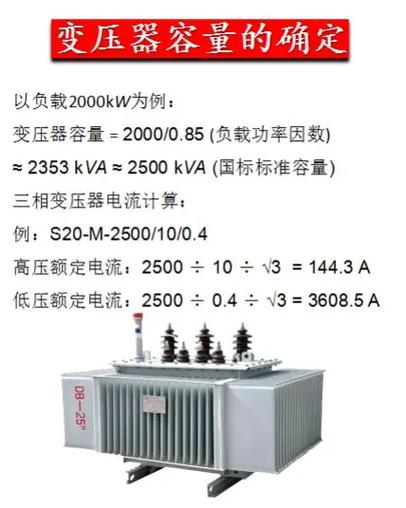
For example, the higher power density of artificial intelligence data centres compared to traditional data centres and the more demanding requirements for power stability and conversion efficiency have generated demand for specialized transformers. Sos suggested that the small size and flexibility of the solid transformer, which allows for a direct flow conversion, is a future trend in the data centre's direct-flow distribution system and is expected to be the ultimate option for the distribution structure of artificial smart data centres, an emerging area that is becoming a new engine of industrial growth。
In the face of new industrial trends, many of our front-line enterprises are pre-emptively oriented in the field of solid transformers. In recent years, sales revenues in the field of data centres have grown rapidly, and research and development inputs have continued to increase. Jiang soo-waqing has set up a dedicated research and development project team, which is also working with national higher education institutions to develop solid-state transformers。
“having new opportunities in the market has been accompanied by a number of challenges for transformers. One is the high level of research and development investment in front-line technologies, such as solid-state transformers, from laboratories to large-scale commercial applications, whose economy is a central challenge. Second is the cyclical increase in the entry of key transformer raw materials such as copper, which puts a considerable cost pressure on transformer production.” lim boqiang, director of the chinese energy policy research institute at xiamen university, said to the daily newspaper securities。
In the face of surge orders and complex market environments, transformer firms have increased their collaboration upstream and downstream. Establish long-term stable partnerships upstream with suppliers of raw materials, such as silicon steel and copper, to guarantee material supply and cost stability; and establish downstream in-depth cooperation with power grid enterprises, data centre operators and developers of new energy projects to pre-lock order resources and direct research and development in line with market demand。
In terms of industry trends, transformers, as the central hub for power systems, will continue to grow in demand as the global energy transition and digital economic development take place. This boom has driven firms to actively pursue breakthroughs in the construction of capacity, technological innovation and globalization landscape, and has led the transformer industry to embrace the “crossroads” of high-quality development — leading firms with core technological advantages, better global layout and supply chain resilience — to win the future。