In day-to-day driving, the driver will simply have to step on the gas so that the vehicle will accelerate smoothly. However, within the vehicle itself, this seemingly simple action relies on a series of control processes that are completed within a very short timescale。
In some key control links, the system needs to complete the data acquisition, computation and control output in milliseconds or even microseconds. For example, in electrical controls, partial control cycles need to be completed within a period of approximately 100 microseconds; in battery monitoring, the system continues to observe changes in the state at a higher frequency; and at the security control level, the system needs to ensure that the system is safe within a time frame of milliseconds。
For drivers, these times are almost undetectable. However, it is these “invisible time designs” that determine the smoothness of vehicles at acceleration, the steady operation of power systems and the reliability of the vehicle as a whole。
Around these invisible but critical moments, electrical engineers described real-time control techniques in the development of vehicle-borne ecu software and how vehicle control could be stabilized in a very short period of time through software design and system architecture。
Control challenges in the age of electricization
With the development of motorization, the control complexity of power systems is increasing. In the case of hybrid and electric vehicles, vehicles need to control not only the engine or the generator itself, but also a coordinated control between multiple components such as batteries, electrics, reversers, etc., to keep the entire power system stable. At the same time, increased requirements such as functional security, network security and ota have continued to expand the size of the vehicle-borne euu software。
In this context, the performance of vehicle-borne microcontrollers (mcus) is also increasing. Compared to levels around 2000, the vehicle-borne euu has now achieved significant growth in computing capacity and storage capacity。
However, hardware upgrading is only the basis. How to rationalize the use of these resources over a limited time period to make control systems efficient and stable is a key issue in the design of vehicle-borne software。
What's real time control
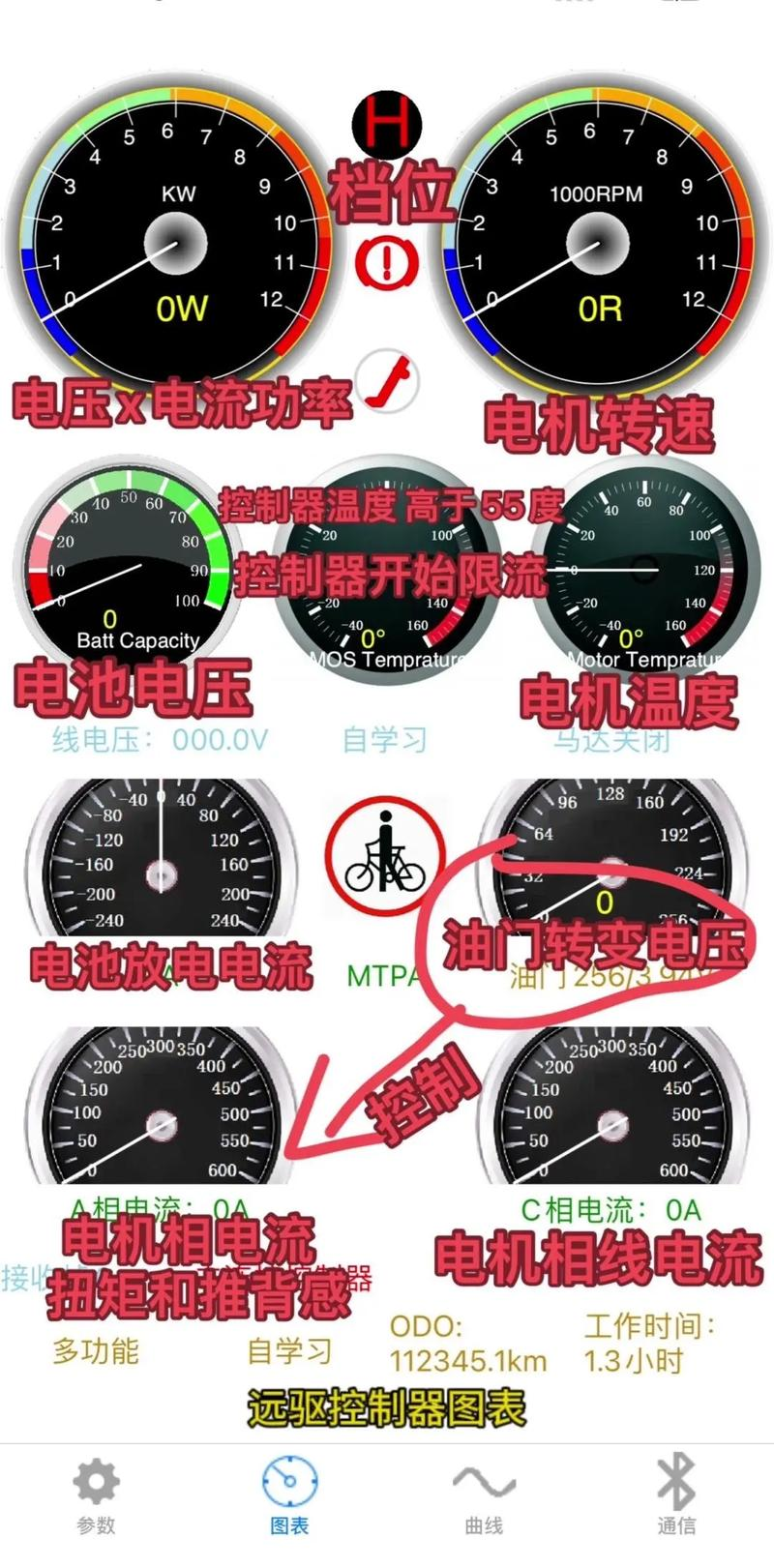
In the vehicle control system, real-time control means that the system needs to continuously monitor the condition of the vehicle and adjust the output to changes. For example, when the driver stepped on the pedal, the vehicle did not begin to respond after the “detection of pedals” but continued to monitor the range of the pedals and adjust the drive output in real time in response to those changes。
In principle, this process is similar to human driving behaviour: the sensory environment makes a judgment about the operation. In the vehicle system, the cycle is continuously completed by the euu. The system captures the input signal through a sensor, calculates and then exports the control instructions to the implementing agency and enters the next cycle according to the new state. Such a control process would be repeated and implemented over an extremely short period of time。
Why do you need a higher time resolution
In practice, time resolution directly affects control accuracy. If vehicle condition is observed on a one-second cycle only, movement changes in the vehicle as a whole can still be observed. However, this timescale is far from adequate for control systems. For example, it usually takes about 100 to 200 milliseconds for a driver to step down the gas door, from light to full. If the system reads the signal in a 100 ms cycle, the data collected will be very rough and it will be difficult to accurately reflect the actual input。
When the sampling cycle is reduced to 10 milliseconds, the system is able to track input changes more closely, thus achieving more smoother control. In a number of complex road conditions, such as rainy days when vehicles pass through well covers or metal surfaces, the wheel can experience short slippages in dozens of milliseconds. If the system is not able to capture these changes in a timely manner, vehicle control may be unstable. Thus, in the partial control scene, the vehicle-borne euu is required to detect the signal in a cycle of 0. 5 ms or even 1 ms, thereby ensuring that the system is able to respond in a timely manner。
Enter microsecond power control
In the field of electrical control, the timescale is further reduced. In the control of the three-way exchange generators, the system usually regulates current output through the pwm (pulse width) mode. In some controls, the pwm frequency can reach 10 khz, which means that the system needs to complete a control cycle of about 100 microseconds。
During this cycle, the system needs to complete multiple steps, including current detection, angle computation, control operation and output signal generation。
When vehicles slide in complex road conditions and re-engage their grounding, the speed of the switch may change in an extremely short period of time. If the control system is not able to update control data in a timely manner, the stability of electrical operation may be affected. Therefore, control software must complete data processing and judgement in an extremely short period of time and adapt control strategies in a timely manner。
How to get control done in 100 microseconds
In order to achieve such a rapid control cycle, it is often difficult to satisfy demand with sequenced procedures alone. In the software design of the vehicle-mounted euu, engineers usually combine the hardware properties of microcontrollers to improve processing efficiency through more sophisticated mission scheduling. For example, the use of a timer to interrupt the trigger sensor for collection and data transmission and the execution of other results-free calculations while awaiting completion of the data. This approach reduces the amount of free time that the procedures generate during the waiting process and allows for more intensive scheduling of computing tasks within the control cycle. Through such a design, the system can complete multiple steps in a very short period of time and ensure the stable operation of the control cycle。
Use "time gap" to improve efficiency
In practical design, engineers also make a more precise breakdown of the control cycle. For example, in a control cycle of about 100 microseconds, the core control algorithm may only take about 60 microseconds to complete. The remaining time could be used for other tasks such as temperature detection, system communication or self-diagnosis。
By rationalizing these tasks, the system can perform more functions over the same time cycle without affecting the core control logic。
Although the time saved on a single occasion was only a few dozen microseconds, it would accumulate as the system continued to operate, thus providing more processing space for the system。
Driving experience changes with small time differentials
In vehicle control systems, seemingly small time differences tend to have a direct impact on driving experience. When the control system is able to respond to changes in vehicle condition in a shorter period of time, the performance of the vehicle will also be more natural when it accelerates, slows down or the road surfaces are accompanied by changes. The continuous optimization of control algorithms and software architecture enables vehicles to operate steadily in complex environments。
Software is becoming an important capability for cars
The role of software in the car as a whole is increasing with the development of motorization and intelligence. The software for the vehicle-borne eu not only requires real-time control, but also continuous optimization in terms of safety, reliability and system synergy。
In the future, as hardware performance increases further and software architecture evolves, the vehicle control system will also be able to achieve a more sophisticated and efficient way of operating. In this process, the fine design of “time” will continue to be one of the key capabilities in the development of vehicle-borne software。
A brief description of the electric company
Electrical assembly is one of the world's most advanced auto parts producers. The united states fortune magazine ranks 325th among the world's 500 largest enterprises. The electrical assembly has been focused on technological innovations such as electricization, combination-aided driving, intelligent networking, addressing the challenges and social issues facing the automobile industry. The two-dimensional code currently being widely applied globally was invented in 1994 and made public free of charge。
In china, the first joint venture was set up in 1994 at a smoke house. Founded in 2003 as an umbrella company in china, electricized (china) investments ltd., there are currently over 30 related enterprises, such as production companies, sales companies and software development companies。