With the development of computer technology, communications technology and control technology, on-site bus technology has become widely used in industrial control systems and is beginning to be applied in the textile industry. This paper presents the rationale for the on-site bus, compares the existing several on-site buses and presents the current situation in the textile industry, both domestically and internationally, based on an analysis of the new features of the development of digital textile production control systems。
Introduction
As our textile industry continues to develop at a rapid pace, modern textile technology will be dominated by electronic information technologies and will be characterized by intelligent production. At present, the development of a system for the control of national textile machinery has focused mostly on automating the performance of the textile process for single-stage equipment, placing the advanced functions of the machine in a single-machine system, while ignoring the networked composition of the system, with the result that the structure of the machine (especially its control system) becomes increasingly complex, making it an “on-island” in the automated system for textile enterprises. Since the beginning of the 1990s, on-site bus technology and control systems based on that technology have attracted considerable attention at home and abroad, becoming a hot spot for automated technology development worldwide, using a combination of microprocessor technology, network technology, communication technology and automated control technology, to place microprocessors in on-site self-control equipment, and to equip the equipment with digital computing and digital communication capabilities, improving not only the accuracy of signal measurement, control and transmission, but also creating conditions for their remote transmission。
In the transformation of the textile industry from traditional to modern industries, on-site bus-based control technologies provide opportunities for the decentralization, networking and intelligent development of textile industry control systems. This paper provides a framework model for a digital textile production system based on field bus control techniques by comparing the features and applications of several of the more common field bus today。
2. Rationale of the field bus
The on-site bus is the interface between today's 3c (computer, communication, control) technological development and the technological development of process control, automated instrumentation and computer networks. It is a central expression of the field of control of information technology, network technology development and a corollary of the extension of information technology and network technology to the field。
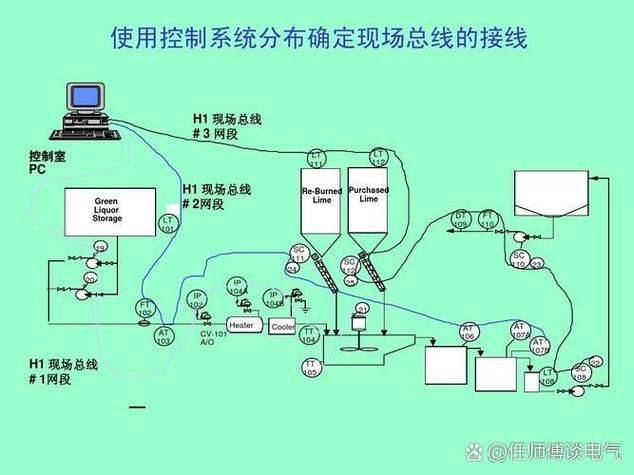
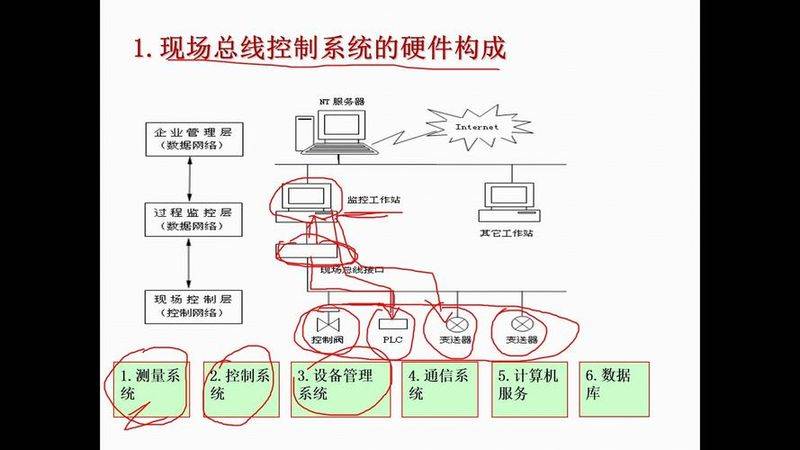
According to iec, internatioThe standard and field bus foundation (ff, fieldbus foundation) is defined as a digital, two-way, multi-branch communication network linking intelligent on-site equipment and automated systems. The on-site bus technology places specialized microprocessors into traditional measurement control meters, enabling them to have digital computational and digital communication capabilities and to become network nodes capable of carrying out certain detection, control and communication tasks independently. Network systems that connect multiple measurement control instruments, computers, etc. To nodes through common double-crowding; use open, standardized communication protocols, between multiple micro-mechanical monitoring and control devices located at production control sites, and between field instrumentation and remote computers used for monitoring and management, and achieve data transmission and information sharing to form automated control systems adapted to actual needs。
The on-site bus is primarily process-oriented and transmits control information in addition to direct information on digital and analogue signals, and network-exchange data units are frame (f)I'm sorry. Distributed coNetbus coNtrol systems, fcs has the advantage of high reliability and better safety, interchangeability and interoperability, openness and fragmentation。
In summary, the on-site bus is a real-time control communication network that connects the lowest level of automation on-site controllers and on-site smart instrument equipment and follows all or part of the communication protocols of the iso/osi open-system reference model。
3. Common on-site bus technologies
Since the 1980s, several industrial on-site bus and on-site communication agreements have been launched by leading international companies, and are currently prevalent mainly in ff (fildbus foundation field bus), profibus (process fieldbus), and can (co)Ntroller area network controller lan, lonworks (local operation network local operator network), worldfip (factory establishment organization protocol world plant instrument protocol), etc. Its main technical differences and applications are as follows:
3. 1 ff live bus
The foundation field bus is based on the iso/osi open system interface model, taking the physical layer, the data link layer, the application layer to the ff communication model, and adding the user layer to the application layer. Two communication rates, low-speed h1 and high-speed h2 ff. H1 has a transmission rate of 1. 25 kbit/s, with a communication distance of up to 1900 m (extended by repeater) to support the power supply of the bus and the essentially safe riot-control environment. H2 has a transmission rate of 1m and 2. 5kbit/s, with a communication distance of 750m and 500m, respectively. Physical transmission media can support double winch, fibre-optic cable and wireless launch. The protocol meets iec standard 11582 and the transmission signal from the physical medium is coded in manchester. The main applications are in the areas of process automation, such as chemicals, electricity, oil fields and wastewater treatment。
3. 2 profibus field bus
The profibus series consists of three compatible components: profibus-dp, profibus-fms and profibus-pa. Profibus uses the physical layer of the osi model, the data chain layer, from which it forms a subset of the first part of its standard. Profibus has a transmission rate of 9. 6 kbit/s ~12 mbit/s, with a maximum transmission distance of 100 m at 12 mbit/s, and 400 m at 1. 5 mbit/s, with an available repeater extending to 10 km. Its transmission media may be double-clause and fibre-optic cables. The main areas of application are: dp-type applications suitable for processing automation, such as pharmaceuticals, cement, food, electricity, power generation, transmission and distribution; fms for textile, building automation, programmable controllers, low-pressure switches, etc.; and pa-type bus types for process automation。
3. 3 can field bus
The network design of can uses a three-tiered structure model that meets the iso/osi network standard model: the physical layer, the data link layer and the application layer. The physical layer and the network layer function are performed by the can interface, while the application layer function is performed by the processor. Communications are highly reliable, real-time and flexible; short-framed structures with short transmission times and resistance to interference; and nodes with different priorities can meet different real-time requirements. Its transmission medium can be used for double winch, coaxial cables or fibres, with a communication rate of up to 1 mbit/s (40m) and a direct transmission distance of up to 10 km (5kbit/s). The main areas of application are automobile manufacturing, robotics, hydraulic systems, decentralized i/o, tool beds, medical devices。
3. 4 lonworks field bus
Lonworks uses a seven-layer protocol structure similar to the osi reference model, and the core of the lonworks technology is the neuron chip with communication and control capabilities. The neuron chip achieves the full lonworks lontalk communication protocol, which allows reciprocal communication between nodes. Lonworks has a communication rate of 78k bit/s ~1. 25m bit/s, which supports a variety of physical media, including double winch, fibre optics, coaxial cables, electrical wire-carrying and wireless communications, and supports a variety of top-up structures, with a flexible network. The main areas of application are industrial control, building automation, data collection, scada systems, etc., which have excellent performance in forming distributed monitoring networks。
3. 5 worldfip field bus
Worldfip field bus structure is divided into three tiers of process, control and monitoring, with protocols consisting of physical layers, data links and application layers. It has a communication rate of 31. 25 k bit/s, 1m bit/s, 2. 5m bit/s and 25m bit/s. The transmission medium uses both winch and fibre-optic shielding. It meets the needs of users and is suitable for central, decentralized and main stations/ various types of application structures, such as station types. A single worldfip bus meets the needs of process controls, plant manufacturing processes and various drivers. The main areas of application are electricity industry, railways, transport, industrial control and buildings。
4. Textile production control system based on field bus technology
The information construction of the textile industry will be the focus of the pursuit and construction of textile factories in the coming years, and a digital textile production system is an indispensable foundation. It would improve the overall management of textile plants, and would have a direct and visible impact on the technological, quality, economic and service-driven progress of the plants。
Digital textile machinery uses modern, advanced control techniques: cpu-centred controllers, new power-electronic-based driving technologies, networks represented by on-site bus technology and high-speed data communication technologies. Real-time accurate data collection and high-speed transmission, improved distribution, on-site and non-disturbing performance, automation of production processes, intellectualization, completion of the integration of textile machinery with modern advanced control techniques, and laying a solid foundation for the computerization of textile enterprises from the level of equipment。