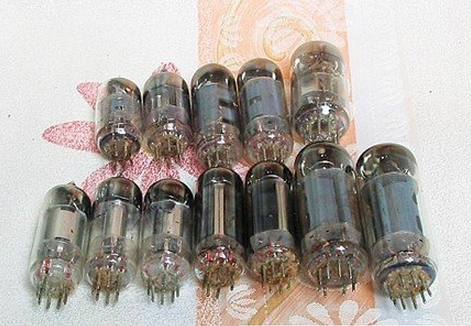
The electrical tubes are broadly divided into the following types:
1, diodes
The metal plate (cathode), the heating source (lightwire), is encapsulated in a suitable shell, i. E. The glass (or metal, ceramics) in which it is said to be, and is drawn into a near vacuum, the electro-diode tube。
When it reaches 800 degrees celsius or more, a heat-heated piece of metal forms an electron acceleration so that it can escape from their attraction and escape to space outside the metal surface. Adding a positive voltage of between a dozen and tens of thousands of volts in this space would attract these electrons to the positive voltage poles and generate circuital currents through the power supply。
It should be noted that, as a result of manufacturing processes, impurity attachments and the material itself, there is a trace residual gas in the tube, and all the finished tubes are filled with an inhalant。
Inhalants typically use nitrogen-blended distilled aluminum or aluminum. Currently, except for special uses (such as uhf and high pressure flow), for ease of use and increased consistency, both two diodes, or dipolar tripolars, or tripolares and dipolar pentapolars, are co-located in one tube shell, which is a composite tube。
2, tripolar
The structure of the diodes determines the nature of its single-directional conductivity, which, when added to the cathodes and the anodes by an polar point with an appropriate voltage, alters the surface level of the cathodes, thus affecting the number of the cathode thermal electrons flying to the anodes, which is the modem pole. It is usually made of metal wire, which is also called a fence。
This is what some friends call "valve function." it follows from this that when the signal voltage is added as amplified between the “breath--cathode” because its change is bound to lead to a corresponding change in the anode current, and because the arctic voltage is much higher than the cathode, the slight voltage change in the cathode can also result in a corresponding tens to hundreds of times the voltage change in the anode, which is the rationale for the tripolar magnification of the voltage signal。
Three, multi-barrel tubes
Common multi-barrel tubes are four polar, five polar and seven polar tubes。
Five- and seven-polar tubes, the four poles are special and are now in the commercial field, and more than half of the machines are used for this, which is later。
The structure of the 1-5 tubes is similar to that of the triodes, unlike the two more fenced poles than the triodes, i. E., the curtain fence and the inhibition fence。
In general applications, the direct current voltage on the fence is equivalent to the anode, which helps the anodes to attract together the electrons that pass through the fence to speed up their flight to the anode, so that, in the case of the electrode of the homogeneity, the anode current with a curtain tube is larger than the triodes without an anode. In addition, the barrier also acts as a shield to improve the stability of circuits。
Before understanding the effect of inhibiting the fence, say a phenomenon: second electrons. And while the filament heats the cathode, the anode heats it, so when the electrons that fly from the cathode crash into the anode, a part of the electron comes from the polar plate of the anode, which is the second electron。
In practical application, the inhibition fence is bound to the cathode. So, some tubes are connected internally) and the purpose of increasing the inhibition of the fence is to use the barbed-up and cathode level to suppress the secondary electrons in order to avoid falling into the fence. In this state, the secondary electrons will be re-attractive to the anode and will fly again to the anode。
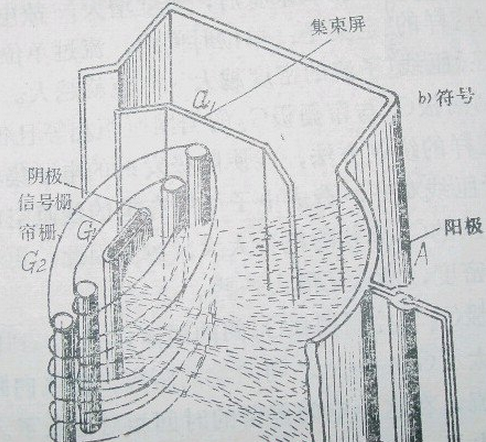
2 the structure of the heptapol tube is similar to that of the pentapolar tube, but it has five fences, which are generally applied in the radio-receiving variant circuit (and the audio amplification circuit is not relevant, not mentioned). Turn around and say quadros。
In fact, the pure meaning of the quadratic tube has only emerged as a certification tube in the history of the development of the electronic tube, and it is not operational (this is another topic). Let me now turn to the above-mentioned item, which is currently used by more than half of the aircraft in the commercial field — the beaming of the tetrapolar tube。
The 3-bed quadros are all power tubes, which are required to produce as large anode current as possible. The beaming quadodes make special arrangements in the structure of the electrodes to enable them to generate a larger anode current than the other power tubes, while maintaining a small difference in their size。
So, how do you identify the type of electronic tube?
As a rule, the electrophone has a type of bass, which is clear from the manual. Nationally produced electronic tubes are graded, with m, j, q, ty, t, etc. (no ranking, possibly one level). The electronic tubes, because of their high capacity, size and reliability, are currently used only for acoustic applications, with the exception of antique radio stations and antique warplanes。
In fact, the symmetrical methods for transistor triodes and the symmetrical methods for electronic tubes are consistent. And by volume, the big one is usually a big one, and the small one is a small one。
But it's important to note that the transistor does not seem to have a 4-level tube, a 5-level tube, etc. The reason for this is that electronic tubes, because they are subject to volume and power consumption, are not capable of doing too much power, so they can only increase power by magnifying accuracy at sacrifice (incorrection). A small size of the transistor can achieve great power, so there is no need for a large deformity level 4。
The sound of the electron tube, which lasts forever on the sound, is truly remarkable. I don't make any other mistakes. I can only say that the sound is very different, and i've heard it。