Marginal utility
So far, we have only discussed cases where consumer utility is assumed to increase as consumption increases. While we may be less sure that the effect of eating more fish increases when eating fish, in cases where some consumption can be purchased in united states dollars, we can simply apply these assumptions. What is more of our concern, therefore, the ratio of consumer utility to consumption growth? In most economic theories, we assume that consumers are going through a process of marginal utility erosion, i. E., more consumption and less effectiveness。
We continue to follow the assumptions of case 1. Figure 3. 1 represents the utility function of mario, and figure 3. 2 represents his marginal utility function, both of which are about his consumption. As can be seen from the figure, mario's consumption effectiveness increases with consumption, i. E., marginal consumption effectiveness decreases with consumption。
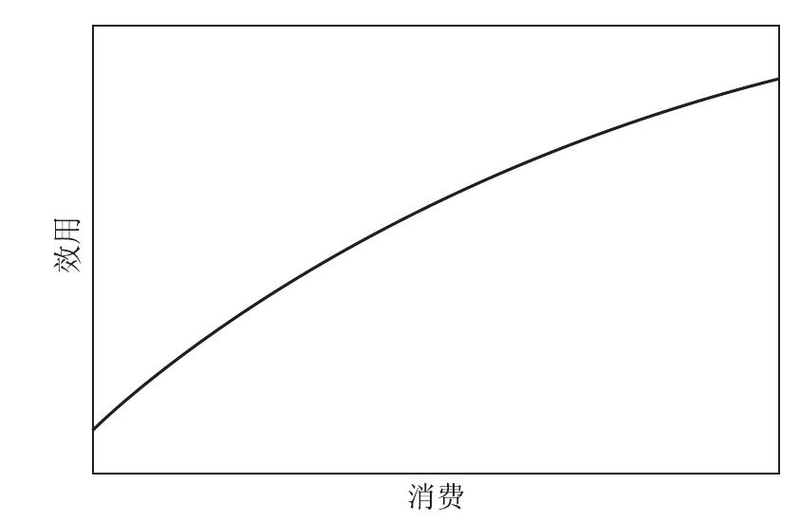
Figure 3. 1 performance function of mario
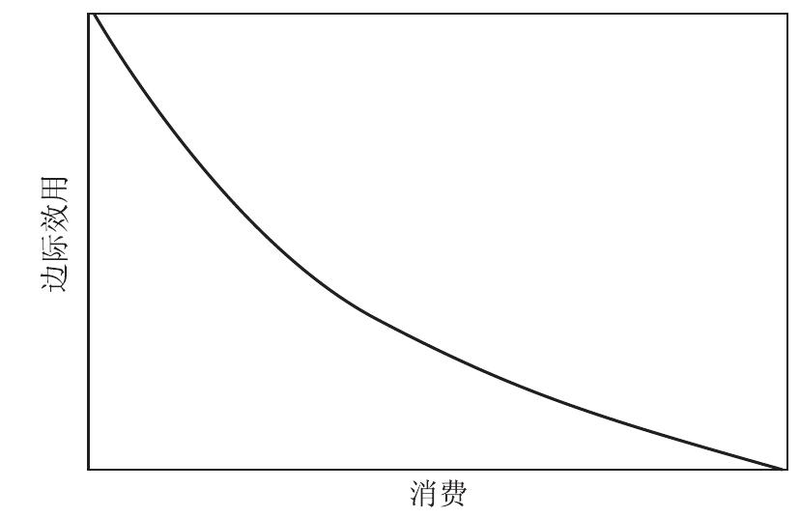
Figure 3. 2 marginal utility function of mario
It was noted that the rate of decline in the marginal utility of mario was also decreasing as consumption increased. The marginal utility function is represented in the figure by a curve tilting downward, and the more consumption moves to the right (increased consumption), the more flat it becomes. Readers may think that the marginal utility function may be a complex function with many parameters. This is not the case, however, as we see from figure 3. 3, which shows the relationship between the logarithmic and the marginal utility of mario's consumption (e. G. In log/log)。
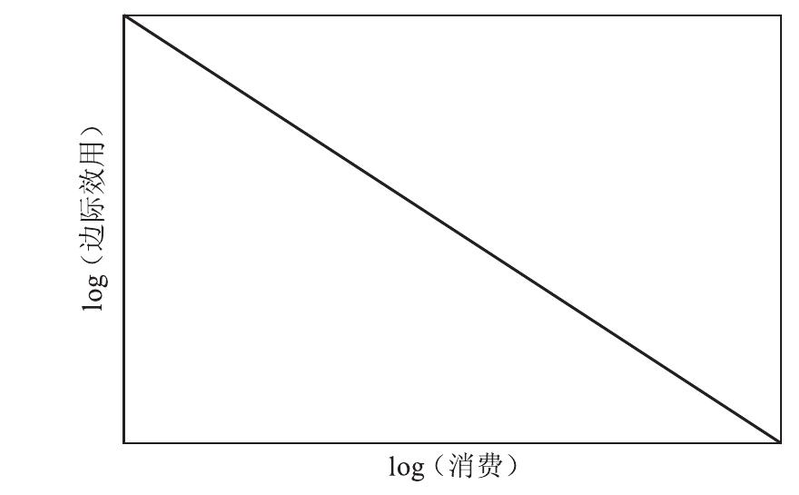
Figure 3. 3 marginal utility logarithmic function of mario
In figure 3. 3, mario's utility curve is a straight line. This line can be expressed by two parameters — amplitude (a) and slope (b). Here are some of the most recent examples:
In(m)=a-bln(x)
Or equivalent to:
M=ax-b
For mario, the curve is tilted at -1. 5. Looking back, we assume that mario's risk aversion is 1. 5. Here, the meaning of these figures can be clarified: it is assumed that mario has a marginal utility function that is graphically expressed as a downward curve (as shown in figure 3. 3) and that the curve is tilted -1. 5。
More precisely, the absolute value of the slope at a point in which a person's marginal utility function (expressed by a consumption logarithmic of a cross-axis, a marginal function logarithmic of a vertical axis) is his relative risk aversion at that point. Mario's analysis shows a constant relative risk aversionFunction. Is that the same for hue? His marginal utility curve will be steeper because of the slope-2. 5. Later, we will see the specifics of such utility functions。
When both variables are presented in numerical form and depicted as curves, economists define the slope of the curve as follows: “in economics, elasticity is the ratio between the incremental percentage of one variable and the incremental percentage of the other that results from it. In accordance with the preceding definition, elasticity is generally expressed as positive (e. G. Absolute value)
Therefore, risk aversion (or risk avoidance factor) is the elasticity of marginality and corresponding consumption. For investors with crra functions, the elastic values are equal at any level of consumption. When mario increased consumption by 1 per cent, its marginal utility decreased by about 1. 5 percentage points; similarly, hue fell by 2. 5 percentage points. (the real figures may vary slightly, as we measure elasticity by the slope of a point on the curve, rather than by the straight slope of two points on the curve
Broadly speaking, investors with crra functions are more focused on the ratio of marginal effect changes than on the absolute amount of change. Such behaviour was also found in the research of other scholars. For example, stevens (1957) describes the degree of change in people's feelings associated with the intensity of the stimulus and gives a formula for relatively marginality elasticity。
Different types of marginal utility curves will emerge after this chapter. Before that, we turned to the study of the relationship between marginal utility and trading behaviour, the most important of which was the various securities called status payments。