First, we break our mathematical fears, second, we master the basics of brain science, third, we learn from feynman, and fourth, we build a chain of logic around each other. When we get to the fifth level, we're going to solve the most painful problems for all: memorylessness, quick forgetting, cardboarding, blankness at the examination。
The vast majority of people have a fatal misunderstanding about the memory of mathematics: math is “back-to-back” and then it's a dead-end formula, theorem, the step, the answer, and it's painful, it's too fast to forget. In terms of the underlying logic of brain science and cognitive science, mathematics is not a “memory-type discipline” at all, but ** “understanding a re-constructive-type discipline” — real mathematical memory is never imposed, but it is the structure, images, causality, spacing, output that automatically reminds the brain, long-term memory, ready to use **。
The core mission at this level is to put the dead to rest and to build a deep mathematical memory system that is fully responsive to the brain, zero pain, efficient and robust throughout life. This set of memories does not involve genres or geniuses, but relies only on globally recognized scientific principles: hiatus, image anchoring, logical coding, synapse reinforcement, and wrong solidification。
After reading this article, you will say a complete farewell to the vicious circle of “forgetting backs and forgetting backs” and achieve: the formula is not dead, theorem is not dead, steps are not dead, understanding is in place and memories are in place; structures are in place, and memories are natural。
One, 90% of the population can't remember. It's not a bad memory. It's a complete anti-brain
You must have experienced these crashes:
(b) to forget behind the formula
Theoretically, it's blurry for two days
If the case is taken, not the number
After the chapter, the whole story is forgotten。
And then you label yourself: i have bad memory, i'm not good at math, i can't remember anything。
This is the most ridiculous self-denial in the world。
Brain science has long come to the conclusion that, as long as the brain has no physical damage, the memory potential of all people is almost identical. You can't remember math for three fundamental reasons:
You're remembering "isolated debris" and the brain hates isolated information
The brain's memory rules are simple: associated retention, unconnected throwing。
If you go back as an isolated symbol, the brain will be judged as "unuseful information" and thrown out in 24 hours。
The superiors, on the other hand, remember the logical chain, the relationship, the structure, the image, and the brain is judged to be “significant and useful information” that is automatically preserved over the long term。
You're doing a hit-and-death thing that only creates short-term memories, not even long-term memories
Staying up all night, reading one-time hysteria and repeating it 10 times ... These acts can only activate the short-term cache of the hippos and be lost at sleep。
The only way long-term memory can be formed is by spacing, retrieving, multi-species。
You only have input, no output, no signal to remember
There's a cruel truth in the brain: passive input can't remember. Active extraction can only remember。
You read, listen and copy, you enter
You're the output。
Without output, the brain does not mark knowledge as “must be preserved”。
In summary:
You can't remember math. You're doing math in the dumbest, most anti-brain, least effective way。
Ii. The first principle of deep mathematical memory: memory is not "put in," but "connect out."
In the second level of brain science, we said that the brain is not a flash drive, it's a neurons network。
The essence of memory is not to “put knowledge somewhere in the brain”, but to connect new knowledge to a stable synapse of old knowledge, images, emotions, scenes, logic。
The more connected, the stronger the memory
The more you connect, the faster you remember
The clearer the connection, the harder it is to forget
The highest level of mathematical memory:
Remember not — remember not by deliberately recited, but by understanding, structure, image, extrapolation。
You remember, "eat with chopsticks." you need to die
No, because you use it every day, you have scenes, you have moves, you have results。
The same goes for mathematical memory: much more, much more, much more, much more, much more。
This is the core of the five levels of knowledge:
All memory methods are structured around “enhanced, simplified, fixed, duplicated”。
Iii. Five scientific codes for deep memory of mathematics (acknowledged by global academia, life-long effectiveness)
I give you the five most authoritative, mathematical, simplest memory laws, which are the bottom lines of all memory methods, students, engineers, self-students, all of them。
Rule number one: intersectional repetition - the only ultimate weapon against oblivion
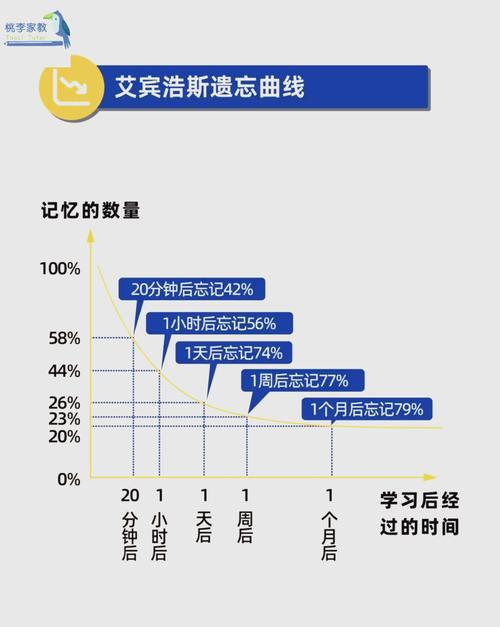
In 1885, german psychologist ebinhos found:
After learning, people begin to forget, quickly and slowly。
The first day forgets 60 per cent, the second day forgets 75 per cent and one week forgets less than 10 per cent。
However, once recalled at a critical forgotten point, memory will be significantly strengthened; three reviews will essentially form a long-term memory。
The three most critical points of mathematical memory:
1. Ten minutes after learning (quick combing)
2. One day after learning (suggest + oral)
3. Seven days after learning (problem + disc)

These three retrospects cost you 100 times。
Rule number two: the law of anchoring of images: 60,000 times faster than the text of the brain
Abstract symbols are the hardest to remember, and images, scenes, actions, shapes are the best。
All abstract things in mathematics can be translated into images:
-land = slope of the cut, slope of the slope
- accumulated = area, pile, cumulative
- gradient = steepest arrow head
- scatter = spray, suck, flow
- microspecies = lift curve, charge
As soon as the images were formed, the memory was solid。
Rule number three: the logical code -- something that causes and causes, the brain never loses
We talked about the logical chain at level four:
Define formulae application for reasoning
As long as this chain exists, you don't need to remember the formula because it's available。
The brain is 20 times more powerful than the debris content in terms of “reasonable, reasoned, sequenced” content。
Rule iv: active extraction - one output, more than ten inputs
There are two kinds of memories:
Enter memory (weak): reading, listening, copying
Extracting memory (strength): silently writing, leading, speaking, making questions
Scientific experiments attest to:
Active extraction, memory effect = passive input 12 times。
That is why:
I can tell you that
I can't forget it
Rule five: the law of wrong reinforcement -- the memory of wrong is three times stronger than it is
The brain is extremely sensitive to the signals of "mistake, pain, shell"。
You're making the wrong question, you're jamming the wrong idea, you're talking about the wrong concept, and the brain automatically marks it: it's important here, remember。
So the master is not afraid of mistakes. Mistakes are the strongest memory hardener。
Level 5 core: five steps of mathematical depth memory (zero pain, immortality, direct landing)
I put five scientific laws together for anyone to use immediately
Mathematically deep memory five steps。
Formulas, theorems, concepts, problem-solving steps, all applicable。
Step 1: understanding anchors -- no understanding, no memory
This is the first iron rule of mathematical memory。
No sense, no source, no use, no beginnings。
Three words:
1. What does it solve
Where did it come from
3. What is it for
Understand = build the first connection point
Understanding is not in place and memory is wasted。
Step two: image conversion -- transforming the symbol into a picture in the brain
No words. Close your eyes and make images:
- see the limits
- sees the calibrations, poachs, slices, straight generations. Music
- i see points
- see the spin, the vortex, the rotation axis

- see a differential equation, a spiral curve
The clearer the image, the stronger the memory。
Step 3: logical chain - the logical chain that hangs the knowledge point at the fourth level let's go
Never write down a formula alone。
Ask yourself:
- what's in front of it
- what's behind it
- which chapter, which section, which system
Take the goss formula, for example:
♪ newton-lebnitz ♪ ♪ 2 wing green ♪ 3 wingos ♪
One chain, one = one string。
Step 4: spacing extraction - by scientific point of time, active memory
Strict implementation of the three points of time, without delay, without surprise or death:
1. The same night: close the book, take an oral review of the concept + extrapolation
2. Day two: no information, silent core formula or key steps
3. One week later: a corresponding question to be tested for memory
Three extractions, permanent memory。
Step 5: scene application -- once, 10 times
The ultimate reinforcement of memory: use it。
- labour control party: put the index = error rate, points = error tired. Jack
- electrical party: charge the differential equation = rc circuit
- mechanical party: put the second-stage equation = spring to block the vibration
Once, the brain will always remember。
V. Fights: to remember the "better through through through through throughs"
I'll give you the most practical demonstration, and the fans will look at it and use it。
1. Memory formula: not back-to-back, by "producing + images"
Example: sin(x) wizard = cos(x)
General memory: dead back
Deep memory:
- image: change in sine wave slope
- extrapolation: guide definition + and angle formula + limit
- one sentence: the slope is flat, the slope is negative, it's cosine
You'll never forget。
Memory theorem: not back-to-back, but logic + causality
Example: lobida law
Deep memory:
- question: how does type 0/0 count
- logic: look at the ratio of the rate of change (the ratio of the guide)
- conditions: 0/0 or ∞/∞
- image: two curves approaching point zero
The logic is clear. The theorem remembers it。
Memory resolution steps: not back-to-back, based on “model + set”
Example: delineation equation
Deep memory:
- model: first/second
- step: one-on-one, one-on-one, one-on-one
- scene: rc circuits, temperature control, electric machines
Model one is built, and steps are automatic。
Six. Five bad habits that hurt the most in math memory
Ninety per cent of the population can't remember. It's not the method. It's the habit。
1. Read the answers while remembering
I can see it
Cover the answer and write it。
2. Copying without thinking
Copying is the lowest level of input and hardly produces memory。
The pen must be extrapolated, written in silence, combed and not copied。
“remember once” in pursuit
Contrary to the laws of the brain, it only brings anxiety and frustration。
Memory is a process of repeated extraction, not a one-time task。
Never look back and throw it away
= white school
Not at intervals, but in oblivion。
5. Fear of error and avoidance of error
Wrong question is memory gold
One mistake, one lifetime; one wrong question, one wrong question。
Vii. Exclusive memory programmes for industrial/electric/automated fans
Most of your fans are technologists, and i give them the most efficient mathematical memory:
1. Formula = engineering physics
Align = slow change
Accumulated = cumulative total
Rational equation = system dynamics
Gradient = best direction
Scatter/scatter = source and rotation of the field
2. Memory = working scene
After school, tie up with plc, circuits, electrics, pid
When you think about work, you think about math
The more familiar the scene, the harder the memory
3. Weekly re-engineering of works
Five minutes recall: which device, which system, which parameter is the math for this week
It's an engineering anchor
Eight, five levels of cognitive summary: three words in the bones
First sentence
Mathematic memory is not on the back, but on connections, on images, on logic, on spacing, on output, the deeper you understand, the more you remember。
Second sentence
Spacing is the ultimate weapon against oblivion, with one active export and more than 10 passive inputs。
Third sentence
It's not a poor memory, it's a counter-brain; it's a scientific memory that mathematics can remember and remember forever。
This concluding remarks
Congratulations on the completion of the fifth level of knowledge of mathematics learning way: deep memory。
At this level, you've completely moved away from the "dying hard back" learning model, into a state of scientific, relaxed, efficient and solid hand-held memory. You are no longer afraid to remember, no longer afraid to forget, no longer need to spend the night in pain, and you learn to stay in your mind like common sense。
Top five: broken brain science, deep memory of feynman's logical chain
You've completed all the bottom systems of math studies。
Next level, we're going to level six
It's an efficient solution - less choreography, more precision, one piece at a time
I'll teach you to say goodbye, to use the least, to improve your ability to solve the problem, so that you will never be tired, confused and tested。