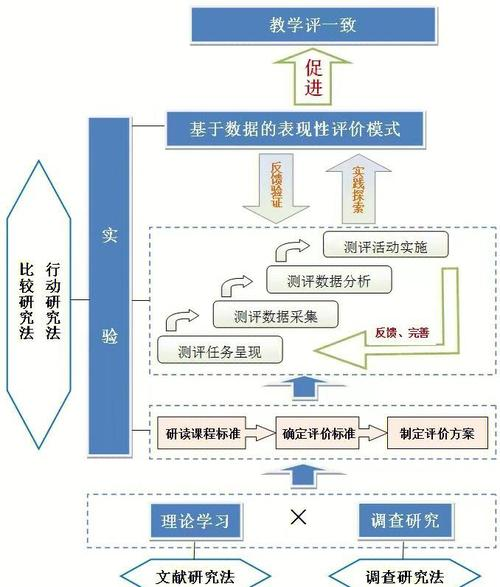
In recent years, the country's higher education has faced new challenges and opportunities as a result of socio-economic development and transformation. In this context, the maple bridge experience, as a model of social governance, has produced significant results in grass-roots practice and has been gradually introduced into higher education to promote school harmony and improve the quality of education. However, much of the existing research has focused on theoretical or case-by-case analysis of the “millennium bridge experience”, with relatively few studies on its application mechanisms in higher education, implementation pathways and, in particular, lack of systematic and in-depth exploration. The selection of the theme “standing through and developing the institutional mechanisms of the maple bridge experience of the new era” as a research topic has not only helped to enrich and refine the theoretical system of maple bridge experience, but has also provided universities with an effective governance tool for the overall development of students and the development of a sense of social responsibility. In addition, the results of research on the subject could provide useful lessons for other educational institutions and for society as a whole, contributing to a more harmonious social environment. The study of values is aimed at furthering the applicability and innovation of the maple bridge experience in the field of higher education through a combination of theory and practice, and building a system of tertiary governance adapted to the requirements of the new era. This will be important in raising the level of management of higher education institutions and enhancing the cohesion of teachers and students, while also contributing wisdom and strength to the nation's efforts to train socialist builders and successors for the full development of moral and intellectual well-being. Ii. Research objectives, target audiences, content: 1. Research objectives: to explore and summarize models for the effective application of the maple bridge experience in the governance of universities; - to develop a framework for the implementation of the maple bridge experience in universities that is appropriate to our national context; - to develop specific policy recommendations to guide universities in better implementing the maple bridge experience. The subject of the study will target different types and levels of tertiary education in the country, focusing on problems encountered in the implementation of the maple bridge experience and strategies for addressing them, while paying attention to the actual perceptions and feedback of groups such as students and teachers. Research content - analysis of the core concept of the maple bridge experience and its application in higher education; - study of the status and effectiveness of implementing the maple bridge experience in different tertiary institutions; - study of how the maple bridge experience can be integrated into the day-to-day management and teaching activities of tertiary institutions; - exploration of the role of the maple bridge experience in promoting communication coordination within tertiary institutions, conflict resolution, etc.; - stocktaking of successful cases and distillation of replicable empirical practices. The subject of research thinking, research methodology, innovation, research thinking will provide a comprehensive analysis of the application of the maple bridge experience in higher education, using a variety of methods, such as literature analysis, field research and case studies, both theoretical and practical. First, the results of relevant research at home and abroad are captured through literature reviews; secondly, in-depth interviews and questionnaires are selected from a number of representative institutions of higher learning; and finally, concrete operational programmes and improvements are proposed in conjunction with data analysis. Research methodology - documentation analysis: collection of relevant information on the maple bridge experience and governance of universities, compilation of research findings and direction of research. - field research methods: in-situ observation, discussion and access to first-hand information. - case study approach: select typical higher education cases and in-depth analysis of their success stories and problems. Innovativeness - theoretical innovation: an attempt to bring together the maple bridge experience with modern theory of higher education management to present new theoretical perspectives. - methodological innovation: using interdisciplinary research methods, such as psychology, sociology, etc., to broaden the scope of research. - application of innovations: based on research findings, a practical and simple programme for the implementation of the maple bridge experience in universities. The members of the research and research team have a rich educational and scientific background and a long-term interest in the maple bridge experience and its application in all areas of society. A large amount of documentation had been accumulated in the previous period and good cooperation had been established with a number of institutions of higher learning, which had laid a solid foundation for the successful implementation of the topic. Guaranteed conditions - financial support: request funding from the national fund for social welfare or other relevant projects to ensure adequate funding for research. - technical support: use of modern information technology tools such as big data and cloud computing to improve data processing capacity and research efficiency. - staffing: formation of research groups with senior professors and young scholars, working together to ensure the quality of research. 3. Research step - phase i (november 2024-2025): complete the literature review and define the research framework. - phase ii (march-june 2025): field research and collection of raw data. - phase iii (july-september 2025): data analysis, preparation of the first draft of the study. - phase iv (october-december 2025): revision of the report, organization of expert reviews and finalization. The above is the illustration of the design of the topic “study on institutional mechanisms for the continuation and development of the new era of the `little bridge experience' in universities”. It is hoped that these will provide you with valuable information. The design of the subject validates the basic thinking, research methods, technical routes and implementation steps of the study of the subject of the general template, and the basic procedures for the study of the subject of education and scientific research. (i) the subject of the study follows the logic of the study “theoretical studies—field studies—quantitative analyses—case studies—programming” and, on the basis of the study of relevant literature, begins with a study of the current state of the country's problems and existing models, explores the characteristics of the topic and analyses its problems and causes, thus improving the quality of education in the country and its own development by building new mechanisms based on the experience of school cooperation in developed countries. (ii) in the course of the selection and study of the subject, a wide range of relevant research literature, policy documents and statistical information are collected from the national and international levels, including through the china information network, the mangang data network, the superweeks network and some government departments ' websites, school libraries, etc., in order to gain insight into the current state of theoretical research and practical exploration of the subject, to determine the main directions of the study, the main areas of challenge to be overcome and to seek innovation based on the research and practice already in place. A comparative study is used to compare the current state, patterns, problems and factors affecting the development of the subject at home and abroad, to analyse the best practices of developed countries and to take advantage of them and to propose possible responses to the topic. In the course of the study, experts interviewed heads of schools and relevant line departments, conducted face-to-face interviews, developed basic views on the content of the subject, collected basic practices regarding problems in the study of the subject, analysed the main problems and underlying reasons for the content of the study. In the course of the study of the main problems, the questionnaire was designed on the basis of the “questionnaire star” platform, to provide online surveys for school administrators and for front-line teachers, business managers, etc., and to summarize the problems and analyse the causes based on the survey results. 5. The integrated evaluation method uses the integrated evaluation method to calculate the effects of the subject. Standardize raw data that are not comparable first at the same level of quantity, then multiply them with the indicator system and calculate them step by step. 6. On the basis of relevant theoretical studies and basic situation analyses, the law on empirical research is based on the school's case studies and analyses its useful research in recent years in furthering the subject, as well as on the main approaches to the establishment of mechanisms for its realization, which effectively validates the findings of the study and provides useful lessons for the high-quality development of institutions of higher education. (iii) technical route notes: the following are templates for generic technology routes adapted to various research topics. Technical course template i: this topic will be carried out in a purposeful and systematic manner along the lines of “information gathering — pre-survey — validation of the subject — development of the programme — practical research — analytical summary — preparation of the report — writing of the paper — request for closure”. Technical course template ii: topical validation -- pre-research -- identification of the theme -- development of the plan -- assumptions, modelling -- data acquisition, data analysis -- completion of the paper, report -- collection of ideas and refinement of results. Technical course template iii: pre-researches (bibliography, research, schools) - dynamic planning (cleaning of relationships, clearing of ideas) - validation of topics (theory, basis of practice) - outline of topics (identifying content, building framework) - preparation of topics (selection of people, decomposition of tasks) - implementation of topics (formulation of questionnaires, interviews, outline) - adaptation of phases (reflection of issues, adjustment of ideas) - orientation studies (focusing of issues, breaking bottlenecks) - summary of phases (exchange of experiences, innovation of arguments) - • validation arguments (induced, widely documented) — response advice (systemic safeguards, proactive adaptation) — generation of reports — extension of application。(iv) phase i of the implementation process (24 months): a research preparation phase (three months)1 to follow a problem-oriented approach, in the light of the practical aspects of the work carried out and to determine the direction of the study;2 a research programme to be developed, the division of labour and the organization of the declaration of topics;3 theoretical studies, the preparation of an introductory report and the timely organization of the issues;4 collection of documentation, analysis of the status of research and refinement of the study steps. Phase ii: research phase of the topic (6 months),1 design of an interview outline, consultation with experts in the industry;2 development of research programmes and questionnaires;3 use of web-based tools to broaden the scope of research;4 analysis of research materials and preparation of research reports. Phase iii: research and analysis phase (9 months), analysis of sample studies and statistical research data; 2, compilation of research materials and organization of research workshops; 3, preparation of analytical reports and publication of research papers; 4, preparation of a summary of the phase for a mid-term examination; 5, invitation of peer experts and organization of academic seminars. Phase iv: declaration closure phase (6 months), integrated theoretical analysis and preparation of studies; 2: preparation of closing reports and binding of materials; 3: preparation of electronic files for cataloguing; 4: organizational review and acceptance for identification of results; 5: compilation of research materials and declaration of project conclusions; 6: sharing of research results for dissemination. The first basic procedure for the study of the subject of educational and scientific research is the identification of the subject of research, i. E. The search for the subject of study in the teaching practice of education; 2. The detailed definition and clarification of the subject matter; and 3. The definition of the objectives and specific issues of the study. Ii. General documentation: 1. Search for relevant literature; 2. Read and collate the literature; 3. Summary and analysis; 4. Presentation of the literature to provide theoretical and empirical support for research. Iii. Design research programmes: 1. Identification of research methodologies; 2. Designing research processes; 3. Development of data collection and analysis plans; 4. Development of ethical review plans. Data collection and analysis 1. Data collection according to research design; 2. Data analysis using appropriate data analysis methods; 3. Interpretation of data analysis results to answer research questions. A classic example of the design and validation of research topics (three modified technology road maps are attached to the document): a reference technology route for research on the subject (3) (with direct modifications) a generic technology road map, figure 2, a reference technology road map 3 technology route