


The unique cold climate in the north-east, which is the country's home area of high-quality rice production, (average annual low temperatures, slow spring returns and frequent winter runoff), imposes severe demands on rice seedlings. The quality of seedlings directly determines the quality of seedlings, the rate of transmission and the capacity for subsequent separation, thus affecting yields and quality. Therefore, each technical node must be precisely controlled in accordance with the principles of “sowning, scientific control and breeding”。
I. Pre-plant preparation techniques
(i) selection and collation of seedbeds
The seedbeds should select areas that are backwinding to the sun, flat terrain, well-drained and fertile soil, giving priority to avoiding low-lying areas, salinous lands and plots that are front-loaded with eggplant crops (reduce the risk of endemic diseases). The north-east uses a dry nursery pattern, with beds of 1. 2-1. 5 metres wide, 10-15 metres long and a walkway of 30-40 cm wide, with beds 10-15 cm above the ground to prevent water accumulation。
The soil needs to be ploughed in depth early to remove rocks and weeds and to combine the whole area with the fertilized farmers' fertilizer (2000-3000 kg per acre) + the special fertilizer for paddy seedlings (15:15:15:15 kg per acre) and evenly flatten the bed and pour the bottom water, to be broadcast when the soil is watered to “hand-held, ready to fall”。
(ii) varieties selection and seed treatment
1. Varieties selection: the choice of cold-resistant, pre-cooked, disease-resistant, highly divided, cold-land-specific varieties, such as zoltan 18, dragon zirconium 31, entire 211, etc., is needed to ensure that the full reproductive period is completed within the local frost-free period. Avoiding the selection of late-maturity varieties in order to prevent the later-maturity of harvests。
Seed treatment:
- sunbreeding: three to five days prior to planting, seeds were tanned in a dry ventilation area, 2 to 3 cm thick, 2 to 3 rolls per day, 2 to 3 consecutive days of sunbreeding, breaking the seeds ' hibernation and increasing the sprouts。
- speculation: using the salt water selection method (saline water ratio 1. 03-1. 05), seeds are poured into saline water, mixed and kept silent for 5-10 minutes, drifting granules, impurities are removed, saturated seeds are extracted, 2-3 washes are washed with water, and asphalt is dried。
- vaccination: 25 per cent of fresh metamine emulsifiable cream, or 10 per cent of leachate, 500 times the fluid, immersed the seed in a pharmacological fluid, with the liquid surface being 5-10 cm above the seed, adjusted for temperature: 60-72 hours at 15-20 °c and 72-96 hours at 10-15 °c, ensuring that the seed intake reaches 30-40 per cent of its mass (seed transparency, embryonic white). During immersion one or two times a day, after disinfection, the water is washed。
- drumbs: desterified seeds are extracted, dry surface moisture is released, placed in a sprout box or warm room, temperature is maintained at 28-32°c, humidity is 85-90%, voltage is 2-3 times a day to replenish water. When more than 80 per cent of the seed is white (breeding 0. 5-1 cm), it cools to 15-20 °c for 1-2 days to increase the resistance of seedlings。
(iii) choice of nursery methods
In the north-east, rice seedlings are mainly grown in the following three ways:
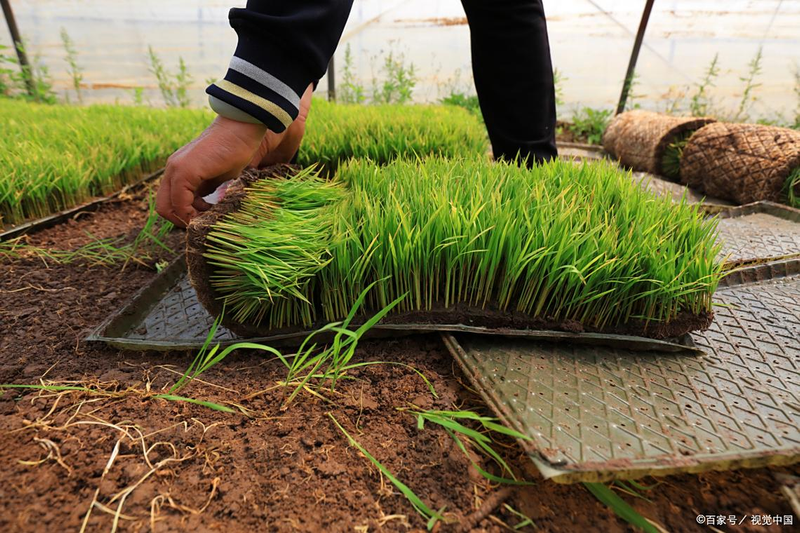
- dry seedlings: suitable for scale cultivation, 6-8 metres wide, 30-50 metres long, warm, easy to manage, early seeding (late march to early april), with 3. 5-4-year-old seedlings。
- small arch sheds, which are less expensive and suitable for small areas to grow, are 1. 5 - 2 metres wide and 10 - 15 metres long and cover two layers of thin membranes to keep warm, and are sowed 5 - 7 days later than large sheds。
- plant propagating seedlings: using standardized seedlings (561 or 434 holes), base-based seedlings, ready and robust seedlings, with dust during planting, high activity rates, suitable for mechanized transplantation。
Ii. Solution of key technology
(i) period of seeding
In the north-east, the planting period of rice seedlings requires strict adherence to the principle of “temperature stabilization through 5-6°c and temperature stabilization through 10°c” and the avoidance of early sowing of scavengers caused by cold springs. In general, the southern region (e. G. Liaoning, jilinsongwon) planted seeds in late march to early april, the central region (e. G. Jilin chang, heilong river harbin) in mid-april, and the northern region (e. G. Heilong jiang ziqihar, jamus) in mid-april, ensuring that the planting age was 30-40 days and the age of leaves 3-4。
(ii) sowing control
Seeding directly affects the density and quality of seedlings, which can lead to thin, thin and thin, and waste beds. Specific seedage:
- dry seedlings in large sheds: regular seedlings seed 30 to 40 kg per acre bed (dry seedlings) and plantings 20 to 25 kg per acre。
- cultivation: 50-60 grams per plate (dry) to ensure a balanced distribution of 2-3 seeds per hole。
Seeding is done using sowing or stripping, and then the seed is covered with fine soil of 0. 5-1 cm thick, suitable for the absence of the seed, which is then watered with “headwash water” to cover the membrane to keep it warm and humid。
Iii. Slimbed management techniques
(i) temperature management
Temperatures are at the heart of the growth of the seedlings and are subject to precision regulation in the form of:
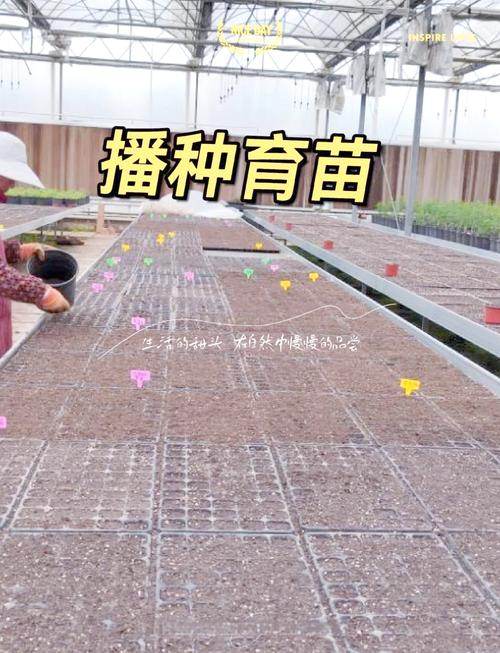
- the seeding period (sowning to seedlings): maintain the temperature of 25-30°c in the shed and maintain the temperature of the grass curtains at night to prevent low-temperature saplings. If the temperature in the shed exceeds 32°c, the temperature is cooled (discovering both ends or sides of the sheet)。
- one-leaf one-heart period: appropriate cooling, maintenance of 20-25°c temperature in the shed, enhancement of resistance of seedlings and prevention of foot length。
- the second locomotive period: the temperature in the shed is 18 to 22°c, the ventilation is increased, the ventilation is 2 to 3 hours a day (from 10 a. M. To 3 p. M.) and the exercise seedlings are adapted to the outside environment。
- a three-leave perturbation period: gradual defiling of membrane seedlings, total demolitions during the day, night-time coverage according to temperature, and complete removal of the membrane when the external temperature is above 15°c。
(ii) water management
The wetting of seedbeds follows the principle of "no wetness, no wetness" and avoids the accumulation of water leading to rotting roots and diseases:
- before seeding: keep the bed humid, if the surface soil is white and dry, with only a small amount of timely water spray, and no heavy water spill。
- post-sapling to tri-leaf period: bed soil is contained in 60 to 70 per cent of water, which is filled with timely water when the sap leaves alight at noon and recover in the evening; if the bed is covered by water, the walkway is drained immediately。
- after the tri-leaf period: proper management of water seedlings, strengthening of the vitality of the root system, improvement of the rate of transfer to life, one or two days before the transfer of seedlings, so as to facilitate seedlings。
(iii) nutrient management
Saplings need to be replenished in a timely manner during their growth, so as not to lose weight and lead to weakness:
- a fully fertilized seedbed is generally not required; if the leaf leaves are yellow and slow to grow, “wetting” is applied during the second lobe, 5-8 kg urea per acre bed, sprayed with thin water and then washed with clean water to prevent the burning of seedlings。
- three to five days before the planting, the pursuit of urea of 3-5 kg urea per acre bed + 1-2 kg of potassium dihydrophosphate, increasing the resistance of seedlings and promoting rapid return to chrysotile after the transfer。
(iv) disease prevention and treatment
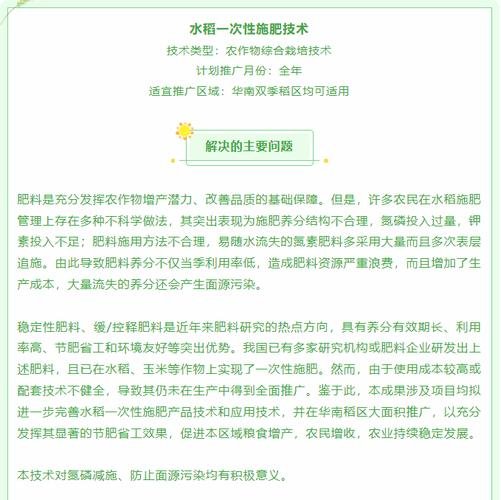
In the northeast, the main diseases of the nursery age of rice are dead, dead and ill, based on the principle of “preventive and integrated treatment”:
- paradoxin, atrophy: 30 per cent of the sown water agent is administered 1,000 times more than the agent sprayed on the bed than the soil; 70 per cent of the methyl tobuzin humid powder is sprayed every 7 to 10 days, 800 times more or 50 per cent more than 600 times the agent humid powder, and the infection is controlled by the presence of a fungus + root agent at the beginning of the disease。
- el niño disease: strict sterilization of seeds, choice of formal disinfectant, sufficient planting time to avoid seed-bacterism; timely removal of strains after the onset of the disease, bringing out the nursery for deep burial to prevent infection。
(v) weed control
Weeds on seedbeds need to be removed in time to avoid competition for nutrients with seedlings:
- artificial weeding: during the 2-3 leaf period, weeds are removed artificially in combination with pine soil, with care to avoid damage to seedling systems。
- chemical weeding: 30 per cent acetate per acre before seeding. Episode cream 100-150 ml, 30-40 kg of water evenly sprayed bed surfaces and closed herbicides; selective herbicides were used when weeds were larger and sprayed strictly in accordance with the specifications to avoid adverse effects。
Core concerns
1. Circumculation of the cold: high temperatures in the spring of the north-east, close monitoring of weather forecasts after planting, timely heating of hot materials such as straw curtains and twirl-free sheets in the event of the onset of the cold, burning of hotspots in the shed (with regard to ventilation against gas poisoning) and prevention of freezing of seedlings。
2. Prevention of seedlings: control of sowing density, avoidance of excess nitrogen fattening, timely ventilation, cooling, control of water seedlings, as shown by foliage of thick green, thin tubing, underdeveloped roots and low survival rates after planting。
3. Cultivation criteria: the indicator of growth is 12-15 cm high, 0. 3-0. 4 cm thick, roots are developed (black root, no black root), leaves are bright and green, 3-4 years old, with 1-2 centipedes and no pests。
4. Pre-plant preparation: 1 - 2 days before the planting, complete examination of the quality of seedlings, removal of sick, weak and small seedlings, avoidance of pull, maintenance of the integrity of the roots, soil transfer and reduction of the duration of the seedlings。
5. Slender bed sanitation: timely clean-up of strains, weeds, membranes, etc. In seed beds to reduce disease- and pest-breeding environments; pre- and post-use use of seedling tools (e. G., nursery trays, canteens) to clean up disinfectants and prevent cross-infection。



