In the age of information explosions, we are exposed to a great deal of knowledge every day. However, these knowledges are often fragmented and, if not collated and internalized, can easily drown in our memories and cannot be translated into practical capabilities. This phenomenon is like building a house on the beach, which, despite its wealth of resources, will not be secure without a solid foundation. The process of shaping knowledge systems and thinking systems is to structure these scattered knowledge in an orderly and systematic way and build on it to enhance our thinking。
Building knowledge and thinking systems is not just about addressing specific problems at work or in academia, but rather about living attitudes. It helps us to understand the world in a deeper and more comprehensive way and to make more rational decisions in the face of complex problems. This paper will explore in detail how knowledge systems and thinking systems can be constructed from multiple dimensions to help you build a solid mental bastion in the information ocean。
I. Structure of knowledge
1. Clear objectives: why learn?
Before starting to build knowledge systems, you need to define your learning goals. Learning is not intended to absorb all information in order to swallow the date, but rather to achieve a specific goal. This objective may be career development, academic research or personal interest. Clear objectives help you to remain focused in the process of information screening and access to knowledge, avoiding interference with unrelated information。
Classification and hierarchy: “bonestoform” for knowledge
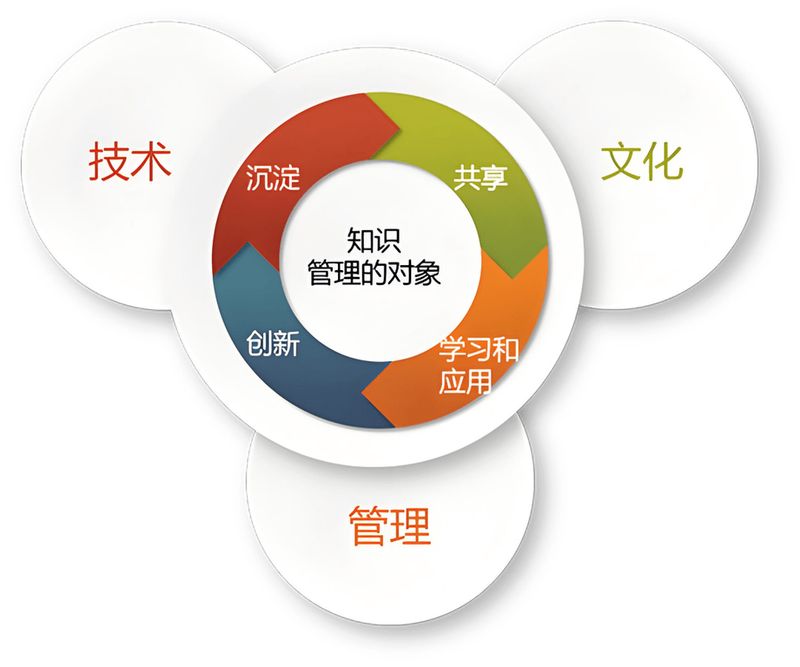
The accumulation of knowledge requires a sense of hierarchy, as does building houses with foundations, pillars and walls. Knowledge can be categorized first and then treated at a hierarchical level according to its importance and relevance. For example, when you learn economics, you can divide it into macroeconomics and microeconomics, and then sub-categories under these broad categories. In this way, you can create a clear knowledge network that gives every piece of knowledge the place it deserves。
Linkages and integration: building knowledge networks
Knowledge systems are not a single linear structure, but a multidimensional network. Knowledge in different areas is often intrinsically linked, and the key is how you discover and use them. For example, some concepts in physics are often closely related to mathematics, while many models in economics draw on the principles of physics. By identifying these intersections, you can complement knowledge in different areas and build more comprehensive knowledge systems。
Dynamic update and reflection: keeping the system alive
Knowledge is not static, especially today, when science and technology and society are developing at a rapid pace. The knowledge system you have built needs to be updated as new information flows. At the same time, reflection is an indispensable part of this process. Rethinking helps you not only to identify gaps in the system, but also to further consolidate and expand your knowledge system by in-depth thinking about what already exists。
Practical application: transforming knowledge into capacity
The ultimate value of knowledge lies in its application. Both academic research and daily life can be truly valued only if knowledge is applied to the actual situation. You can test and strengthen your knowledge system through practical projects, case analyses or simulations. This will not only help to consolidate what has been learned, but will also enable you to further refine your knowledge structure in your ongoing application。
Ii. Conclusion structure
1. Critical thinking: challenge and validation
Critical thinking is the cornerstone of the system of thinking. It requires you not only to passively accept information but also to actively question and validate it. For any point of view or theory, you should ask yourself, “is it true? What evidence supports or refutes it?” through constant questioning, you can filter out useless information and avoid falling into cognitive bias. At the same time, the validation process can help you to deepen your understanding of knowledge and make you think from multiple angles。
2. Logical reasoning: from phenomenon to substance
Logical reasoning is a way of thinking that links a superficial phenomenon to the underlying nature. It can help you to face complex problems, to sort out the causal links and to identify the core of the problem. Logic reasoning requires not only the mastery of some basic principles of logic, but, more importantly, the nurturing of a habit of logic that allows you to naturally apply logic in everyday thinking。
3. System thinking: global perspective and dynamics watch
System thinking emphasizes a holistic and dynamic view of the problem, rather than being limited to a certain part. For example, in analysing the business of an enterprise, systemic thinking requires you to consider the interplay of multiple factors, such as the market environment, the enterprise's internal resources, its competitors, and its customers ' needs, rather than focusing solely on one aspect. This way of thinking helps you avoid being caught up in the most nuanced pitfalls in the region, thus better grasping the overall picture。
4. Innovative thinking: breaking the rules, jumping out the framework
Innovative thinking is a way of thinking that transcends traditional thinking patterns and seeks innovative solutions. It requires you to dare to break the rules, jump out of the existing frame of thinking and try to look at things from a perspective you never had before. Innovative thinking depends not only on a rich pool of knowledge, but also on an open mind and a spirit of risk. By constantly challenging your own mindsets, you can find new possibilities to provide a greater perspective on complex issues。
Emotions and reason: balancing senses and logic
The balance between emotion and reason is also an important factor in the construction of the mental system. While logic and rational thinking are essential in analysing issues, emotions provide a source of intuition and creativity. In the face of challenges that require creativity, emotions can inspire you to emerge from the framework of rational thinking and to come up with innovative ideas. And in making decisions, reason helps you to carefully analyse the possibilities and avoid the bias in decision-making caused by emotional impulses. By balancing emotions and reason, your system of thinking will be more comprehensive and flexible。
Integration of knowledge and thinking
1. Integration of theory and practice: from book to reality
The ultimate purpose of building knowledge systems and thinking systems is to effectively integrate them and thus enhance the ability to solve real problems. Theoretical knowledge provides a resource and framework for thinking, which is a tool for translating these knowledge into practical capabilities. In practical application, theory often requires intellectual processing and reorganization to be better adapted to specific situations. This combination of theory and practice will make your knowledge both more flexible and more incisive。
2. Interdisciplinary thinking: the collision of diverse knowledge
Knowledge in different areas tends to resonate in specific contexts, thus triggering new thinking and innovation. Interdisciplinary thinking is a way of thinking that brings together knowledge and approaches in different fields, thus generating fresh insights. Through an interdisciplinary perspective, you can find the laws of physics in economics and the philosophy of philosophy in art. The confluence of this diversity of knowledge can greatly expand the boundaries of your thinking and help you find unique solutions to complex problems。
3. Multicultural recognition: self-reflection and reconciliation
This is the ability to reflect and regulate the process of thinking and learning. It helps you to be aware of the deficiencies in your own thinking process and to adapt your strategies in a timely manner in order to build knowledge and thinking systems more effectively. Through periodic self-reflection, you can find yourself in the blind spots of learning and in the inertia of thinking, thereby making targeted improvements. This constant self-regulation will keep your knowledge system and your thinking system optimized。

Summary
Building knowledge and thinking systems is a continuous and dynamic process. It requires you not only to build and collate knowledge, but also to improve and enhance your mental capacities through critical thinking, logical reasoning, systemic thinking and innovative thinking. By combining knowledge and thinking, you will be able to understand the world more deeply and make more rational and innovative decisions in the face of complex problems. # educative creation incentive program #