The roots of the apple tree, which are the core organs for the absorption of moisture, nutrients and synthetic internal hormones that support the growth of the tree body, directly determine the strength of the tree, the rate of flowering fruit and the production and quality of the fruit. In order for apple trees to be productive, it is necessary to follow the core logic of “reforming the soil first, protecting the roots and regulating the roots”, and to combine the biological characteristics of the roots of the different growth cycles of apple trees with the following key measures to create an appropriate growth environment for the roots, and to promote the “weak” to the “created” to the “created” to the “created” to the productively robust。
I. Improved soil environment and firm foundations
Soils are “carriers” of root-based growth, and their physico-chemical properties (irradiation, water retention, fertility levels, ph) directly affect the growth, extension and absorption functions of the root system. The three objectives of soil improvement are to focus on “facilitation, fertility balance, and the suitability of acid alkalis” and to address fundamentally the “environmental constraints” of root-based growth。
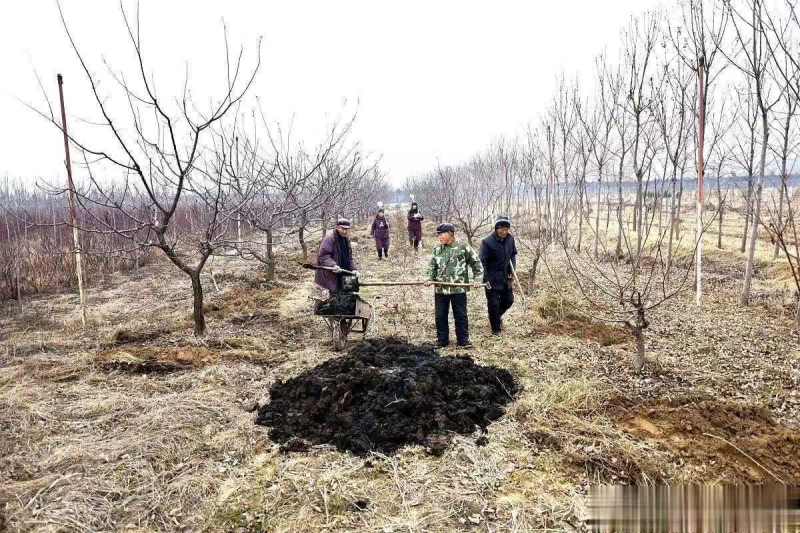
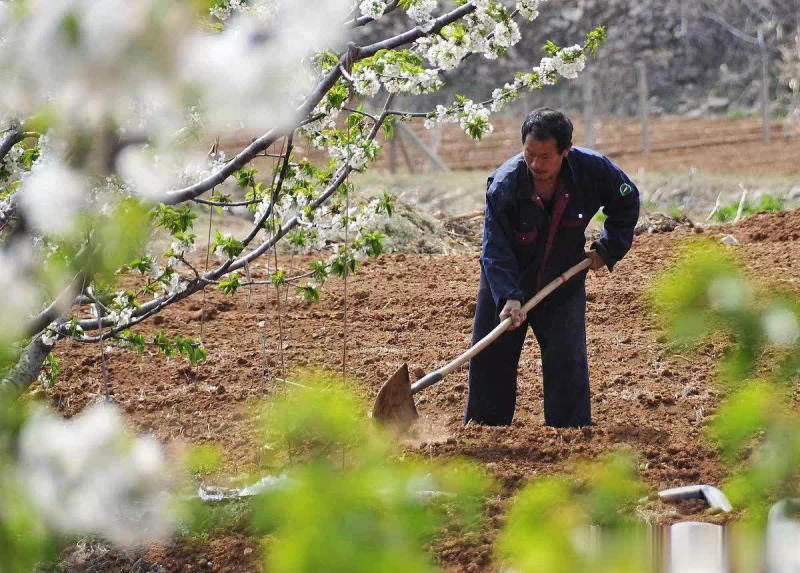
1. Deep tillage and conversion to break the slabs. The long-term shallow tillage of apple-garden soils is prone to the formation of plough bottoms, which makes it impossible for root systems to deep down and concentrate on surface soils, with a significant decline in resilience (dryland, flood, cold). It is proposed to adopt the “autumn deep-farming and spring-subsidized” model: after the fall harvest (15-20 days before the fall of the leaves), deep tillage is carried out in conjunction with the application of the base fertilizer, in depth at 30-40 cm, with the planting being focused on the outer edge of the tree crown projection, extending internally to 15 cm of the trunk (to avoid damage to the main roots), completely breaking the slabs and promoting the extension of the roots to the deep soil, while increasing the perforation of the soil and increasing the ability to respirate and conserve water; after the spring soil is unfrozen (10-15 days before the sprouts), shallow tillage, in depth 10-15 cm, and only estination of the surface soil, avoiding the destruction of the structure of the summer cormorants, while at the same time reducing the growth of the weed grass and preventing competition between the roots for nutrients。
2. Regulate soil alkaline and adapt to root system needs. Apple trees are suitable for growth in neutral-micro-acid soils at ph 6. 5-7. 5, with soil perchlorine (ph <5. 5) likely to lead to moderate trace absorbent barriers in root systems such as iron, calcium, magnesium, which cause the root to rot; soil peralkalies (ph > 8. 5) inhibit the root system and lead to a decrease in its vitality. For acid soils, 50-80 kg of lime per acre can be applied (regulated on an annual basis to avoid one-time use leading to soil ph abruptly) or for alkalin organic fertilizers (e. G., goat dung, cow manure decomposition) to gradually increase soil ph; for alkaline soils, 80-100 kg of sulphur powder can be applied (after shredding) or to increase acidic organic fertilizers (e. G., rotting chicken dung, rabbit dung) and corrosive fat, in conjunction with the planting of green fertilizers such as purple flowers and trileafowl, to be pressured into the soil during the flowering period, to regulate soil acidity through green decomposition, and to balance the effects of improvement and fertilation。
3. Increased application of organic fertilizers and breeding of soil pellets. Soil pellets are the “quality environment” in which root systems grow, while organic fertilizers are the core nutrients that nurture the gravitational structure, and their growth is inhibited by the long-term monochemical fertilization that leads to the destruction of the gravitational structure and fertility decline. It is recommended that organic fertilizer be applied after the fall harvest (60-70 per cent of the annual application), with emphasis on the application of base fertilizer after the fall harvest (e. G., composting, fattening, decomposite animal excreta) of 3,000-5,000 kg per acre, with calcium phosphate of 50-80 kg, potassium sulphate of 20-30 kg (calculated by age, reduction of young trees, increase of adult trees), after the mixing of organic fertilizer with chemical fertilizer, using “ring ditches” or “radiation ditches” (which account for 60-70 per cent of the annual application), so as to avoid direct exposure to the roots of organic fertilizer that causes the burning; the growth season (incubation of precipitous and large-scale infertilation) also requires a combination of corrosive acid, biological organic fertilizer, 50-100 kg per acre, with a gradual upgrading of soil organic matter content (target of more than 1. 5 per cent), increasing the capacity of soil to protect the soil water on a continuous basis and balanced nutrients。
Ii. Scientific water fertilization management to avoid underlying damage
Water fattening is a “breeding source” of root-based growth, but it is poorly managed (e. G. Overwatering, over-heavy application, mistimed application), which can lead to problems such as “blowing” and “failing” roots. Scientific water fertilizer management is based on the principle of “demand-based supply, a small number of times, water-composed” that meets both the demand for root-based growth and avoids damage。
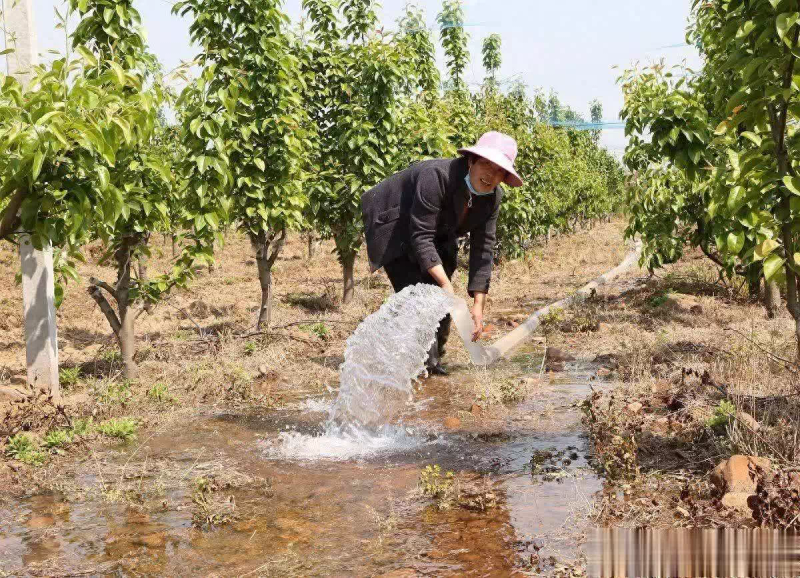
1. Rational watering to keep the soil wet or dry. The roots of apple trees are resistant to drought and the soil is overwatered (more than 80 per cent of the maximum water holding in the field) leading to a lack of oxygen in the soil, which is unable to breathe normally, leading to the decay of the roots, while the soil is too low (less than 50 per cent of the maximum water holding in the field) leading to the failure of the roots to absorb moisture and nutrients and to “atrophy”. The water needs to be purified according to soil acreage and growth cycles: first, the bud (late march) when the root is precipitous and the roots need to be “precipitated” so that the amount of water is 30-40 cm wet soil suitable for the wet soil, so that the root is awakened and nutrients are absorbed to provide protection for seeding and flowering; second, the eugenic period (late may to mid-june) when the fruit is growing in tandem with the new sand, requiring “inflated water” and keeping the soil steady at 60-70 per cent of the maximum water holding in the field, while the amount of water is reduced in the dry season to prevent the erosion; and third, when the fruit is chromium (from late august to early september), proper water control (the soil contains 50-60 per cent of the maximum water capacity in the field) is required to be “red by freezing” to 50 per cent in the cold, to protect the soil from drought. Water is distributed in a manner that prioritizes drip irrigation, seepage (water saving and avoiding soil sheeting) and avoids heavy flooding (which can easily lead to soil accumulation, sheeting); during the rainy season, orchard drains need to be cleaned in a timely manner to ensure rapid drainage of rainwater and prevent flooding at root。
2. Precise application of fertilisation to avoid adverse effects and nutrient imbalances. Poor application of fertilizers is one of the main causes of the destruction of apple roots and is controlled by the following three aspects: “consumer concentration, timing of application, fertilizer mix”: first, control of the application of fertilization concentrations, whether the root pursues fertilisation or foliage supplementation, is subject to the principle of “fruit and diligence” when the root pursues fertilization, chemical fertilizer is applied after dilution (e. G. Urea dilution is controlled at 0. 5-1 per cent and potassium phosphate dihydrates at 0. 3-0. 5 per cent), avoiding direct application of high-cofertilizer fertilizers into the soil, resulting in excessive pressure on the soil, loss of water and burning of the root system; second, control of the application of fertilisation at the same time as the root pursues fertilization, avoiding the application of fertilisation during a fragile period, such as during high temperatures in the summer (from 12 pm to 4 pm) when the soil is too high, the application of fertilation is avoided at the same time as the application of a single dose of ferant, resulting in the new fertilization of in the growing season, the demand-driven mix of `nitrogen, phosphorus, potassium' and moderately trace elements is required, such as an embryonic focus on nitrogen fertilizer (for the promotion of root and new growth), a juvenile expansion period on nitrogen, phosphorus, potassium compound fertilizer (for the balance between fruit growth and root strength), a chromosomal period on phosphorus, potassium fertilizer (for the promotion of colouring of fruit and for the enhancement of the resistance of the root system) and periodic foliage of calcium, zinc fertilizer (for example, sequestered calcium, zinc) to reduce pressure through leaf absorption and indirect protection of the root system。
Iii. Strengthening the root causes of protection and reducing external abuse
The apple roots are vulnerable to external factors such as “pests and pests, mechanical damage, extreme environments”, which result in a decrease in the vitality of the roots and their deterioration, which in turn affect the direction and productivity of the trees, and require targeted protective measures to construct “protective barriers” for the roots。
1. To prevent the spread of diseases and diseases from spreading. Apple roots are common causes of disease: root rotor disease, root cancer, common pests have root nematodes, and the principle of “prevent main and control combinations” is followed: one preventive measure is that 50% of the fungible powder 2-3kg (or 3% of the thiophosphate granular agent 5-8kg) is distributed per acre in the fall of deep cultivation, which is aligned with soil to eliminate the disease in the soil, and 80% of the fungible powder (or 70% of the hysteria dysenter) is fully decomposed, avoiding the carrying of the disease in organic fertilizers, causing the root pests; two diseases are treated with 40% of each leaf, and each chlorotectate is treated with 20-30 kg, and each chlorotect is treated with 1 000 - 3 days of the chromic acid is treated with a chrythropyte, and a 5% of the chromic acid is produced with a chrysynosis, and a 1% of the ch- 1% of the acid is found in the ch- 10-。
2. Avoiding mechanical damage and protecting the roots and the roots. In the day-to-day operation of orchards (e. G. Tilling, weeding, picking, fertilization), mechanical damage (e. G. Ploughing, touching the main root, mowing the grass) leads to exposure to the root wound, which is susceptible to infestation, and to protection: first, when farming, deep and shallow cultivation is carried out in the outer limits of the tree canopy, it is carried out in such a way as to avoid ploughing in areas above 15 cm, damage to the main root of the head; when weeding is done, preference is given to artificial weeding (or weeding), avoiding the use of large-scale weed machinery to prevent mechanical pressure damage to the surface; second, when picking is performed in a manner that the pick is performed in a manner that does not cause damage to the surface; in particular, when the soil is wet below the tree crown, it is more than 50 per cent wet to remove the soil and more than 50 per cent wetness to remove the soil from the soil than the soil, more than 100 per cent of the soil by which the wetting of the soil is more than tified (。
3. Address extreme environments and increase resilience. Extreme environments (e. G., high temperatures, low temperatures, droughts, floods) directly damage root systems and require pre-emptive protection: first, high temperature protection, during high summer temperatures (july-august), covering straw, weeds (5-8 cm thick) under tree canopy, or laying black weeds, reducing soil temperature (avoiding soil temperatures above 35°c to prevent root burns), while reducing soil water evaporation and maintaining soil moisture; third, low temperature protection, before winter freezes, using drip irrigation in the trunk of a tree (30-40 cm high, soil-pumping material selected for soaked sand or corrosive soil) to form “ears” to protect the main roots and roots from freezing; juvenile trees can further increase temperature protection by covering the ground (or wedging) at 35°c, while dry and flood waters can be used in a timely manner to avoid heavy water flooding (or in the aftermath of the flood), cleaning of the first spring ditch, draining of the soil to protect the main roots from freezing, increasing the effects of the soil by up to 50 per cent of the soil by 10 per cent and increasing the soil by adding 10。
Iv. Managing the tree balance and facilitating the transfer of nutrients to root
The relationship between the part of the apple tree field (leaf, fruit) and the subterranean part (root system) is “subsistence, growth synergy” and, if the part of the ground is overgrowing (e. G., the new man) or overloaded (e. G., the result), it leads to an excessive transfer of nutrients up to the ground where the roots are weak because of inadequate nutrients, which need to be balanced by regulating the tree body to achieve “reasonable distribution of nutrients on the ground and below” and to promote root system growth。
1. Rationally trimmed and control of the upper part of the land. The core objectives of the tailoring are “to remove excess branches, reduce nutrient consumption and promote the transfer of nutrients to root systems”: one is to trim them during the winter (after falling leaves to pre-emerge), to remove long branches, cross branches, overlapping branches, disease branches within the tree crowns (with burning out of orchards) and to reduce non-effective nutrient consumption; to “resort” the branches of the results, avoiding the ageing of the branches, while at the same time controlling the number of result branches (8 to 100,000 per acre) and preventing overloading; to “sorpting” the crowns, increasing the efficiency of the foliage by increasing the co-operation (more transfer of foliage to roots); and to avoid overcuting, removing from the top 5 to 10 cm at the end of the crown, inhibiting the new scavengers, promoting new scavengers and reducing the number of scaves by 15 per cent; and to reduce the growth of scaves by 15 per cent。
2. Reasonable load to avoid excessive nutrient consumption. As a result, there is too much diversion of nutrients to fruit, with slow growth and a decline in vitality due to “insufficiency” of nutrients, and even “infringements” which require the control of loads through “fruit fruit”: flowers (sprune-to-precipitation), flowers that are weak, sick and deformed, flowers that are kept robust (two or three central flowers are kept in each row), flowers that are controlled at 30 to 40 per cent of the total amount of flowers and reduced consumption during the flowering period; fruit that is lost at 15 to 20 days, fruit that is of high age or soy, and fruit that is removed from small fruit, fruit, disease, malformant fruit, double fruit, preservation of strong fruit (based on the strength of the branches, with two or three fruits, one or two of the branches and one of the small or not) and an adult tree that is controlled at 1. 5 to 22,000 (adjusted for varieties, for example, 15,000 or so many apples, with a view to ensuring a balanced distribution of fruit) and a balanced yield。
3. Leaf supplementation to relieve root nutrient pressure. During periods of weak root system activity (e. G. High summer temperatures and before the onset of winter), partial supplementation of nutrients on the ground through leaf fertilization can reduce the pressure on the root system to absorb nutrients and indirectly contribute to root system growth: one summer high temperature, application of 0. 3% potassium phosphate solution + 0. 2% calcium sequestered solution on the side of the leaf, one application per 7 to 10 days, two to three successive sprayings, enhancement of foliage co-operation and reduction of pressure on the root system to absorb calcium and potassium; and, following fall fruit harvesting, application of 0. 5% urea solution + 0. 3% zinc sulfate solution on the side of the leaf, application of 1 application per 10 days, continuous application of 2 spraying, supplementary leaf tablets, promotion of the transfer of leaf blades to the root system, and reserve nutrients for winter and coming years。
In conclusion, apple root promotion is a “systemic exercise” that combines “reform, water fattening, protection, control” measures throughout the apple tree growth cycle to create an appropriate environment for the root system and to avoid external factors that damage the root system, while ensuring a rational transfer of nutrients to the root system by regulating the balance of the tree, with the ultimate goal of strong, stable and productive roots。

How much for a 1t solid drive? Look at the market now

The computer version of "3d fishing game" rocked online and experienced different fishing pleasures