Blueberries, because they are rich in pheasant, vitamins and minerals, have a significant antioxidation and health effect and have become one of the global high-value-added cash crops. It is widely used in the fields of food, processing and medicine, and market demand continues to grow. As a difficult land resource to use efficiently, salin lands are widely distributed in the northern part of the country, especially in shandong, hebei and inner mongolia, covering approximately 7 per cent of the country's total arable land. However, the high salinity of saline soils, structural laxity and low water utilization limits their potential for agricultural development. The exploration of blueberries under saline conditions not only contributes to improving resource utilization of saline lands, but also provides efficient crop choices for farmers and contributes to regional agro-economic development and ecological improvement. It is therefore important to study the adaptation of blueberries under saline conditions and the techniques for planting them。
1 adaptation analysis of blueberries under saline conditions
Blueberries require very strict physico-chemical conditions for soils, especially with regard to control of soil ph and salinity levels. Soils suitable for blueberries have a ph range of 4. 2 to 5. 5. When ph values exceed 5. 5, the effectiveness of trace elements such as iron, manganese and zinc in the soil is reduced by 30 to 50 per cent, leading directly to the eutrophication of the leaf, the erosion of photocosm and even the death of the plant. In addition, when soil ph values exceed 6. 0, the growth rate of the blueberry plant is likely to decline by more than 20 per cent. The sensitivity of the blueberries to salinity is also prominent, and their growth is significantly inhibited when the soil conductivity (ec) exceeds 1. 0 mscm; when the conductivity reaches 2. 0 mscm, the production of the blueberries is likely to decline by more than 50 per cent. High-saline environments lead to an increase in the permeability pressure of the soil solution by more than two times, significantly reducing the absorption capacity of the blueberry root system to the moisture, thereby triggering a physical drought. In addition, blueberries require good aerobicity and drainage of the soil, with roots usually growing at depths of 30 to 50 centimetres and higher requirements for soil structure. Blueberries in saline must be grown through soil improvement, such as the application of 1 to 2 tons of sulphur per hectare to reduce ph and the application of organic fertilisation of 10 to 20 tons per hectare to improve soil structure and create an environment suitable for blueberries。
1. 1 impact of saline on blueberry growth
High salinity and low permeability of saline land pose a significant threat to blueberry growth. When the soil is salted up to 0. 3 per cent, the rate of atrophy of the blueberry leaf exceeds 30 per cent; when the salt is further increased to 0. 5 per cent, the survival rate of the plant is only around 50 per cent. High levels of sodium ion (na+) in saline soils can significantly interfere with the absorption of blueberries to potassium ion (k+) and calcium ion (ca 2+). Specific data show that in high-salt environments, the absorption of potassium ion in the blueberry root system can be reduced by more than 40 per cent, while the excess accumulation of sodium ion can increase cell penetration by 1. 5 to 2. 0 times, severely inhibiting normal cell metabolic activity. Water management is another major challenge for salinizing blueberries. The high evaporation of saline soils and the average annual salinization of 5-10 tonnes/ha have resulted in long-term exposure of the blueberry root system to high salt environments and further inhibition of growth. In addition, water accumulation after salinization is widespread and when the soil contains more than 20 per cent of the water held in the field, the supply of oxygen from the blueberry root system is reduced by more than 50 per cent, leading to the root causes of death. In order to cope with these problems, blueberries need to be grown using drip irrigation techniques that provide 1,000 to 2,000 m3 of water per hectare through precision irrigation, reduce salinity accumulation and combine measures such as deep desalination to improve the soil environment。
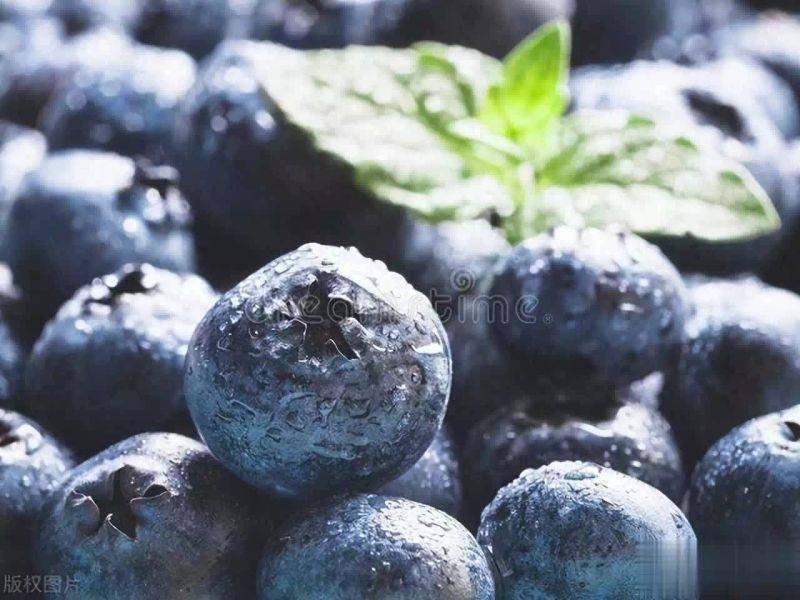
1. 2 biological mechanisms for the adaptation of blueberries to saline environments
Under saline conditions, blueberries are able to enhance their adaptability through a range of physiological mechanisms, demonstrating a measure of salt resistance. Blueberries effectively accumulate permeable substances such as amino acid and soluble sugar by infiltration. Under salt-coercive conditions, the levels of alumina in blueberries can increase by 2-3 times and the soluble sugar content by 1. 5 times, thus reducing cell water levels and helping root systems to maintain normal water absorption. Blueberries effectively remove excess sodium ion (na+) and enhance the absorption capacity of potassium ion (k +) and calcium ion (ca 2 +) through ion-balancing mechanisms. Under the medium salt coercive conditions (approximately 50 milligrams/l at nacl), the ejection efficiency of sodium ion from the blueberry root is above 60%, while the absorption of potassium ion remains above 70%, a balancing ability that significantly reduces the toxicity of salt. The blueberry antioxidation enzyme system under salt coercion is significantly activated, the hyperoxidation enzyme (sod) activity can be increased by 30 to 50 per cent, and the peroxide enzyme (pod) activity can be increased by 20 to 40 per cent, thus effectively removing excess activated oxygen (ros) from salt coercion。
2 key technology for blueberry cultivation in saline
2. 1 technologies for soil improvement
The use of soil acidizers is an important means of reducing ph values when blueberries are grown in saline, where sulfur powder is widely applied because of its low cost and efficacy, and where sulfur powder is generally applied to 1 to 2 tons per hectare, reducing the ph value of soil by 0. 5 to 1. 0 units, with care to be taken to apply evenly and to be fully mixed with topsoil. Increased organic fertilisation is an important means of improving soil structure in saline soils, where application of organic fertilizers (e. G., decomposed chicken dung, straw composting, etc.) can significantly improve soil aerobicity and water conservation, increasing organic content by 1 to 2 per cent, increasing the vitality of root systems and enhancing soil buffer capacity. In addition, the application of improved agents such as plaster can effectively replace sodium ion in the soil, improve soil ion structure by applying plaster to 2 to 4 tons per hectare, reduce soil salinity by 10 to 15 per cent, and increase the availability of calcium ions to a sustainable effect of more than 2 years. The combined application of acidizers, organic fertilizers and plasters can provide a suitable soil environment for blueberries, resulting in a significant increase in plant activity and yields。
2. 2 feeding and planting techniques
Blueberries in saline need to be prioritized for salt-resistant varieties, and it has been found that the northern land and blue-rich varieties are more adaptable to light saline levels of 0. 3-0. 5 per cent and that the selection of suitable varieties requires increased seedling cultivation, with the introduction of acidic matrices (e. G. Peat, ph values of 4. 5-5. 0) resulting in significant increases in tree strength. Due consideration should be given to the treatment and depth of the caves, which are generally 30 to 50 cm deep, and the 5 to 10 kg mixture of acidized soil or sulfur powder and corroded organic fertilizers applied to the ground floor, which effectively regulates the local ph value to around 4. 5, while improving soil aerobicity and water retention. Moreover, planting density needs to be adjusted to the variety and plot conditions, usually 3,300 to 4,500 units per hectare, which can lead to insufficient light and poor ventilation, and to a disproportionately low impact on land use efficiency. Regulated seedling and planting techniques are important safeguards for the success of salinized blueberries。
2. 3 fertilizer management technologies
Scientific water fertilisation management is essential in salt-alkali blueberry cultivation, and the implementation of integrated water fertilisation techniques can significantly increase resource efficiency, with precise fertilization through drip irrigation systems, with a concentration of 0. 5 per cent to 1. 0 per cent per application and 30 to 40 m3/ha per injection, reducing water waste by more than 50 per cent and salt accumulation. Appropriate irrigation methods can be effective in preventing re-salinization, with drip irrigation and submural drip irrigation techniques most common, with water efficiency ranging from 30 per cent to 50 per cent, and significant improvements in the growth environment of root systems. In addition, salinization requires special attention to the removal of salinity, with drainage canals at depths of 60 to 80 centimetres being rapidly drained during the rainy season, with annual desalinization of 2 to 3 tons/ha and effective control of the accumulation of salinity. A combination of sound water fertilizer management measures would not only significantly improve the growth and quality of blueberry plants, but also extend the years of saline cultivation and increase the efficiency of land use。
2. 4 cultivation model optimization
Optimization of cultivation patterns is an effective way for blueberries to achieve high yields in saline lands, and the combination of wind-proofing forests and shade-covering technologies can significantly improve the planting environment, reducing wind speed by 30 to 40 per cent, wind erosion and soil salt evaporation by setting up wind-proof forest belts of 3 to 5 metres high, while moderate shades (30 to 50 per cent) can reduce leaf evaporation rates and increase plant resistance. The effect of membrane cultivation techniques on inhibiting salt evaporation is significant, with black membrane cover of approximately 150 kg per hectare, reducing the salinity of surface soils by 20-30% and water evaporation by 40-30%. In addition, the membrane inhibits weed growth, increases soil temperature by 2-3°c and promotes root system activity. Optimizing cultivation patterns not only improves the growth adaptability of blueberries in saline areas, but also improves the quality of fruit and the efficiency of planting。
2. 5 integrated pest management
The special conditions of salinic lands make blueberries vulnerable to a wide range of pests, of which the root causes are the most common, with incidence rates ranging from 20 to 30 per cent in high-salt environments, combined with biological control using soil acidification treatment, such as deadness per hectare bacillus formulations 10 - 20 kg, which significantly inhibit the reproduction of pathogens. In addition, pests such as aphids and parrots are generally more hazardous than ordinary plots on saline land and can use green anti-control techniques such as yellow decoy boards (30-40 pieces per hectare) and the release of natural insects (e. G., rhesus bees, 5,000-8,000 per hectare only), with more than 80 per cent of the effects. In combination with chemical control, the selection of low-toxic and efficient pesticides (e. G. Aphids and polybacterium) for rational spraying at recommended doses can effectively reduce the incidence of pests to less than 10 per cent. Integrated management measures can significantly improve the health of saline blueberries, reduce production losses and guarantee economic benefits。
3. The potential and challenges of blueberry cultivation in saline development
Blueberry cultivation has significant economic and ecological benefits in saline development. As a high-value-added cash crop, market demand continues to grow, especially in the areas of processed and health products, and the cultivation of blueberries not only generates an economic gain of more than $100,000 per hectare for farmers, but also improves the saline ecological environment, reduces soil erosion and improves the sustainable use of land through greening and soil sequestration. At the same time, the extension of blueberry cultivation, which increases the value of saline land use and alters traditional land idle or inefficient cultivation patterns, in the northern saline areas (e. G. Shandong, hebei, etc.), will contribute significantly to the optimization of agricultural structures and contribute to agricultural development. However, blueberries still face many challenges in saline development. On the one hand, the development of saline-resistant blueberry varieties is inadequate, and existing varieties, such as northern land and blue-rich, display significant growth inhibition at levels of more than 0. 5 per cent and are unable to adapt to medium-heavy saline environments; on the other hand, key technologies such as soil improvement, hydro-fertilizer management are more difficult to spread, and farmers still have concerns about operational technology and economic inputs, especially the higher cost of drip irrigation, rebrands and less than 50 per cent of extension coverage. In addition, the lack of experience in the cultivation of salin lands and the low acceptance of farmers have limited the scaling up of blueberries in salin lands. In the future, therefore, the development of saline-resistant varieties will need to be accelerated, demonstration promotion and economic efficiency assessment of planting techniques strengthened and targeted support policies put in place to lower the technological and financial thresholds for farmers in order to realize the full potential of blueberries in saline development and achieve economic and ecological gains。
Conclusions and outlook
Blueberries are highly viable under saline conditions, and scientific applications of soil improvement, saline-resistant variety screening and hydro-fertilizer management techniques can significantly increase the productivity and productivity of plantations, while achieving efficient use of saline and improved ecological conditions. However, inadequate research and development of saline-resistant varieties and low standardization of planting techniques still exist. Future studies should focus on molecular mechanisms for the adaptation of crayberries to the saline environment, deepen their saline-related genetic and regulatory networks and provide a theoretical basis for the selection of varieties. At the same time, the establishment of a standardized technical system for saline blueberry cultivation should be accelerated, covering key elements such as soil improvement, management of hydrofertilizers, optimization of cultivation patterns, and ensuring the replicability of technology and the operationalization of farmers. The economic and ecological benefits of blueberries in saline development will be more fully realized through a combination of scientific innovation and technology diffusion。