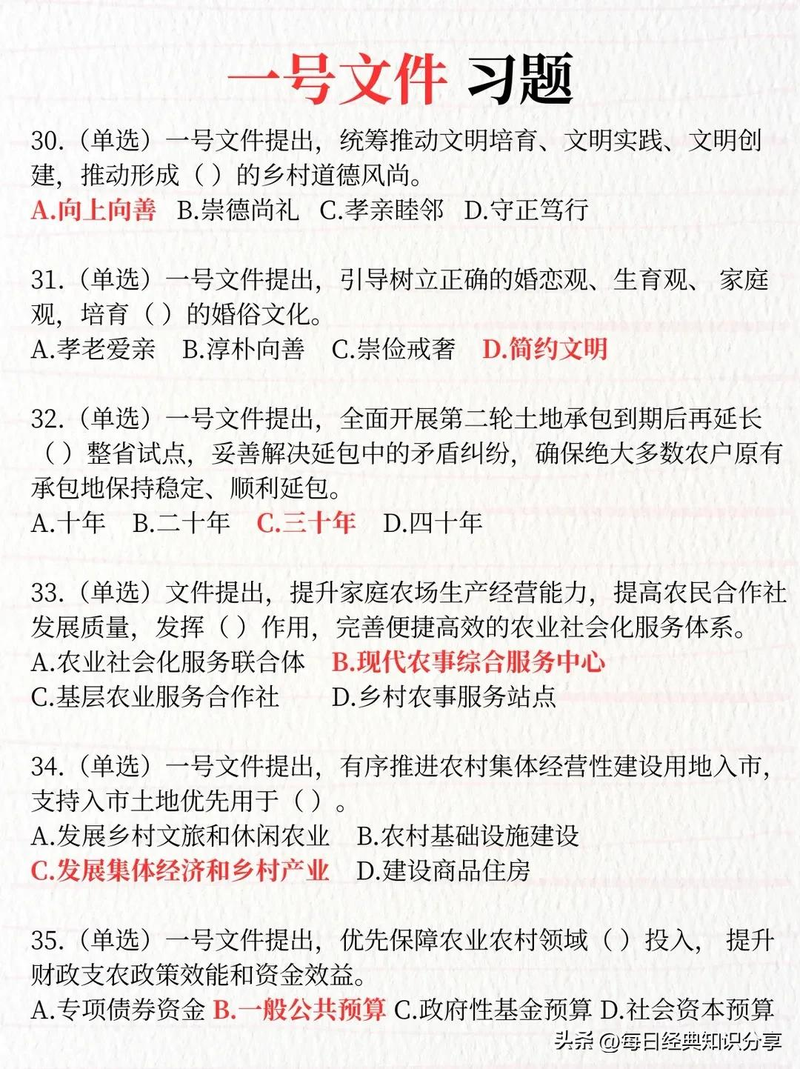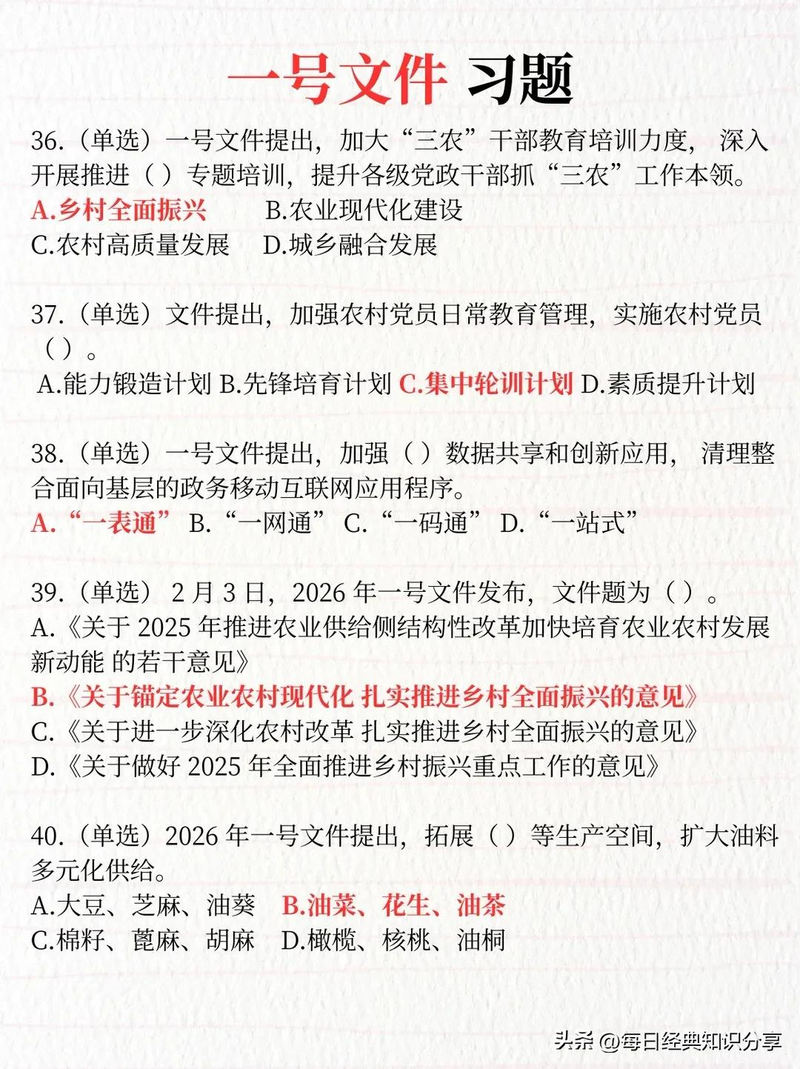
Central document no. 1 of 2026 is a module for public servants, departments, three one-aid examinations and a core source of literature and interviews. This document is well focused and focused, rather than a hard-to-heart full text, it is better to fast-track the score points with a realistic theme, consolidating both the memory and the charade, so as to be truly efficient。
The document, which is referred to as the " opinions on anchoring rural agricultural modernization and solid promotion of overall rural revitalization " , is the central document of the twenty-third and fourteenth “three farmers” since the eighteenth century. This year's examination focused on core concepts, key data, policy bottom lines, and innovation. It was difficult and clear, and common sense was almost non-distinguishable if it was cross-referenced and well documented。
The first is the mandatory question of numbers. Food production has stabilized at around 1. 4 trillion pounds, and the red line for 1. 8 billion acres of arable land has been adhered to; the second round of land contracts has been extended for another 30 years; and efforts have been made to implement a new round of 100 billion pounds of food capacity enhancement. This type of subject option is highly disruptive and a high frequency problem point for the subject person and must be accurately remembered。
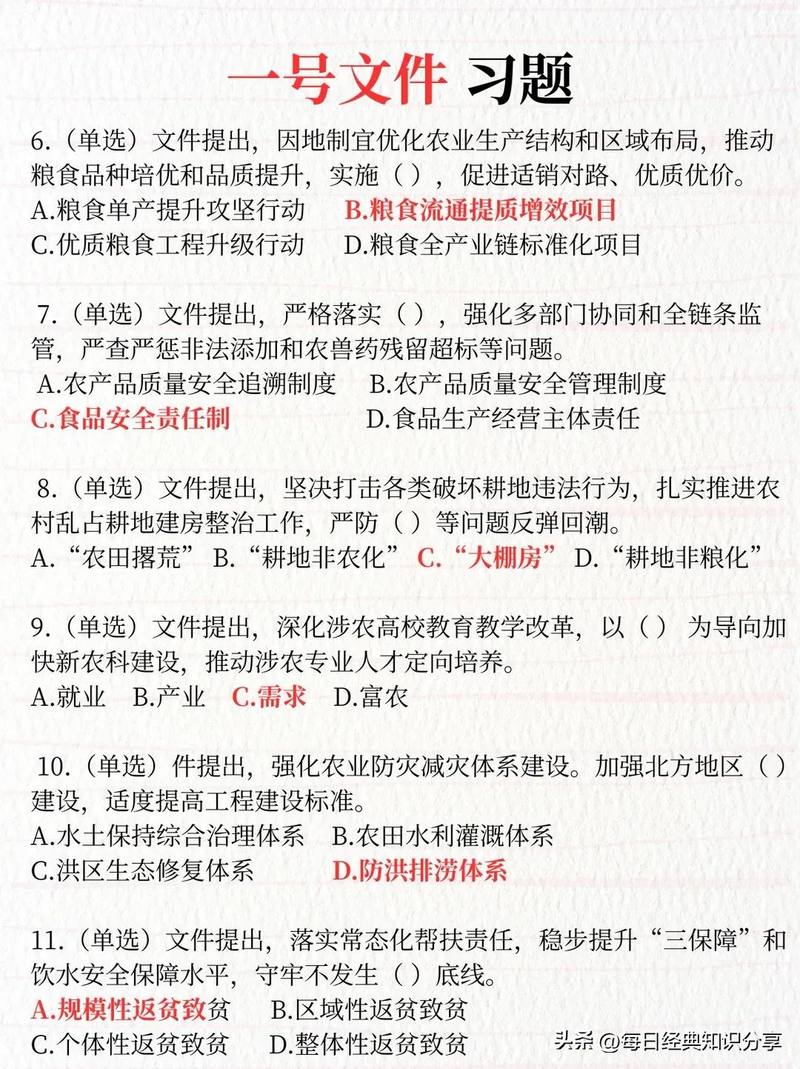
The second is positioning and bottom line. The master of the new era's “three farmers” is the comprehensive renewal of the countryside, guided by the experience of the “millions of works” and driven by innovation. The two bottom lines are national food security and no scale return to poverty. The system of autonomy, rule of law and a combination of german governance, led by the organization of the partido para la género por el género, are standard expressions that directly correspond to the answers。
The third category is devoted to new quality productivity in agriculture. This year's new emphasis has been placed on the modernization of agriculture driven by science, technology and innovation, the promotion of synergies between good fields, good seeds, good opportunities and good practices, the acceleration of crop renewal, the application of smart farm equipment, and the enhancement of the integration of black land conservation and salinization. This part is both a common sense hotspot and a theoretical high score。
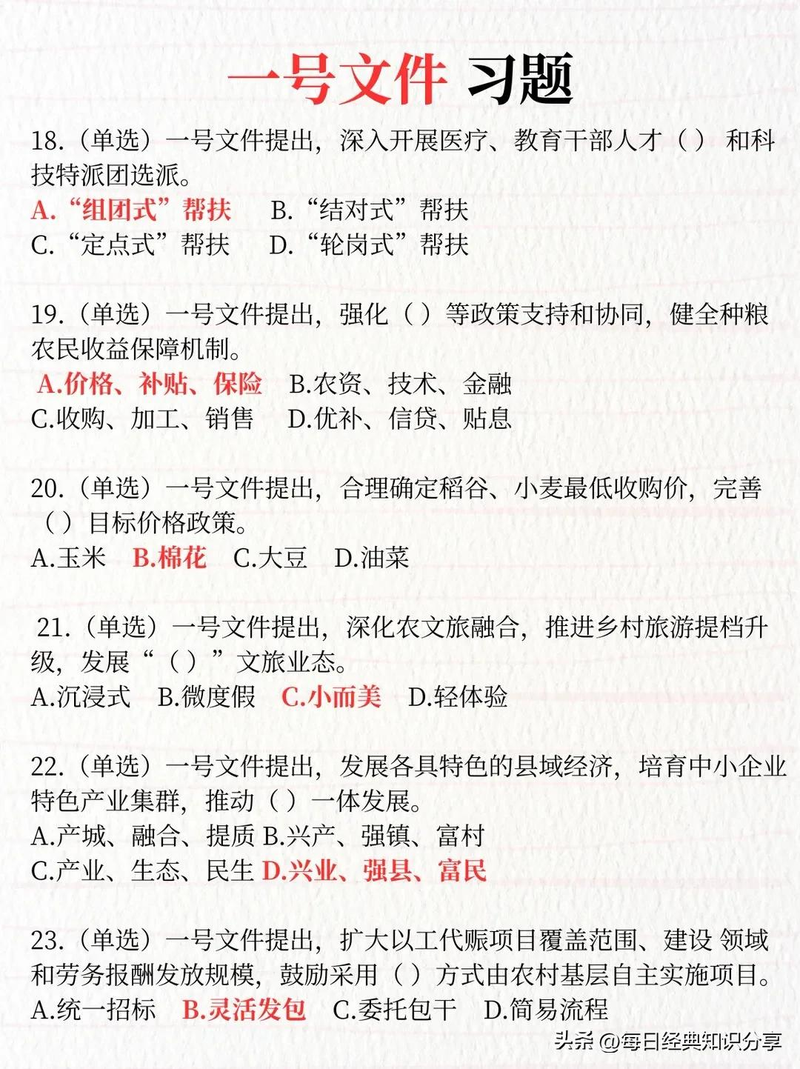
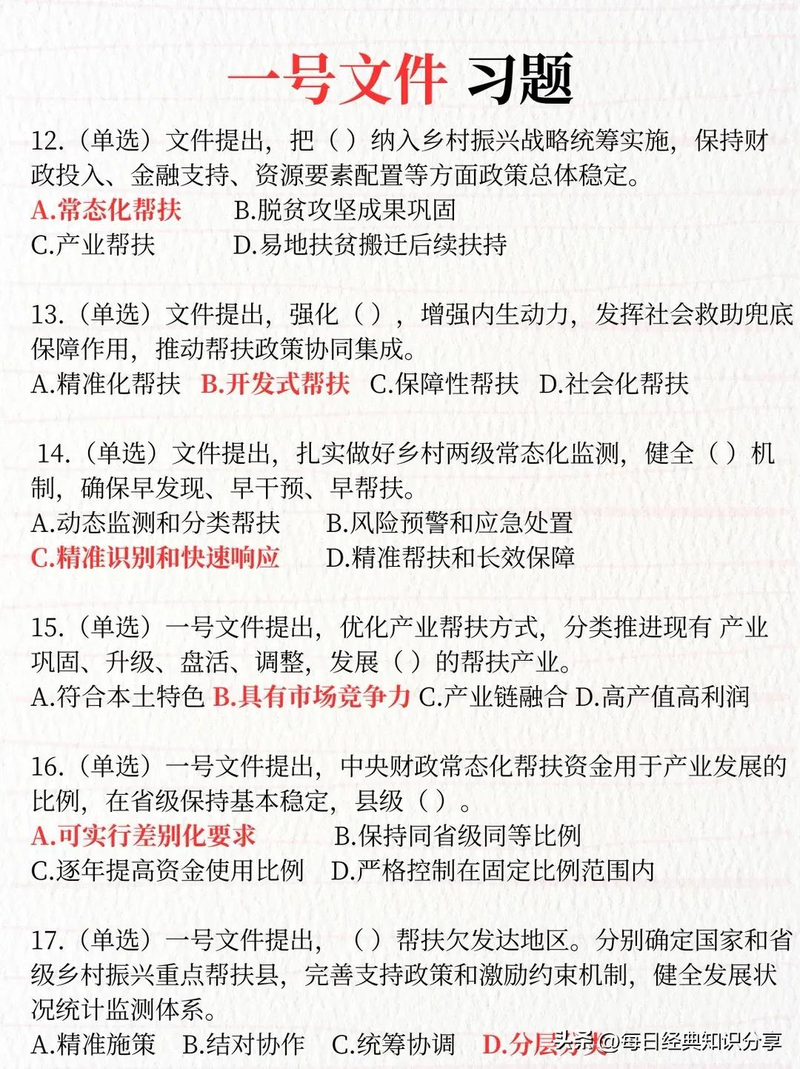
The fourth category is policy practice. The increase in farmers' incomes revolves around broadening the four main sources of income: wage, business, property and transfer; collective rural construction of land for commercial housing is strictly prohibited; rural construction is focused on residential and rural areas in order to prevent the “thousand village side”; and anti-poverty rehabilitation is carried out through the implementation of a well-defined and regularized support mechanism, which is integrated at the grass-roots level and often appears in multiple selections and judgments。
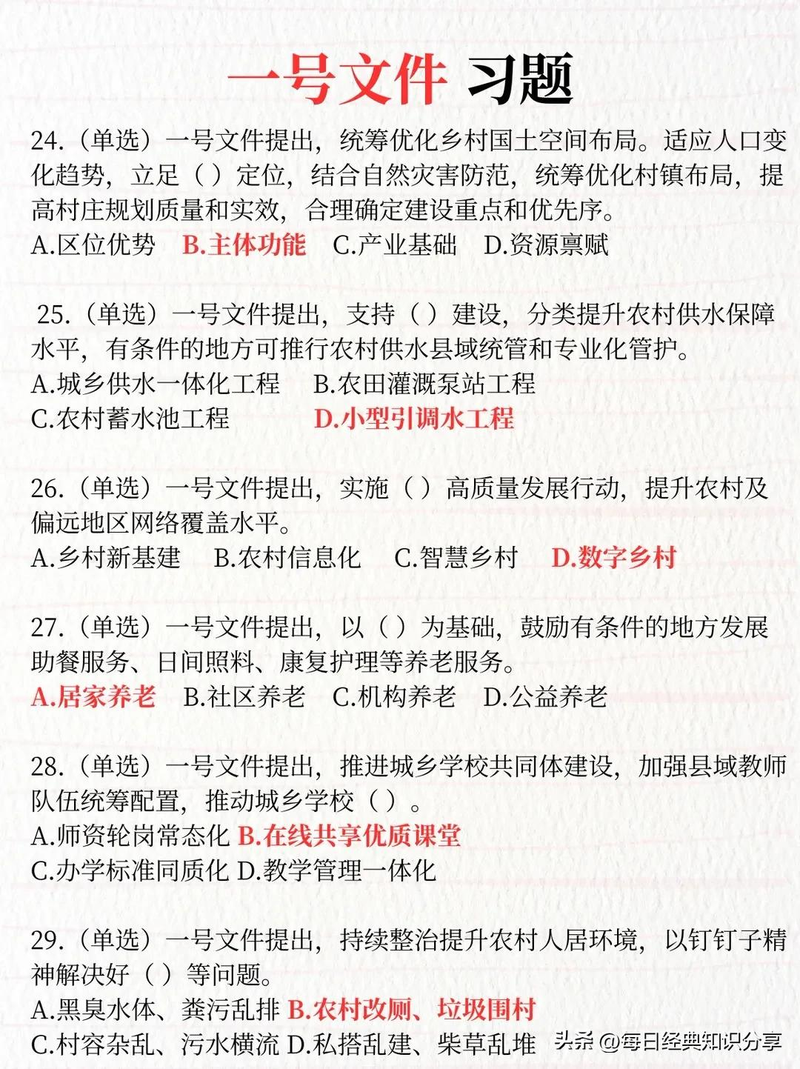
The core value of the encapsulation is to translate the policy language into the ability to score. Single-choice keywords, multiple-choice combination presentations, and judgement of red-line requirements. This set of exercises not only captures the time scores, but also directly uses the points of reference in the summary of the argument, the response and the interview responses, to achieve a multi-purpose, time-consuming and multiple harvest。
Many of the candidates are in a situation of “forget and forget” in preparation for the examination, which is essentially a lack of conceptualization and consolidation. Document 2026 was focused, the subject matter was clear, the topic was cleared, the political basis was stronger and the field was more decisive。
So, do you want the whole 50-track library of these exercises? How can the practice be directly translated into a gold sentence at the end of the commentary, a high-scoring template for interviews