


Estimation of the performance of the queen of naguana grapes and techniques for the early and high-quality production of plants
Nguyen zhixiang is waiting
Grapes, the first growing area of the zhejiang, are widely grown throughout the province, are cost-effective cash crops and play an important role in promoting rural renewal and farmer enrichment. Kashing is the main and dominant producer of the grape industry on the north and south banks of the bay of zhejiangzhou, with an area of approximately 0. 67 million hm2 for grape cultivation and 176,000 t for annual grape production, with a value of approximately 2. 4 billion yuan. Recent years have seen a rapid expansion of solar rose grape cultivation in the kaing region, which has already accounted for more than 70 per cent of total grape cultivation, leading to a decline in industrial efficiency. At the same time, the market demand for red grape varieties has not been effectively filled. In order to promote steady growth of fruit farmers and adjust the structure of grape varieties, it is necessary to strengthen the selection of cultivable varieties, while meeting the high demand of consumers for the quality of grapes, and it is therefore important to select new varieties of grapes of high economic value, good commercial performance and good taste to promote the transformation of the grape industry。
Queen nina (also known as queen nina) is a four-fold european-american hybrid that was formed by a mix of queen anzuzuzu 20 and queen anzum, and is favoured at both ends of production and distribution by the combination of bright red appearances, large grains, high quality, strong flavors and a high degree of disease resistance, as well as by a comprehensive and well-integrated new type of raisin. At present, zhejiang has less coverage of queen nina's seedlings, reports of rain-shielding in huai an, nantong, shanghai, etc., with poor colours in many places, and the exploration of complementary farming techniques for this variety suitable for zhejiang areas, which will not only optimize the structure of the zhejiang grape varieties, but also reinvigorate the grape industry. In light of this, in 2018, the experiment introduced queen nina to grow in casing, after many years of observation and research, using a range of technical techniques such as early planting and stripping, fattening, and management of fatty in production practices. The results show that queen nina's grapes show significant advantages in the zhebei region (kasing) under the double-film cover model for early cultivation, and that they are systematically summed up in their introductory expressions (including growth properties, fruit-based economics, adaptability, etc.) and integrated into a combination of two-film-promoting early healthy cultivation techniques with a view to providing technical guidance for the cultivation of the species in ka xing and zhejiang。
1 basic information on the pilot park
Wang jiang of ka xing city is located in the village of twin bridges in the south of wang jiang district of xiuzhou city, ka xing city, covering an area of 1. 33 hm2, which is a subtropical monsoon climate with four seasons full of sunlight and abundant rain, with an average annual temperature of 15. 9°c, and 2,000 hours of sunlight and 1,200 mm of rainfall. Soils are adhesive, organic at 3. 2% and ph 6. 8. The kashing area is part of the gangnam plains water network, with high groundwater tables, and is grown using a pick-up method. The two-peripheral membranes are used for pre-planting, and the sheds are co-located with 6 m span, 3 m shoulder height and 4. 8 m roof height, covering the outer membrane of 1. 2 mm polyethylene pep thin membrane, the inner membrane of 0. 4 mm thin membrane, the membrane of silver black reflector, and the large and inner sheds are equipped with electro-voltaic membrane devices. Plant 150 ~ 160 strains, v-shaped frames with a range of 1. 7 m x 2. 7 m, 667 m2。
2 citations
2. 1 botanical properties
Queen nina's raisins are tenderly sprouted in half-open, light yellow green, fuzzy; young leaves are light green with no hair on their backs; green on their backs is red striped with red stripes and ripe branches are brown; ripe leaves are palms, single leaves are born, 3 fractures are fractured, medium thickness, thicker hairs on their backs are thicker, gender flowers are the first in line, section 2 to 4。
2. 2 equivalent period
Five years of continuous observation in 2019-2024 found that queen nina's waiting periods varied little between years. In zhebei-kahing, the membrane (winter-to-be) membrane was bred at the end of january, flowering in late march, fertilizing in mid-april, re-finishing in late may and fully matured in mid-july。
2. 3 growth result properties
Queen nina has an embryonic rate of 84. 6 per cent, resulting in 75. 2 per cent, easy to flower, followed by a chording, with a number of 10-12s per flower。
2. 4 fruit economics and benefits
As can be seen from table 1, queen nina's grapes ears are cone-shaped or cylindrical, with an ear size of 800-1000g and an average of 951. 0g per ear; fruit ovulations and large fruit, with an average of 19-21g per grain weight; fruit skin thicker and red; soluble solids containing as much as 20. 3 per cent of the crust; drip acid content of 0. 51 per cent; sour acid heights and sweet tastes; strawberry and wines; and steady production at around 1250 kg. Queen nina field priced $80-110/kg, with high returns。
Table 1 freeze

2. 5 adaptation
It was observed that queen nina planted tree bodies under local ecological conditions at a faster rate, with a high degree of lumbering, with a high degree of adaptability and water resistance, and that the main diseases in the field were anthrax, albinosis, as well as dusty diseases, with particular emphasis on the prevention of anthrax。
3 dual membrane for early healthy cultivation
3. 1 production target
This type of tree is relatively modest and should be trimmed with a mid-twisted and trimmed, mainly with two stubbles, with 4000 to 5,000 sprouts in 667 m2. With the aim of producing refined fruit, 667 m2 is used to control the extraction of 210-2300 items, each with 1 bouquet, and the weak branches are kept in order, leaving 40-45 pieces of fruit per ear, within 800-1,000 g and 667 m2 production of 1250 kg。
3. 2 construction
Site selection is subject to the following land conditions: soil type is preferable to neutral to micro-acid sandy or bordery soil (ph 6. 0 ~ 7. 5), farm layer organic content is 3 % and drainage systems are improved. Cultivation systems are based on a two-concentrated morning model with tree-shaped structures such as t-shaped, y-shaped and v-shaped to achieve efficient use of coronary light。
3. 3 quantified management of cranberries
3. 3. 1 rest periods. Queen nina's growth is weak and her branches are less embryonic and weaker. The winter trim was completed before the lid on 20 december, with a short-slipping strategy to be applied, with 1-2 buds to be retained and trimped, thus making it easier to trim and avoiding excessive siphoning of nutrients in order to boost branch strength。
3. 3. 2 absorption in the early stages. Before the diaphragm is sealed, 50 per cent of the melamine is sprayed with 30 times more fluid for the result-based parent branch in order to break the grapes' hiatus, and 80 per cent and 90 per cent of the soil in the field and 85 per cent of the air in the shed is relatively moist, thus contributing to the growth of the buds. The planting of membranes in time for the evaporation of the soil has reduced the relative humidity of the air in the shed to 60 ~70 per cent, resulting in environmental moisture consistent with the long-term needs of grapes。
3. 3. 3 spreading of leaves to the bouquet separation period. 1 scattered buds: due to the early and early growth of the buds and the early and late appearance of the eye, the sprouts should be postponed until they reach the 4cm or 5-leaf 1 perm; 2 removed from the bouquets: see the varnishing of the extra bouquets, with only one bouquet reserved for each result branch. A 1,000-fold spray of atalin (composed of 6 per cent amino-vagina chain protein) on the front frontal lobes of the new lobe can induce strain resistance and prevent viral disease。
3. 3. 4 long-term fresh birth. In the long term (up to 40 cm) of grapes, it is necessary to implement a space configuration of branches at 17-20 cm standard distance, with the speed and efficiency of the twilight bands; the result is that it is not appropriate for the branches to take their hearts prematurely. The first step of 12 blades should be taken to the heart, to the top, to the back of the heart, to the top, to the top, to the upper end, to increase the number of leaves, to the four to five, to leave 3 to 4 to be grown, to be repeatedly to the heart, and to remove the remaining hairs as soon as possible; and queen nina, in large and scattered form, has swabled the shoulder of the seven to eight leaves in order to promote the forwarding of the flowers。
3. 3. 5 flower period. The pre-flower flower is plattered, with a pointer of 3. 5 cm or the left (five to six layers) and a cylindrical fruit。
3. 3. 6 post-flower until the expansion period. Queen nina, who is not easy to sit on fruits under natural conditions and needs a non-nuclear plant, found that queen nina, who spends 25mg/lga3 during flower seasons and 14d spent 25mg/lga3+5. 0 mg/l cppu, contributed most significantly to the growth of queen nina's grapes, with large grains and single fruit weighing 17. 36g. This study shows that, throughout the course of the first flower, the ear is cut off and the point of the ear is kept 3. 5 cm; and after the flower, 1 ~3 d is treated with 50 mg/l apricot and 12 ~ 15 d is treated with 50 mg/l aromic acid and 3 mg/l chlorine is expanded and more effective. When the fruit is grown to soybean grains, the ointment is to be trimmed one week after non-nuclear treatment, the axle is to be fixed, 40-45 grains per ear are to be retained, and the principle is to keep the oars on top of the lobe, remove the oaks from the face, and keep the oats outside the loch, cut them up in the face, to form the cylinders and spray them in a timely manner; and queen nina's grape light is to be easily coloured, but too strong light is to be sunburned. As a result, the prevention of management of fertilizers has been strengthened, with hard-core soil pursuit and the application of medium-sized elemental fertilizers to the leaf。
3. 3. 7 after maturity and harvest. In the critical period of fruit chromosomalization, the result is selectively removed from the two nodes of the base and the light of the fruit is improved. Prior to harvesting, 15d reduced soil water content to 60 per cent of field water holding, promoting accumulation of sugar. By october, the top line had been removed and the promotion branch matured in time。
3. 4 pest management
In the southern regions of zhejiang, which are prone to disease due to high summer temperatures and wet weather, queen nina's grape pests are mainly anthrax, grey disease, powdery disease, albinosis, stupefy moths, etc., under the conditions of double-film promotion facilities. Healthy cultivation is based on the concept of healthy plant protection to prevent pests and pests, develop tree positions and control yields, thereby increasing tree resistance and reducing pesticide use。
(a) sleeping period: after the grapes have been cut, the old skins on the main trunk of the grapes and on the main chickens, which are often the hides of the fungus and pests, should be cleanly bred from the vineyards, with the dead branches and leaves completely cleaned and removed from the gardens; in order to further safeguard the health of the vineyards, the new plants should be treated with 3 ~ 5 ° to 5° of sulphate or sulphate, which can effectively reduce the incidence of disease in the vineyards and reduce the potential threat; the euphemism period: at the beginning of the sprouting of the grapes, cracking of the blades, euphemisms of the eye, euphemisms of the eye, and the application of the ~ 8° ° ° ° ° ° ° ° ° ° ° ° ° ° ° ° * * * * * * * * * 硼 硼 硼 硼 硼 硼 硼 硼 ; precautionary periods: 42. 4 per cent of cedar fluoroamide 2500-4,000 times the fluid, 200g/l-amphetamine 3,000 times the fluid to prevent asympathic disease, powdery disease, anthrax and gill moths; maturity period: to ensure the safety of fruit, use of insect-intelligent enticing and anti-regible night moths, orange fly, blue-boarded bait flies, treas, cedars and aphids to reduce chemical use; post-harvesting: protection of autumn leaves with copper, etc。
3. 5 fertilizer management
3. 5. 1 base fat. In the kashin region, the application time was october. At the height of the growth of the grapes, the roots are broken and new roots emerge. Recommendation 667 m2 applies 1 t bioorganic fertilizers, 50 kg phosphorus fertilizer, microbacterial fertilizer 20 kg, particle boron 0. 5 ~ 1. 0 kg, particulate zinc 0. 5 ~ 1. 0 kg, granular magnesium 5 kg, with a garden-wide application, which is applied in conjunction with a field management machine, with timely water recharge after application, to promote fertilizer solubility and root system absorption。
3. 5. 2 fat pursuit. Water soluble fertilizers are used interchangeably for algae, amino acids and corrosive acids to meet the nutrient demand of grapes at different stages of their growth. Long-term high nitrogen and post-balancing water solubility fats, two times solubility in obituary green organic water, 2 times weights in 667 m2 and 1,200 times more algae at a one-week interval, root-drive rooting after 20-20-20 balanced water fertilizers 1 times after current rolls, 5 kg/667 m2, 10-48-10 high phosphorus water soluble 1 time before flowering; high nitrogen water solubility in the early stages of fruit expansion, 20-20-20 balanced water soluble 15kg/6672 in 2 times; fruit chromatic chromosomal chromium, e. G. Potassium nitrate, applied by tree size, 667 m2, 5kg in 2 times; and s-influcose, 667m2, 100g in a spraying system, 1 100 g in order to promote colour and growth. Studies have shown that the auxiliary spraying of a reasonable amount of folic fertilizers or plant growth regulators has had a significant effect in promoting colour improvement, such as the application of decomposition acid (aba) to promote the colouring and amelioration of red earth grapes, and the application of 50 mg/lmeja to the face of the fruit can significantly improve the coloring of the consequences of king nina. For this reason, in queen nina's first flower, fertilizers can be sprayed to promote pollen growth and fertilisation; calcium fertilizers are sprayed in the swelling-to-chromosomal phase; and stimulant + potassium phosphate can boost fruit colouring and early maturity。
3. 5. 3 water management. Water should be carefully controlled and 20 d of berries should be controlled before maturity to prevent fissures and ensure the quality of fruit. Owing to heavy rainfall in the south, the monsoon season is characterized by dysentery and timely drainage to prevent internal flooding of fissures。
3. 6 agronomic measures such as stripping, photo-reflection
Earning technologies play an important role in grape cultivation as an effective horticultural management measure. Not only can it be used to control the growth of grape branches and to contribute to the expansion of sit-ins, but it also has a clear effect on the maturity of early giant grapes, the promotion of colour and the improvement of the quality of fruit. The 15d stripping of the main stem after queen nina's queen's queen's queen's queen's queen's queen's queen's queen's queen's queen's queen's queen's queen's queen's queen's queen's queens queen's queen's queen's queen's queens queen's queen's queen's queen's queen's queen's queen's queens queen's queen's queen's queen queen's queen's queen's queen queen's queen's queen's queen queen's queen's queen's queen's queen's , will has helped to the the the q '。
Studies such as perp show that queen nina's grape color can be increased by placing a reflection film 60 cm above the shelf. In zhejiang, the high temperature, the high wet and weak light climate and the infrequent colour of red grapes makes it possible to place a silver, black or super-sweet agro-reflective film on the face of queen nina, which can significantly improve the light environment and increase the refraction light to promote colour and effectively inhibit weed growth。
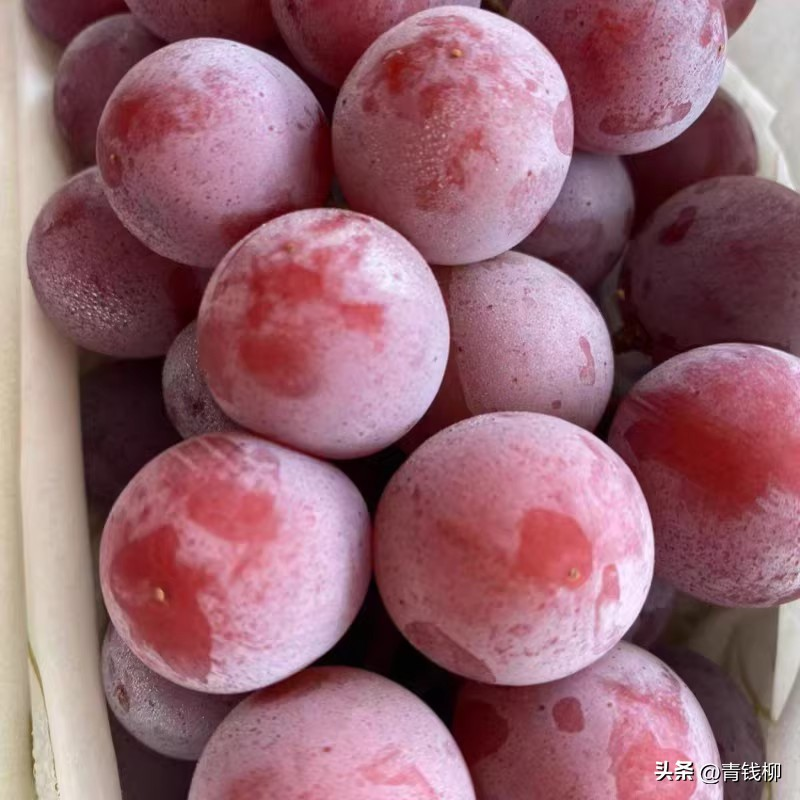
Queen nina's grapes
4 concluding remarks
Queen nina has the advantage of contributing to the steady production and quality of early cultivation in zhebei kashing, developing the proportion of red-coloured grape varieties, optimizing the structure of varieties dominated by zhebei grapes and roses, promoting the diversification of grape varieties and making them economically efficient, as a fine new species suitable for early cultivation in zhebei and similar areas。
This research system summarizes the queen nina's dual membrane-promoting combination of early healthy cultivation techniques, which improves the quality of queen nina's grape cultivation by means of diaphragm-promoting early, reasonable load, quantitative management of cyanobacterial fruit, fattening, green pest control, anti-photo membranes, and ring-feeding. Technical safeguards are provided to address the problem of poor coloring of queen nina's grapes in the zhebei region, but more in-depth research is needed to further improve the system of queen nina's grape cultivation techniques for sustainable industrial development in the areas of queen nina's zhebei。
The new breed of queen nina, the nuclear-free queen, the result of queen minina's queen's queen, was the same year



