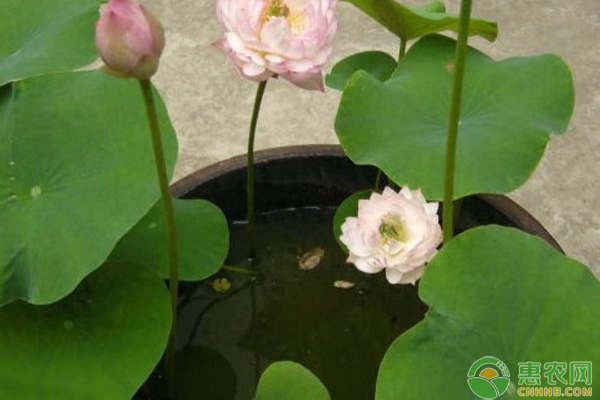
The bowl, also known as white lotus, has a green and round leaf, rich in colours, typical form, and has the elegance of a flower. To keep the bowls at home, not only beautiful but also interesting. Most people in their homes use water to make a bowl of lotus?
1. Preparatory material
Select a good, full bowl of seed. It is recommended that glass or ceramic packagings should not be too small or too shallow to provide sufficient space for the growth of the bowl. Pond mud is an ideal matrix, and if it is not available, it can also be used in a balanced mix of leafy soil, garden soil and fine sand。
Seed breeding
The thicker skin of the seed may prevent its growth. Seeds therefore need to be pre-treated before seeding can take place in order to promote seeding. Spectrums on one end and dents on the other, pre-treatment is mainly decorative for the end of the dent. In the course of the operation, care should be taken to avoid damage to the embryos inside the seeds, while the skin should not be removed completely. A small piece of skin can be cut lightly with a small knife, or a plier can be used with a tiger clamp, even if the skin is sharpened gently on the concrete floor, which can serve the purpose of pre-treatment。
Pretreated seeds are immersed in clean water, and the water level is just about to flood the seeds. In order to promote seed germination, it is advisable to place seeds at ambient temperatures above 20°c. If the ambient temperature is low, the water temperature can be maintained using a thermostat. In general, at temperatures above 20 °c, seeds usually germinate within one week. Water needs to be changed every 1 - 2 days during the leaching of seeds. If running water is used, it is recommended to dry it for a period of time to remove hazardous substances such as chlorine gas from the water. When seeds are sprung and rooted, they can be planted in ready containers。
Three, plant
The pre-prepared matrix (soil) is added to the glass or plastic container and is immersed in water two weeks in advance, but no fertilization is required at this stage. In the process of planting, the small seedlings shall be gently pressed into the soil, evenly inserted into a few pieces, followed by an appropriate amount of water, so that the water level does not exceed the height of the small leaf。
4. Later conservation
The bowls are not grown with sufficient light and should therefore be placed on the balcony or window to the sun for at least four hours per day for their maintenance. It is important to note that insufficient light affects the formation of buds and that, around noon in the summer, strong sunlight may cause foliage and petals to die and therefore need to be properly shielded. There is also a need for proper fat pursuit during the growth of the bowl. Fertilizers should be applied in accordance with the principle of “fat weight and diligence” to ensure that plants receive sufficient nutrients. When the leaves of the bowl are too dense, some of them can be properly removed for the benefit of ventilation, which also helps plant better flowers. After a year of cultivation, soil exchange should be considered as the nutrients in the matrix are gradually decreasing and the roots of the ground become dense. Land exchange is best carried out in the spring in order to provide good conditions for the new year of growth of the bowl。
This is how you grow a bowl, which you can grow, grow and grow. The experienced florist is welcome to continue his addition。
You may be interested in the content of the following recommendations, which are welcome。