Xinjiang hammy city: singing "water save" and doing "ecological articles"
Peasant daily chinese network journalist, crown
With reference to the city of hammy in xinjiang, there is a connection between the metropolitan area and its specialty, the hammelon. Hamish is an oasis city in the desert, with less than one second of water resources per capita across the country. There is a cloud in hami road, and i'm looking up on the top of tianshan, and the grass is dazzling. From xinjiang's map, hamish, three sands, none of the lakes. In such a situation, how can the people of hamish use and adapt nature, so that the water-consuming melons can grow into a rich and productive industry and the city of hamish become a green eco-friendly city
In recent days, journalists have followed the “four seasons looking at xinjiang” interview, “looking at xinjiang” to khami, across the north and south of the tianshan mountains, from the khami river in the khamiyi region, located in the south, to lake barikun, in the north of the hill, and to the igor river basin, to showcase the vivid practices of the lake hami, which embraces ecology, the feeding of people, the yoonzawa economy, and the flourishing humanities。
Water conservation aid "sweet business"
Hammy has been growing melons for over 2000 years. There is sufficient light and a dry climate, with a maximum temperature difference of 20°c and a high suitability for the growth of the melon. In the city of hami, in the town of igor, the town of chailu lake, where the production of the melon is sweet and contains more than 15 degrees of sugar, thanks to glacial snow and water。
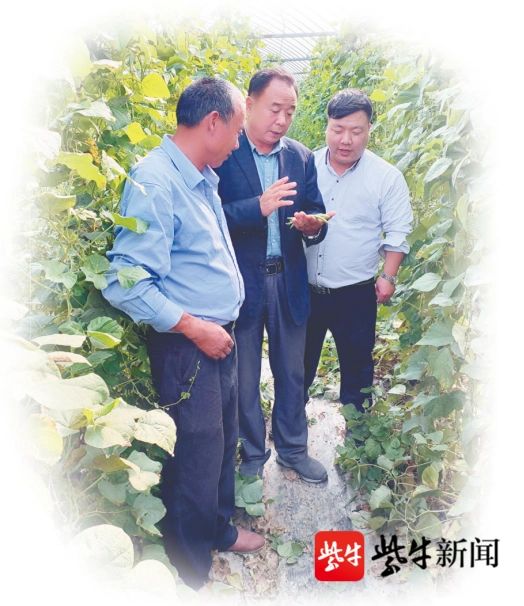
In order to efficiently use limited water resources and accelerate the promotion of efficiency in agricultural water conservation, the town of shao mao has been active in promoting underwater drip cultivation techniques, which can save more than 35 per cent of the acre. “acre water use was generally 500-600 cubic metres in the previous pattern of flooding with large water. Water use has been reduced to about 300 cubic metres following the application of the submural drip water-saving model.” presentation by zhang myung-sheng, member of the tsang lake town council。
In 2021, the humiliated water-saving irrigation project was upgraded at the late-lated chamigoa planting site of lake shaggy, where remote control devices were added to drip irrigation facilities so that the melons could operate with precision on their mobile phones。
Zhou zhou, a member of the community of chau-lac and hao-won, has just demonstrated to journalists that “measure fields can be seen on mobile phones, with maximum control of water on the basis of the size of the terrain, ensuring that they are irrigated equally. People are sitting at home watching television, water is poured in the ground, saving time and labour.”
At the same time, the town of chammal lake has also made a major effort to promote the chamigoan species and to assist the guangnons in supporting standardized farming, drone protection and organic farming. At this stage, the main crops of lake shao mao are the nueva 25 and mei 17 of western county, known as cucumbers and cucumbers, which are of excellent quality. In 2019, igo county was also covered by the technical protocol for the production of organically dated melons. Since the introduction of the new technologies, water use has been significantly reduced, sugar levels have increased by more than two degrees, storage periods have been extended by about 15 days, and the weight of commercial melons has increased significantly, to over 80 per cent, with a marked improvement in quality。
This year, chamigoa, which is grown at a late age, has an area of 4. 15 million acres and is expected to produce approximately $4,500. “we are currently planning to implement the hammelan deep processing project, which will focus on the development of a series of deep-processed products, such as melon dry, melonic, melonic, melonic, melonic, melonic, and melonic, in order to continuously increase the value added of the entire melon chain and open the way to innovation for farmers.” huang ho, deputy director of the rural and agricultural directorate of hami city, said that “the next step, hami will focus on five broad areas of seed development, branding, certification, cold chain logistics and brand promotion around the hamigu fresh fruit platform, with a strong focus on developing the capabilities of the hamigu industry.”
Water-saving irrigation, efficiency gains, technology applications, and the movement of the chamigoa lake to further markets, as well as the “sweet business” of the population, are on the rise。

Water plus eco-rehabilitation is re-energizing the harmi river
A lot of citizens enjoy leisure and exercise in the hami river national wetlands park. "you see now that it's been modified, that the vegetation is all over, that the water is clear, that there's so much comfort and beauty, that we have a place to walk, and we're in a good mood." the citizens who are practicing in the morning give vande a happy smile。
It is hard to imagine that the hamish river in the late 1980s is in a state of near depletion, without looking at the current wetland park of the hamish river. In 1981, the construction of the stone city reservoir addressed the main production and use of water for the living of the citizens of hamish, but it also resulted in a sharp drop in water flow from the east-west dam of the khami river, the drying up of numerous springs and the subsequent complete collapse of the khami river, the loss of grass and wood in the river, the serious destruction of regional biodiversity and the scarcity of water for agricultural production and irrigation。
The hamish yearning for the early rebirth of the hamish. Water-enrichment works have continued in hami since 1998. “we have built the project to bring up the water supply to the south, and we have built a dry canal from the stone city reservoir to refill the khami river, which is about 10 million cubic metres per year.”。
In addition to the water reservoirs, since 2019 the city of hamish has been fully promoting the ecological restoration and conservation of the khami river and its tributaries. Seven major projects have been carried out, namely, the prevention and control of harmful organisms of the khami river, the management of wetland eco-water and the conservation and rehabilitation of habitats, and the establishment of long-lasting protection mechanisms. The construction of the project is based on the principle of non-destruction of the original water system and of non-destruction of the original vegetation cover, and the opening, restoration and construction of the two eastern and western green corridors to achieve a longer period of effective water recharge for ecological restoration。
With more water and more green, the rivers of hami, which were once cut off, are now vibrant, greening the people and benefiting them. At present, ecological restoration works in the hami river amounting to 5,300 acres have been completed in the hami river national wetlands park, 3. 8 times more than before the ecological restoration, with the addition of 2157 acres of green land, increasing the rate of greening along the hami river from 18 per cent to 78 per cent, becoming “natural oxygen bar” in the city. With the construction of 10 small parks and two cultural squares by the east-west dam, a 26-km gymnasium walkway links the gardens and a wide view of the wetlands park。

The ecological dividend lets the villagers eat "tourism."
"in the clear, in the rain, in the mud, in the boots at the door, in a bottle of wine." this is the true picture of the former lake takaya wetlands. In 2017, khami bariqun district invested funds to rehabilitate the ecology, build landscapes and develop tourism. From 2021 to 2023, henan islands invested rmb 31 million in the construction of basic roads, tourist galleries, wood pavilions, specialty residential accommodations, etc. In the wetland areas of takaya lake, and the overall upgrading and improvement of the infrastructure of the attractions not only improves the living conditions of farmers and pastoralists and the quality of tourism services in the attractions, but also broadens new ideas for wetland tourism development。
“we will not choose to build large landscapes in areas where weeds are rich and in ecologically very good pastures, and residential and tourist service centres will also be built in saline and peripheral areas.” the deputy director of cultural and sports television and tourism bureau of bariqun county, jiang xiaoqian, described lake takaya as a gradual development of an integrated ecotourism route that has led to the employment of more than 300 people and indirectly more than 1,200 people。
“this year, during the summer season, we received 70,000 visitors, receiving around $50,000 a day.” the “after-90s” owner of the possibilities village told journalists that he operated residential and agricultural accommodation for tourists, meals and fishing, with a capacity of 300 per day。
From the mud to the aaa area, the villagers of lake gao eat “tourism dinner”. They also value the hard-earned “happiness” that they enjoy from ecological conservation. “it is only in a better and better environment that our roots will hold and tourists from all over the country will come to us in balikun.” meng qingjie said。
With ecological support, people's lives improved and human prosperity flourished, khami was on the path to green development of “water clean people”。