Grapes are one of the most popular fruits because of their nutritional abundance. So how do we grow high-yield, high-quality grapes? Today we're going to elaborate on the quality of grape cultivation。
I. Park selection and planning
Grapes are radiant and warm fruit trees that have better adaptive capacity for planting the soil. The soil that is most suitable for the cultivation of grapes is suitable for sandy soil, which is organically rich, ventilated and better protected by water。
Before we grow grapes, we have to plan for orchards, especially the choice of planting density and planting methods, which have a significant impact on their production and economic efficiency. The rational use of land resources and the efficient use of light energy are the basis for rational planting, which is now mostly carried out through the planting of sheds and fences。
(c) cultivation: 1 metre by 5 metres and 150 acres。
Ii. Cultivation of grape trees
1. Base weight
In order to provide good conditions for the growth of grapes, bottom fertilizers can be applied about a month before planting, typically 3500 to 5,000 kg of rotting organic fertilizer per acre and 50 to 100 kg of calcium per phosphate. Fertilizer can be applied through ditches, the depth and length of which are appropriate at about 60 cm. Fertilizers are distributed in the ditch with a small amount of fine wheat straw, weeds, etc., which is then applied to the gutter by the middle layer, where the rotting organic fertilizer is even with the soil, and then the past calcium phosphate is concentrated on 10-15 cm from the ground and then the ground is flat。
2. Plantation
The trees can be planted one month after fertilization, with spring and autumn plantings and flexible choice of planting times depending on local climatic conditions。
The seedlings are set to choose a strong graft, with a crudeness above 0. 7 cm in the upper part of the cut. The elimination of the rotting roots, the mutilated roots and the removal of a small part of the primary roots before planting can prevent the roots from bearing bacteria and stimulating the emergence of new roots. In pre-prepared planting, 30 centimetres of planting pits are dug every 1. 2 metres to place the tree in the centre of the pit, allowing the roots to stretch naturally around it, then landfill with fine soil and light seedlings in the direction of the shelf, promoting full contact between the roots of the tree and the soil, and ultimately watering the ground。
Iii. Management of the larvae period
When planted, the grapes enter the field management stage, and we call the period from planting to flowering. The focus of early tree management is to foster scientifically sound tree shapes through enhanced management of fertilizers and to promote rooting for the purposes of deep-leaved seedlings。
One, the chicken
In the first year of planting, new seedlings must be planted in such a way as to ensure that each of the main chickens is kept in one or two places, the basic principle of which is to stay healthy and weak, but it is best not to exceed two. When the main chickens grow, they lead to growth in time. The way to draw is to place a pole vertically next to the main chicken, which is about 15 centimetres tall, and to tie it loosely, leaving room for its thickness。
2. Management of juvenile water fertilizers
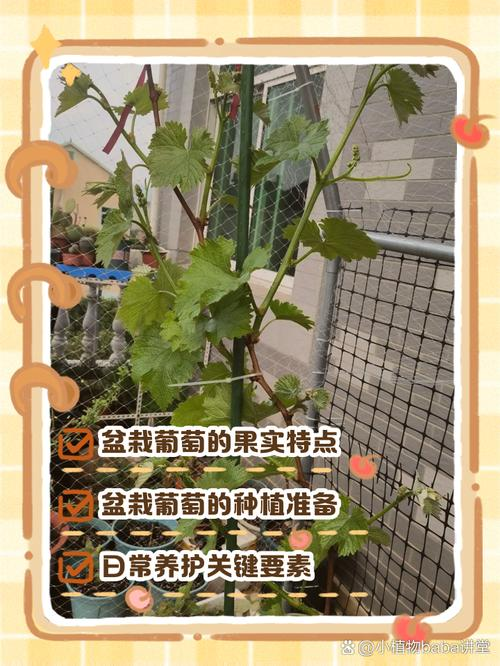
Some 40 days after planting, the pursuit of fast-acting nitrogen fertilizer contributes to the growth of the tree, allowing urea to be applied to 25-30 kg per acre. The principle in the management of moistures is that, if growth is weak in the early stages, some nitrogen fertilisation can be applied, with the latter generally dominated by light and leaf or organic fertilisation. Episodes are drought-prone and need to be constantly checked for the survival of the trees and soil conditions, and care should be taken to keep the soil wet, to water once after application, and not to overload, so that the orchards are not wet enough to increase the likelihood of disease。
3. Weeding
In order to keep the soil loose and permeable during the growth of the grape larvae, weeding is often done with pine soil in order to promote the growth of the larvae roots。
4. Integrative trim
Integration of the larvae will ensure balanced growth of the tree, as illustrated by the following example:
Grape trees grown by fences are cultivated during the larvae and, depending on the main chicken, the budding eye of the main chicken is selected during the year and the side branches below 30 cm above the ground are removed to prevent disease. The first is when a young child grows up to 80 centimetres, where it continues to grow at the top of the chicken, while the remaining two to three leaves repeat the heart, when the length of the chicken reaches 1. 2 to 1. 5 metres, to promote the growth of the chicken side by side and to cultivate the fruit of the future. Carcinating helps to strengthen the main chicken and lays the foundation for early grape outcomes. During the winter trimmed, four to six strong branches were selected for the main chicken, and four to six were left with short sprouts, thus forming a contour of the main chicken。
5. Pest management in the nursery age
The main diseases of the sapling season are ravine and black bean disease. The rainy season is a high-prevalence period for both diseases, which can normally be prevented with the use of dyson manganese zinc 400-500 times the fluid, with one spraying every 10-15 days and two sprayings. If the rainy season comes, it can be combated by 1:0. 7:200 times the bordeaux fluid, usually sprayed every 12-15 days。
Iv. Management of the tree of results
Grapes are grown by fences, sheds and so on, and i'm presenting to a wide range of farmers' friends, mainly for example, the management of grapes。
1. Management of the embryonic period
Before the onset of the early spring, thiomers of thiomers of 3-5 degrees of thiomers can be sprayed to prevent infestation. The first water fertilisation in the spring after the raisin sprouts is via the application of nitrogen fertilizers and 15 kg of urea in acre at an eye length up to 5 cm. A branching operation is also carried out to remove excess and weak branches, etc., and to allow the branch to have a width of 30 centimetres around them。
2. Chicken management
During the growth of the grapes, the chickens are managed in a timely manner according to the growth of the plant to facilitate the rapid growth of the plant。
A chicken binding: this can be done by placing new mats on the mantle, with the upper one evenly distributed over the shelf, avoiding cross branches and overlapping branches, so that, in addition to being evenly distributed, the female branches are bound vertically, which can be tied at 45 o'clock, strong branches should be tied horizontally or in arc, and weaker branches may be tied in a smaller size, so that the new branches can grow evenly. Cardiocre: 10-12 leafs above the end of the tree. It is then carefully designed to reduce the consumption of new nutrients and thus concentrate on the provision of flowering fruit. To keep the branches closed, the nutrients must be concentrated in the provision of the flowers, and all the stalks below should be removed; the stalks above the stalks should leave a leaf behind for the heart; and the top stalks should leave two to three leaves behind. (b) decorations: throughout the long-term, when new rolls are to grow, they need to be removed in a timely manner, and they are harmful in the context of artificial cultivation, which hinders the growth of plants and consumes nutrients, as well as causing many diseases。
3. Phasing management
As the saying goes, “raisins bloom and are run by fats”, and fertilizers and pests are the focus of management。
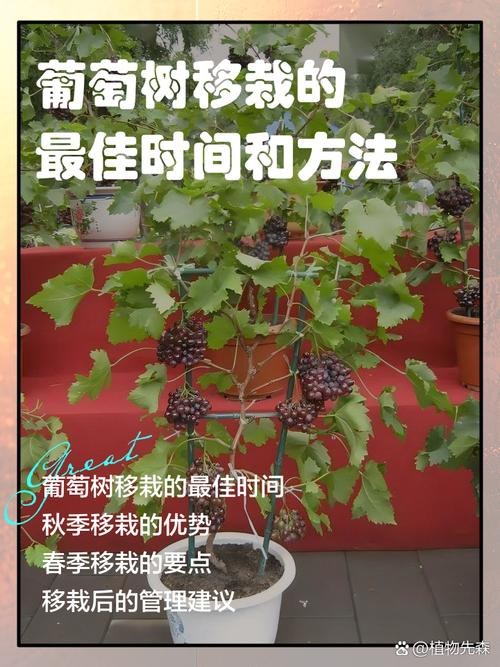
Fertilizing the flower: usually, 10 days before the flower bloom, the flower is fertilized with 15 kg of urea per acre. Before and after the flowering period, 0. 2% ~0. 3% boron sand or boron acid is sprayed, in addition to increased organic fertilizer, which has a significant effect on the rate of sitting fruit. Water control: from the time when flowers are present to the time when they are to be watered one to two times before they bloom, there is no need to be watered after they are bloomed, because they cause the branches to grow, consume a great deal of nutrients and cause the flowers to fall. Post-flower disease prevention and treatment: after flowers, care is taken to prevent and treat the disease, the main diseases during this period being ravine frosting and rheumatism, which can be sprayed on the leaves with dyson manganese zinc 400-500 times more, usually every 7-10 days and 2-3 in a row。
4. Fruit boom management
(1) episode, particle
In order for the grapes to be stylish, colourful and even, the size of the particles must be improved, and they must be refined. When the sequence is shown, it is expected that it will be estranged as soon as possible on the basis of plant cover. The main task of estrangement is to remove the estrangement of the shoulder, the first ear and the tip, so that the edifice is kept at about 15 centimetres, preferably not more than 20 centimetres, so as to ensure that the estrangement of the edifice is tight and loose。
Grapes have a high rate of sitting fruit and must be gravitated in order to obtain good quality fruit. Sorption is a delicate and important task, and in order to save nutrient consumption, it is recommended that it be done as early as possible. When the oscillation starts to shake the ear of the fruit, the fertilized fruit falls, and then the disease, the deformation and the injury leave the fruit equal in size。
(2) vegetable bag
Plumbing is followed by timely bags of fruit, which not only improve the appearance and quality of grapes, but also ensure their integrity from pests and diseases, while reducing pesticide residues. A microbicide can be sprayed in front of the bag, a fungi attached to the ear can be removed, and a liquid wind-drying bag can be used in time。
(3) large-scale fat catch
When grapes are most in need of nutrients and moisture, in order to promote fruit expansion, fattening can be followed up by approximately 40 kg of compound fattening per acre and 20 kg of potassium sulphate; 20-30 kg of compound fattening in acres of colour, 20 kg of potassium sulphate, 0. 3% of potassium phosphate solution sprayed on the leaves and watered immediately after fatting。
(4) go to the bag
The paper bags are removed about 20 days after harvest to increase light to promote sugar on the fruit, while the colour should also be improved, for the sake of even colouring。
5. Fruit harvesting
Harvesting is an important part of grape management, and the harvest period is the key to determining whether berries are good or bad, and should be collected in a timely and phased manner, based on the variety of grapes planted. When harvesting, grab the fruit, cut it off from the part of the stench and the stench, and keep it as long as possible, thus effectively increasing the storage time of the grapefruit. When the fruit is cut off, it shall be lightly released and the powder attached to the fruit surface shall be protected, and the fruit shall be removed, the fruit shall be removed, the fruit shall be removed and the fruit shall be marketed。
6. Fertilizing and harvesting
After harvest, tree recovery can be facilitated by the application of rapid nitrogen fertilisation or urea solution. In the case of root application, the acre application of urea is about 15 kg; in the case of leaf spray, 0. 3% urea solution can be sprayed 2-3 times. Of course, fertilization depends on the direction of the tree, and if the tree is strong, less or no more。
A new application of base fertilizer should be carried out before the leaves fall in order to promote the growth of the root system and the storage of tree nutrients and to lay the foundation for the next year's results. At the time of fertilization, 15 kg of corroded organic fat and 0. 4 kg of sulphur complex fat were applied to each den and then covered with fine soil。
7. Clearing the park

If grapes are to grow well in the coming year, grapes must be cleaned up in time for harvest, which will effectively reduce the incidence of disease. The gardens are to be cleaned out of all the diseases, fruit, branches and leaves, and to prevent pests and pests from crossing the winter with the remaining leaves, and colder fruit areas from being treated for winter protection。
Grape cultivation management measures are numerous and fragmented, and farmers ' friends are required to keep up with all management measures according to the pattern of grape growth in order to produce good-quality grapes. How to grow grapes for starters
When planting grape seedlings, the option is to plant them around april each year, at a time when the climate is more appropriate to increase the survival of grape seedlings after planting. The seedlings must be immersed in water for 10 minutes before planting, and the roots must be trimmed and then planted into a loosely fertile soil. When the planting is completed, water will be sprayed around the soil to keep it wet so that grape seedlings can grow healthy。
The new guy's way of growing grapes
Grapes are grown at the right time, and grapes are suitable for warm conditions, so they can be planted around april of each year, with temperatures rising in april and higher humidity in air and soil, which helps to increase the survival of grape seedlings。
Before planting grapes, the seedlings must be immersed in clean water for 10 minutes, so that the seedlings can absorb sufficient moisture. In addition, the roots need to be properly trimmed before planting, the seedlings need to be cut to about 10 cm, the extra buds cut off, and two full seedlings retained to reduce nutrient consumption。
Grape seedlings are suitable for growth in well-drained, defusing soils and control of soil acidity between 6 and 6. 8. Cultivation can be used as the basis for planting, when the soil is evenly mixed, and before planting, the soil needs to be properly retrofitted and incorporated into an appropriate amount of base fat so that grape seedlings can flourish。
When planting grape seedlings, the surrounding soil is to be dug into a pit, then the grape seedlings are to be planted and covered with a layer of dirt, which is then gently pressed with hands. When the planting is completed, water is sprayed from the canteen to the surrounding soil to keep it wet so that the vine seedlings can grow healthy。
How do grapes grow
Gravity seeds are washed with water and immersed in distillation water for two weeks, then they are laid in pre-prepared flower basins, covered with some 2 cm thick soil, then placed with a small stone, which can be kept in a plastic bag for warm and sunlight, and germinate in a week or two。
I. Preparation for seeding
Grape seeds are washed with water and then immersed in a small amount of distilled water for about two weeks. Pick water and ventilated pottery, ready to defusing fertile soil。
Ii. Cultivation methods
The prepared soil will be poured into the flower basin, the soil will be levelled and the immersed seed will be laid on the soil, and then the seed will be laid on about 2 cm thick of culture soil. A small piece of rock can be laid on the surface of the cultured soil, water can be poured into the basin once after seeding, and then a plastic bag can be placed in a flower basin to be conserved where there is warm and sunlight and it can germinate in about a week or two。
Iii. Last containment
A sprout seedling is best sprayed with a small canteen, which can be used to fatten up the water and prevent dumping. And when the baby grows up to about 10 centimeters, it's going to be given a little shelf to grow it。