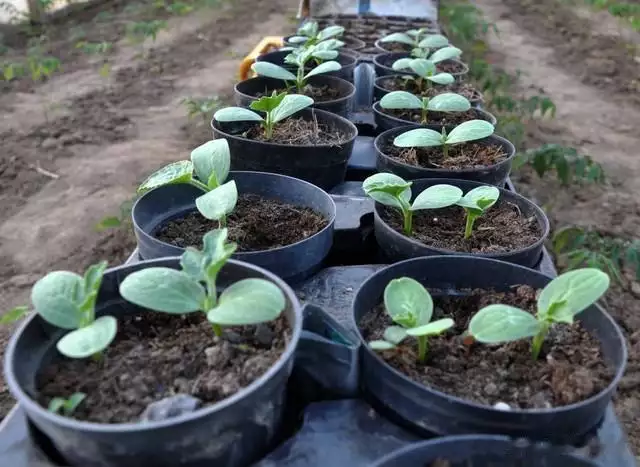
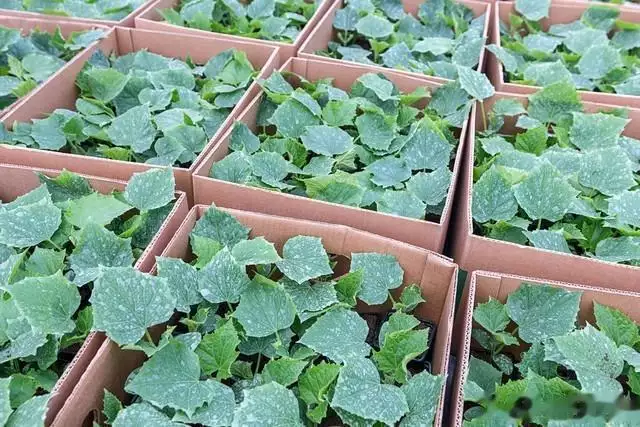
The production of cucumber seedlings comes mainly from seedlings, and some of the priority methods are described below。
I. Preparation for nursery
1 in terms of number of species: cucumber seeds weigh 28 to 32 grams per thousand, with 1,700 seeds per 50 grams. In the field cucumbers, around 4,200 cucumbers are normally planted per acre, using a 90 per cent gestation rate, removing ill and ill seed, etc., and requiring about 150 grams per acre. In order to ensure that the whole seedlings are broadcast live, two seeds are normally planted per den, which requires approximately 300 grams per acre。
Seed treatment: seeds without wrapping need to be tanned, disinfected, impregnated and incubated. It would be best if the seeds were delivered live, otherwise the packaging was washed away through seeding and did not work. If seeds are left out or unpacked, the need to: sow, choose the weather, and sow seeds in the sun for two to three days can not only kill parts of the fungus attached to the seed surface, but also increase the livelihood of the seeds and contribute to their germinate. 2 sterilization, killing or passivation of bacteria or viruses attached to the seed surface or even inside is the first level of disease prevention in cucumber production. The simplest and most effective method is to impregnate the warm soup. Water temperature and processing time should be strictly controlled to prevent the burning of seeds. Seeds are impregnated for 4 to 5 hours to inflate, and the fungus begins to move and is placed in hot water at 50 to 55°c, which is constantly mixing, and drops down to room temperature and extracts acupuncture. 3 leaching, where 4-8 hours in room temperature are sufficient to suck water. 4 the seed sprouts occur 24 hours at 28-30°c. The bulge was found to reduce the temperature to 22-25°c immediately, making it strong。
Ii. Breeding methods
There are a number of ways to raise a child, and the following are commonly used:
1. Base-based seedlings: the advantage is to avoid the hazards of endemic pests and to cultivate insect-free seedlings. The base is permeable, ventilated, the roots are well developed, easy to transport and plant, and do not hurt the roots. However, the root temperature is highly influenced by the temperature of water and the temperature of the environment, and nutrients need to be periodically replaced. Base quality water conservation, poor fertilization, high investment, high-density seedlings with strong control and high management and environmental requirements. This method is used in the summer and autumn high-temperature periods, where cucumber-specific seedlings can either be purchased directly or prepared themselves. The principles of the formulation are fine, light, nutritious, water-conserving and waste-free. Common materials include inorganic matrices such as leeches, pearl rocks, river sands, slags and organic matrices such as grass-grains, peat and straw fermentation, waste mushrooms and horse manure. Cultivation is used more often than not, as are nursery beds。
The selection of nutrients and burrows is based on seasonal and planned sizes. Before filling a lacquer or nutrients, the matrix must be impregnated to the point where the water is held by its hands but not flowing. Spray water before seeding or seeding. Cultivated seedlings are mostly on-demand, i. E., one seed sprouts per den, and one to two seeds unsprung. The seeding method requires a seed sprout rate of over 90 per cent, full seed grains, and consistent seed sprouts. It can also be broadcast first, sowing 8-10 grams per square metre, with a single pericardial period of 2 leaves being spread to nutrients or dens. The sowing is followed by a pebble of 0. 5 to 1 cm thick, which is sprayed with water (approx. Water drops from the bottom of the lavender), bringing the base to a maximum water holding capacity of over 200 per cent. Thereafter, water is sprayed regularly to keep the base humid until seeding occurs. Temperature protection of the membrane can also be increased during low temperature periods, with sunnets to protect the moisture, cooling and accelerated seedling。
Regular birth control: soil breeding, with the advantage that it is constant at root temperature, low investment in seedlings, easy management and suitable for large-scale seedlings. The disadvantage is the vulnerability to endemic diseases and pests, which need to be decontaminated by nursery beds or planted in an alley; and the fact that they are grown with nutrients, which can cause injury to roots at the time of seeding, and the fact that the soil is significant and difficult to transport. Select fertile fields that have not been cultivated for at least three years, with 1,100 kg of organic fertilizer per 10 square metre, 0. 25 kg of ammonium phosphate, 20 centimetres deep, and approximately 1 centimetre thick of lids that are mixed with soil. When the surface is flatted or when a man in the ground is nourished with fertilizer, the water is poured out and seeded after the underwater consultations. The air is followed by 0. 5 to 1 cm thick, humid soil (lower temperatures than high temperatures), properly suppressed. Low-temperature membrane inoculation and temperature protection in high-temperature lids or sunnets for seedlings。
3. Marriage of seedlings: a form of cultivation that overcomes obstacles by using the nature of wood species resistant to endemic diseases and pests. The advantage is to overcome endemic pests and diseases with strong roots and strong growth. The disadvantage is to be labour-intensive, with a long age ... Requiring a high level of managerial skills and good environmental conditions. More use is made in northern areas where the risk of atrophy is greater. The growing incidence of endemic diseases in the production of cucumber by the attendants makes it increasingly important to marry a child。
Currently, the species of cucumbers used are highly resistant to diseases such as blackseed pumpkins, chinese pumpkins, japanese hybrid pumpkins, low-temperature, and cucumbers of good taste, which, when married, can lead to early maturation and production, without any significant adverse impact on their quality. The selection of the remembracing is based on the adaptation of the protected environment, generally in the form of abundant products that are low-temperature, weak, pre-cooked, of good quality and resistant to foe diseases. The method of indoctrination is dominated by the top sprouts and the leaning. It's three to five days before the sprouts were planted. The most suitable age of marriage is the first leaf of cucumber with large nails and two cucumber leaves that have just begun. It is broadcast three to four days later, using a cucumber-by-mix, the most suitable of which is a two-leaved leaf, the size of the soybeans, the cucumber leaf, and the new leaf。
Specific methods of indoctrination: the seedlings and seedlings are first extracted from the nursery, and roots are covered with wet cloths. The true leaves and growth points of the pumpkins are removed with disinfected blades or bamboo tags, and on the side of the leaves in parallel with the direction of the leaves at 0. 5 to 1 cm below the leaf, cutting down by 45 ° angles with blades, reaching 2/5 to 1/2 centimetres deep in the embryo's axis. It then takes an ear and cuts the blade upwards by an angle of 30° in a vertical direction of 1. 5 cm below the leaf, reaching a depth of 1/2~2/3. Embedding the incisions of the logs and ears, squeezing the interface softly with your hands, so that the interface is not lost. Fixed interfaces with a dowring. Cucumber leaves are higher than pumpkin leaves in the "ten" shape. Once connected, the seedlings are hidden in the nutrients. When planted, the left hand gently grabs the part of the interface where the seedlings are contracted, places the roots inside the quarries, and the left hand grabs the roots and fixes them. To facilitate the removal of the stem system, the tubing should be approximately 1 cm away from the root, and the interface should be 3 to 4 cm from the trophic soil, so as to avoid the interconnection and exposure to the soil. When planted, water is poured and planted in a nursery. Uncertainties formed by the festival should be removed in a timely manner, starting seven days after marriage, one time for 2-3 days。
The interfacing healing period for seedlings is 8-9 days, requiring a temperature of 25 °c during the day and 18 °c at night, not exceeding 27 °c and not exceeding 15 °c at the minimum; the relative humidity of the air for the first 3-5 days is maintained at more than 95 per cent, with subsequent increases in the amount and duration of ventilation. The first three days of marriage are covered in full, the next half is covered in light (on both sides), and in the event of a rainy day, the cover is gradually removed and transferred to normal management. Be careful that the choice of the cover is not too thick, but through the faint light, and that the shade cannot be too long or too long, otherwise it will lead to the marriage of the seedlings. Long
Iii. Slimbed management
Temperature management: temperature from seeding to seedlings should be controlled at 23-25°c, 28-30°c, and 15°c at night to facilitate the early release of seedlings. After the seedlings are excreted, the temperature and humidity will be reduced appropriately, 24-28°c will be maintained during the day and appropriate ventilation will be wet. The temperature should be sealed at 25°c in the afternoon and above 20°c. When a seedling grows to three leafs, it is necessary to gradually increase ventilation and extend the number of sunlight hours. One week before planting, cold exercise is carried out, bringing the temperature in the nursery near the temperature of the shed after planting。
2. Water management: sufficient moisture is required before seeding takes place to facilitate seeding as soon as possible. When seedlings occur, when the bottom water is sowed, it is generally not watered in the early stages, even if it is slightly dry, which leads to the growth of the embryos deep into the earth and to their development. If the seedlings are found to be particularly dry, they can be watered at 30°c at noon。
3. Light management: the growth and development of cucumbers is closely related to the intensity of light, so it is desirable that early spring seedlings maintain light for eight hours a day. In the event of heavy rainfall, it would be preferable to increase light with “high-energy, multi-efficiency fertilizer lamps”, to increase temperature, to produce ideal seedlings and to establish a sound basis for later production. The most effective way to extend the short sunlight is to open the morning cover, which should be removed from the non-transparent cover such as grasshoppers, as soon as the sun shines on the surface, and then clear the film to increase the perusal rate, which can only be covered when the sun does not shine on the surface in the afternoon. In some places, it is very wrong to think that mornings are cold, that mornings are cold, that afternoons are covered by nightfalls for fear of heat run off, and that even in the harsh winters, when the sun is short, the light is only 4 to 5 hours. In snowy weather, snow must also be removed and covered in a timely manner during the day, as solar light is dispersed and the non-transparent cover is removed, and the temperature in the gill can rise slowly. If the darkness is not revealed for a long time, the seedlings are not only yellow and weak, but also impoverish and rot. It should be borne in mind that, once the sky is clear, the seedlings die in large numbers。
Nutrient management: general seedbeds have a soil organic content of more than 5 per cent and contain abundant nitrogen, phosphorus, potassium and water conservation, fattening and good gas. In general, there is sufficient nutrient nutrients for nursery and no need for fertilization. If the seedling grows slowly, a leaf-faced fertilizer can be used, i. E. 0. 2% ~0. 3% urea solution or 0. 1% ~0. 2% urea mixed with 0. 1% ~0. 2% potassium phosphate。
Advertising bean bag computer download portal