


There is no sea wider than heart, no mountain higher than faith! In the process of becoming rich
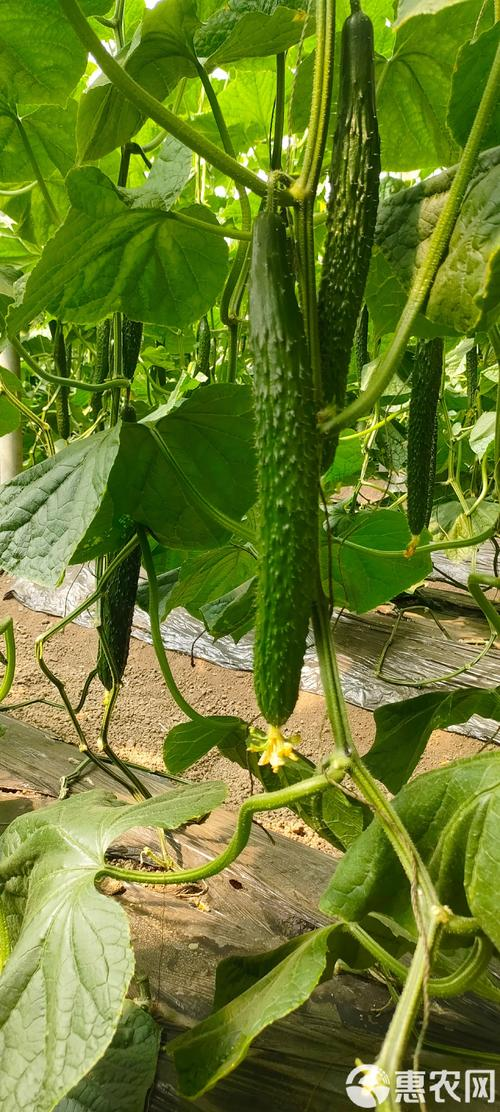
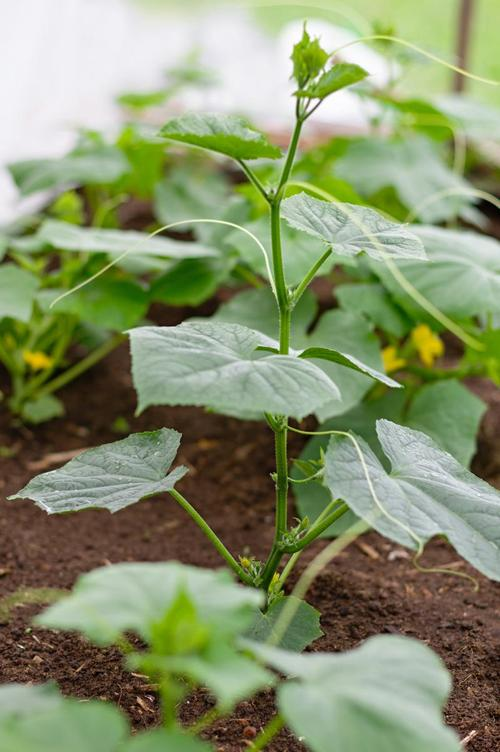
Vegetable technology is in the company of the cucumbers of the rich, warm, intolerant and sensitive to the temperature of the ground, requiring a certain degree of coolness of the day and the night; weak light; shallow roots that make it difficult to absorb the depth of the soil; stringent requirements for nutrients, which require multiple fertilization at low concentrations; and suitable growth in organic, permeable, water-conserving and well-structured soils. In the field conditions, cucumbers are usually grown in the form of seedlings from the small spring accelerage, which took place in early march, were established in mid-april and began to collect in batches in mid-may. In the field of cucumber cultivation, the associated planting techniques should be developed in accordance with the requirements of their growth habits and environmental conditions. Growing habits and environmental conditions require 1. 1 temperatures for cucumbers to be warm and suitable for 15~32; zero benefits for death and five benefits for frost; seed buds to be no less than 12~13 benefits for seeding and 28~32 benefits for seedlings; seedlings for daytime temperatures that should not exceed 24~28 benefits for sunday and should not be less than 18~22 gains for shades and not less than 12~17 for nighttime; flowering seasons that should not be less than 20 benefits for daytime; and fruit growing the fastest under 25~30 temperature. The requirements and temperatures of cucumbers vary, and their roots are more sensitive to temperature. Therefore, the field planting in the spring should take place when the temperature reaches more than 15 cents; during the breeding period and at the beginning of the planting period, measures to increase the temperature must be taken to ensure normal growth of the roots. 1. 2 the hydrocucumber root is shallow and does not absorb the deep moisture of the soil; the leaves are large and thin, the evaporation effect is strong, and they are prone to atrophy in high temperatures, strong light and dry air, so that the soil is supplied with sufficient moisture through irrigation. When temperatures are low, the soil is overwatered and can cause cucumber root and fallout. 1. 3 soil nutrient cucumbers are suitable for cultivation in organically rich and well-fed fertile soils, which are gaseous, fattening, water conservation, well-structured and suitable for cucumber root growth. Cucumbers absorb the three elements of nutrients most with potassium, followed by nitrogen and, at least, phosphorus; cucumbers have a particular preference for organic, corrosive, et cetera. School fertilization can improve soil permeability and facilitate the activity of micro-organisms in the soil, thereby accelerating the recomposition of organic fertilizers; the release of heat and carbon dioxide in the process of decomposition of organic fertilizers not only increases the temperature but also allows for the full utilization of nutrients. Therefore, in early spring cucumber cultivation, the application of fertilizers is particularly important. The cucumber roots are weak and require low concentrations and multiple fertilization. 1. 4 the cucumber under the light condition is a vegetable with a weakness, which is conducive to the formation of cucumber females under conditions that do not exceed 10 ~12 hours of short sunlight; the long sun is conducive to the formation of male flowers; the cucumber “foster” occurs in the middle of the day, when the sun is too weak and the cucumber “foster” occurs; in order to achieve high productivity, a certain intensity of sunlight is required; and in the light of light, the improvement of the conditions of light can increase the production of cucumber. The selection of high-yield, disease-resilient, low-temperature, weak-light, good-commodity, suitable for field-planting in the spring, should be based on the selection of high-yielding, disease-resilient, low-temperature, low-light tolerance, good-commodity varieties. For example: zin chun 4, bomi 4, chinese nonon 12. Zinchun no. 4: combats frosty, powdery, aging; early ripe, strong and predominantly maggot-based, with macabre-capable and back-to-back; melon stick-shaped, white prick, slightly elastic and visible; melon-sized 30 ~ 35 centimetres in length and heart chamber smaller than 1/2 in guacamole length; melon-heavy, dense, sweet, fresh and good quality; high production potential, suitable for spring field cultivation. Bomi 4: a new hybrid cucumber species. The species is strong, resistant and resistant to frost and powder disease; it is about 36 centimetres long and weighs more than 200 grams per melon; it is cosmopolitan, dark green and bright; it is light green, small, dense, clean and good; and it produces a high yield and is an ideal species for field cultivation. · china agriculture no. 12, a mixed group of medium- and early-school common flower species. It is grown in a strong and medium-sized branch; the first female flower, dominated by the main cranium, starts with the main cranium, section 7. 0108, with the appearance of two female flowers every two and a three-leaf leafs; the melon is thicker, with a stick of twenty-three centimetres long and short; the melon is dark green, with light and no yellow stripes; the tumour is moderate and white; and the melon is 150 grams single, sweet, of good quality and suitable for field cultivation. 2. 2 cultivation of saplings of appropriate age 2. 2. 1 for preparation of seed beds: selection of fertile plots with a backwinding yang, easy to drain, good permeability, light salinity, high organic content, or empty areas in the courtyard. 2. 2. 2 nutrient earth: sifted soil at the ratio of field topsoil to rotive organic fertilizer 7:3. A compound of 500 grams of nitrogen, phosphorus and potassium crushed, 100 grams of methyl tobuzin, 60 grams of trichlorfon and 50 grams of multi-dimensional micro-fertilizers (composed of boron, zinc, calcium, iron and magnesium) per cubic metre of trophic soil is required to mix evenly. Two thirds of them were used to fill nutritional bags and one third were broadcasted to cover the ground. 2. 2. 3 filling of nutrients: selects a 15 cm or 8 cm plastic film-nutrient bag, requiring 2 cm above the surface of the ground, to be filled with trophic soil and placed in the nursery. 2. 2. 4 seed treatment: siltation: two days before sowing, with an increase in gerontology and sprouts. Sterilization of seeds: the tanned seeds are immersed in 55 wilayas (three open-waters of one cool water) for 15 minutes, then cold water is added to 35 wilayas for 3 hours, and sodium phosphate solution can also be impregnated with 10% sodium phosphate solution for 20 minutes to prevent viral disease, and then rinsed with water to rinsate the leachate to be broadcasted. 2. 2. 5 seeding: siltation periods: small arch sheds are used to grow seedlings for a suitable planting period in mid-march, with the minimum temperature in the shed being stabilized at a rate of 15 cents in time for planting; under low sowing temperatures, the seedlings are not easy to grow and contribute to the cultivation of the seedlings. On the radio: 80 kg of dry seeded land per acre. Scrolling methods and technical requirements: cucumber seeds, which are soaked, are planted manually in the heart of the nutrients, lightly suppressed, the seeds are ploughed into the soil on three sides and covered with well-formulated nutrients of 2 cm; willow poles, with a distance of 80 cm, willows, are built immediately after sowing; small water is used and immersed from the bottom 3/4 of the soil in the trophic quagmire (keep in mind that water should not flood the trophic hysteres, prevent the wetness of the seeding period, causing sprouts and post-sprouts of soil, and the emergence of seedlings); and cover the foggy-resistant film, heat-preserving wetting and seeding soil as soon as the bed is immersed with natural seepage. Song wei li, a high-yield high-yield cucumber cultivation technology (agricultural technology extension station, camp east north bank)



