What exactly does electronic engineering learn? What are the employment prospects? Let's follow the director
What's electronic engineering
The subject of electronic engineering involves a wide range of courses, from electronic devices to chip design, from light to communication systems, from signal processing to artificial intelligence。
In addition to the content of the profession itself, it is also closely linked to other disciplines, such as computer science, physics, chemistry, and even the arts of music production。
Some foreign schools will have electronic engineering as a separate department under the engineering college, but many will have it as one of the branches of the electrical engineering profession, which is more extensive in terms of overall professional coverage。
Although there may be differences between schools in terms of specializations and faculties, the traditional content is as follows:
Signal processing
Signal processing (signal processing) technology is the basis for modern electrical and electronic engineering, including voice and language signal processing, image and video signal processing, biomedical imaging and visualization, imaging array and array signal processing, signal processing from adaptation to time and change, large-scale integrated circuit (vlsi) system structure, real-time software, statistical signal processing, etc。
Communications and networking
The main research areas of the communications & network include wireless and light networks, mobile networks, quantum and light communications, information theory, network security, network protocols and architecture. There is more theoretical knowledge of the course, and employment can go to some national and foreign communication companies, but theoretical research is a good option if it continues。
Microelectronics
Microelectronics (microelectronics) courses are aimed at informing students about the concept of advanced electronics, covering mainly the following topics: multi-level amplifiers, frequency response feedback using podutu, oscillators and active filters。
Integrated circuits
Integrated circuits are designed to design integrated circuits, commonly known as chips, including wireless communication chips in mobile phones, computer processor graphic cards, etc. Chips are the cornerstone of information technology and have a range of different functions in almost any electronic device。
System engineering
Systems engineering is a particularly important element in any project design. In the area of electronic engineering, the system is the object of any completed project and may be a radio receiver, a mobile phone or a large project consisting of several separate project units。
The study is oriented towards complete object or system operation, ensuring compliance with product specifications and initial needs, including through testing。
Electromagnetic
Electromagnetic is a discipline that explores the interaction between electrical and magnetic properties, focusing on electromagnetic waves, electromagnetic fields and the dynamics of electric charge, electrical objects, etc。
Electromagnetics under the subject of electronic engineering mainly involve courses such as satellite communications, microwave electronics, remote sensing, radio astronomy, radar antennas, electromagnetic wave theory and applications, radio and optical systems, and the transfer theory of the electromagnetic field in electrical wave conductivity。
Optical science
Photonics studies include basic knowledge of photology, geometry and fluctuations in optical sciences, fibre-optics, semiconductor optical sources, electrooptics, optical devices, optical communications, optical data processing, optical computing, etc. Some schools also offer courses in biophotology, micro and nanooptics, photo-integrated circuits and components, and radio-frequency photology。
Computer engineering
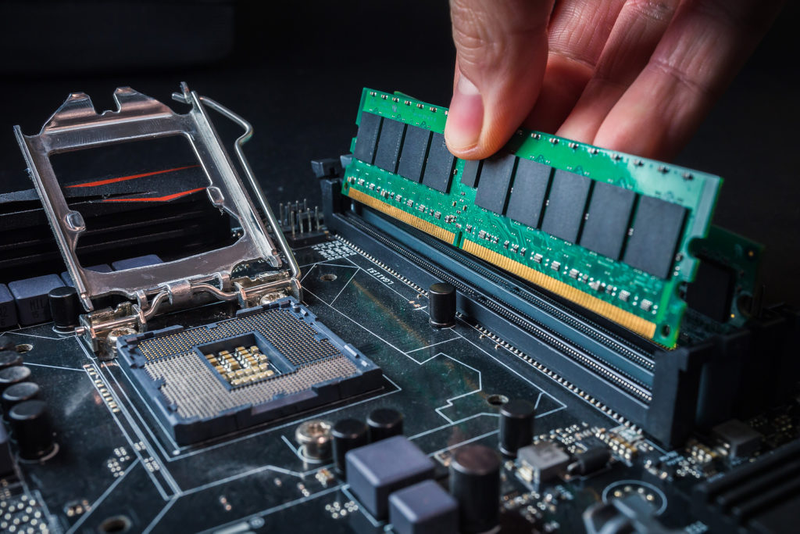
Computer engineering under electronic engineering is primarily concerned with the research, design, development and troubleshooting of electrical components (e. G., main panels, memory systems, telecommunications systems and circuit boards) and primarily with hardware engineering in computer engineering。
In addition to the directions mentioned above, the electronic engineering profession is often integrated with other subject areas and has produced many new course directions。
Bioelectronic engineering has been developed, for example, in conjunction with the field of biotechnologies, as most biomedical equipment needs to be applied to technologies in the core fields of electronic engineering, such as electronic components, microwaves, electromagnetics, opticals, etc。
Other courses that may be relevant in the field of electronic engineering include computer science, electronic materials science, nanotechnology, etc., which can be accessed by the network of targeted university officials
Why learn about electronic engineering
High demand for employment
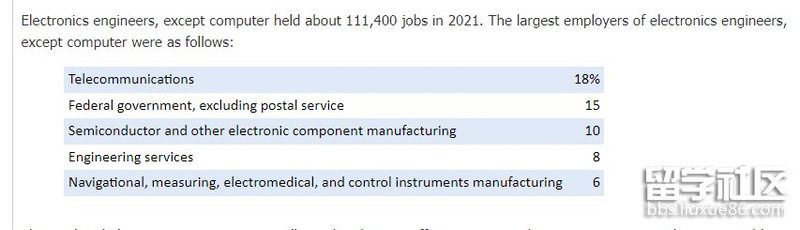
As technology continues to develop, so too is the demand for electronics engineers. In the united states, for example, according to data from the united states labor office, the needs for electronics engineers in 2021 were around 111,400。
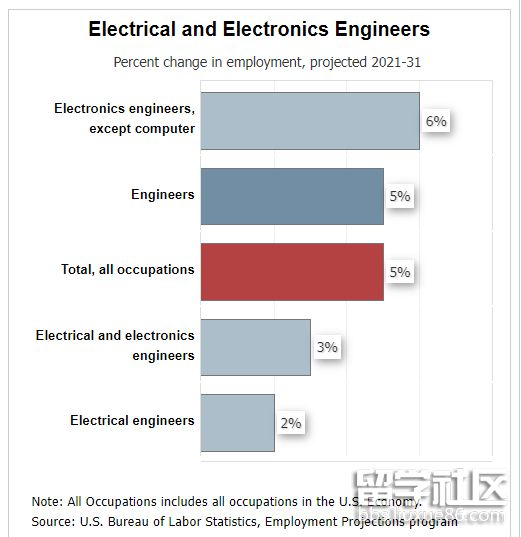
Employment growth in electronics engineers is expected to be 6 per cent higher than in all other jobs in the next decade。
Broad employment orientation
Electronic engineers, a general term for technical staff who produce and develop related products such as integrated circuits and electrical and electronic equipment, also have professional and industry-specific responsibilities, but can generally be divided into hardware engineers and software engineers。
The career orientation of the profession is broad and targeted, and electronics engineers are present in the communications, electrical, electronic and even mechanical, computer and other industries, typically:
Space industry
Automobile industry
Defence industry
Electronics
Scrap industry
Marine industry
Material and metal industries
Power generation
Railway industry
Utilities
Information industry
In particular, the positions available include, but are not limited to:
Electronics engineer
Computer hardware engineer
Electronic design engineer
Electronic communications engineer
Systems engineer
Hardware engineer
Computer network architect
Equipment engineer
Aviation engineer
At the national level, employment in the electronics sector is dominated by the following four categories:
(1) electricity companies: the national electricity network company, the southern electric network company and the five major electric power companies (grand tang, huai-chang, national electricity, china electricity and middle power) are supposed to be among the first jobs for graduates。
2) upa electrical design institute or institute: works mainly in the design of power plants, transformers and circuits, on-site commissioning, testing, data reporting, research, etc., with little pressure but considerable remuneration. These institutions, however, have a high demand for talent and believe that there is a greater chance to emerge if they have experienced study abroad。
3) department of engineering, which is primarily responsible for the construction of power plants and the construction of transformers。
4) other industries: e-engineering professionals are also needed in sectors such as automobile manufacturing, lighting, communications, chemical industries, etc。
High salary
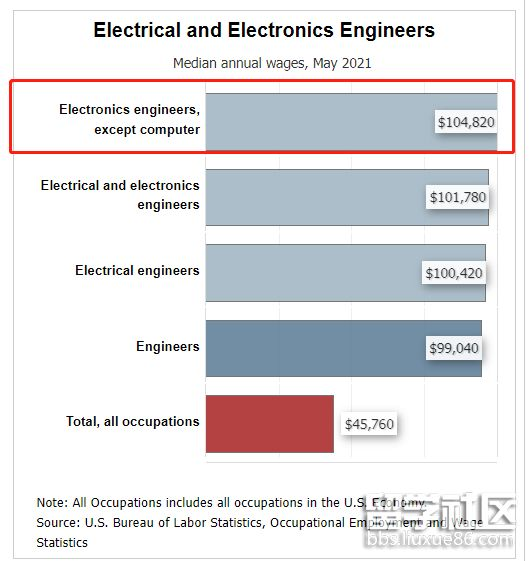
According to data from the united states labor office, the median annual salary of an electronic engineer is us$ 104,820 (approximately rmb 730,000)。
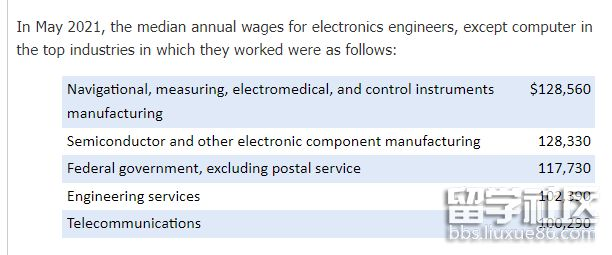
The median annual salary varies according to the industry, where the highest-paid industries are the seafaring, surveying, electronic medicine and control instrument manufacturing, with the median annual salary reaching us$ 128,560 (approximately rmb 900,000)。
Conditions for application
Undergraduate
There are no particularly significant differences between applications for the electronic engineering profession and other professions in applications for this section, but most universities have certain requirements for applicants' performance in science subjects such as mathematics, physics, chemistry, etc., so the intake team will look for the most appropriate subjects for reference in the subjects you studied in the past. Other useful disciplines may include advanced mathematics, design techniques, engineering, etc。
1. Language requirements
Other achievements such as tofu or yath (top 30 institutions recommend 100 points in the tofu score, or yath 6. 5 and above)
2. Academic achievements
Applying for an undergraduate university in the united states will generally require the provision of sat or act results, with specific scores to be viewed in the network of school officers
English schools generally have a-level or ib achievement requirements. If you want to apply for a higher-ranked institution, a-level grades generally need to reach aaa or higher and specific information needs to be referred to the network of school officers
In addition to the above, other achievements that could be applied for undergraduate applications may include those of gpa, baccalaureate or baccalaureate, pre-studies, etc。
Postgraduate
1. Professional background
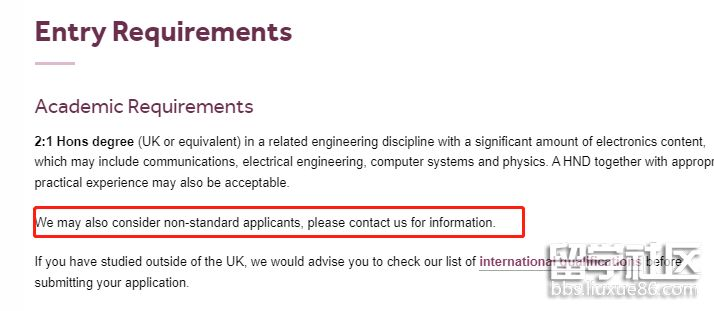
Ee has numerous branches and research orientations and is a highly cross-cutting discipline, so that foreign universities do not have specific professional requirements for applicants ' backgrounds, but most require scientific courses。
If you have a degree in the fields of communications, electrical engineering, computers, physics, mathematics, chemistry or other engineering branches, it is certainly the best; there are also schools that consider accepting undergraduate students who do not have a relevant degree。
2) gpa
Most schools will require you at the undergraduate level of the gpa at 3. 0 and, if you want to apply to top 30, the gpa is better at 3. 5。
3. Language achievements
International students who do not speak english as their mother tongue are required to provide the relevant language achievement, and some schools are exempted if they have a national educational background in english。
Tofu 80 points, the minimum requirement for most schools, and 90 points or more for the first-ranked schools; and yassian scores require a total of 6. 5 or more。
4) gre requirements
In the field of electronic engineering, especially in north american institutions, applicants are required to submit gre results and, if they wish to hit famous schools, to recommend gre 325+ above. There are, however, a number of institutions that are optional and specifically require access to the network of school officers。
5) work/internship
Most schools do not have a mandatory requirement for applicants ' work experience, but if so, it must add value。
As a practical discipline, science and technology tends to place greater emphasis on the hands-on research skills of students, such as the ability to help quickly in the laboratory, and subject papers, work experience and project experience are among the most valuable indicators of assessment。
We can upgrade our personal background by attending laboratories in schools, using summer vacation time to communicate abroad, exchange, or enter relevant institutions for scientific internships。
Institutions/project recommendations
Massachusetts institute of technology
Massachusetts institute of technology
Project introduction
The eecs department of electronic engineering, located in mit, is the largest faculty of engineering, with approximately 700 doctoral and master's students. The application was for ph. D., master, only for mit eecs undergraduate students. And it's 3-7 years。
Application requirements
Language: toefl100+ (internet-b)Or ielts 7+
Gpa : no explicit requirement, based on previous year admission data, recommendation 3. 8 +
Gre: no mandatory requirements。
Soft power: students need not only the relevant background, but also a strong mathematical, physical, computer or engineering background。
Stanford university
Stanford university
Project introduction
With the rise of the silicon valley in the united states, there has been an increase in electronic engineering at stanford university, located in silicon valley, precisely because stanford university has provided an excellent technical base for the rise of silicon valley。
The phd+master is about 200 people per class in stanford, about 75% of whom are masters. If students want to learn solid electronic engineering and want to live in the best climate in america, stanford must be the best place for you. And his project system is: ms 1. 5-2 years; phd 5 years
Application requirements
Gr: 90% per cent or high on the quantative section
Gpa: no express requirement, but follow up on previous year admission data, recommendation 3. 8+
Languages: toefl100+
University of california berkeley
Uc berkeley
Project introduction
Like stanford university, the belik branch also plays an important role in the development of silicon valley, where research is widely regarded as a theoretical focus in academic circles, and where the academic level of the electronic engineering profession is strong in all directions。
The bailey school, however, is under-funded by cuts in education in california, but applications are as difficult as any of the top universities in the united states. The application is based on ph. D. The eecs graduate project in berkeley is one-to-one-two in the united states, with a wealth of school resources。
Application requirements
Gre: 325+ ( > 90% in quantitative, > 70% in verbal, > 3. 5 in analytic)
Languages: toefl 100+, ibt 90+ or ielts 7+
Gpa: 3. 7+
Average enrolment rate: 12 per cent
Caltech
California institute of technology
Project introduction
The small and sophisticated electronic engineering profession at caltech makes it quite difficult to apply, and it is unlikely that, for undergraduate students, it would have been possible if it had not been for very good academic results。
Application requirements
Application requirements
Language: tofu has no explicit requirements, based on previous years ' admissions, recommendation 100+
Gre: no specific requirements, based on previous year admissions, recommendation 325+
Gpa: 3. 5+