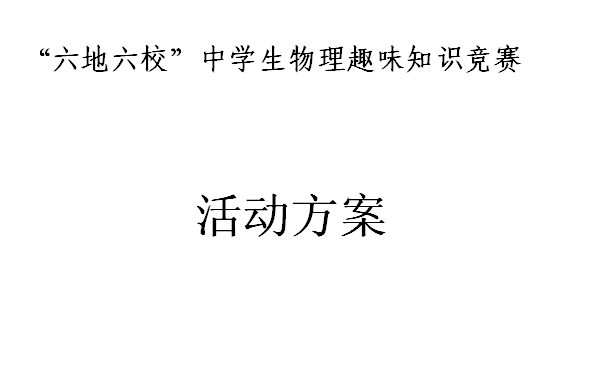
The spread and dissemination of the physical knowledge of the physical interesting knowledge competition programme i and its objectives not only enhances students'scientific literacy but also stimulates their interest in physics. The programme aims to promote the academic atmosphere in schools and foster teamwork among students by organizing a physical-interest knowledge contest to enhance their understanding and application of physics. The scope of the programme is primarily for students at the secondary level, with participation at all levels. The event will be organized by the school physicology study group, with the assistance of teachers in the relevant disciplines and the participation of extracurricular physics experts. Activity objective 1. Knowledge-sharing: to equip students with basic physical knowledge and knowledge of the application and development of physics through competitions. 2. Capacity enhancement: improving students ' mental, hands-on and teamwork skills. 3. Stimulation of interest: to stimulate interest in physics among students and to foster a spirit of scientific exploration. 4. Social interaction: promoting communication and cooperation among students and enhancing class cohesion. Organizational needs analysis 1. Target group: students at the secondary level, with an estimated 100 participants. Resource requirements: - site: school auditorium or multi-purpose classroom - equipment: projectors, sound equipment, timers, flashcards, etc. - manpower: physical teachers, volunteers, evaluation specialists 3. Timetable: activities are scheduled for approximately one week at the end of each school year. 5. Step 1 of the implementation of activity 1. Preparation for the formation of organizational committee 1. 1 - division of responsibilities: establishment of teams for planning, promotion, site setting, logistics, evaluation, etc. To ensure the orderly conduct of the work. 1. 2 determination of the format of the competition - format: it is divided into three stages: the first, the resumed and the final. - first competition: in-class, basic knowledge is examined in the form of written examinations. - repetition: on-site answers are conducted in teams to examine application capabilities. - finals: students and teachers from all over the school are invited to attend and set up a field test challenge. 1. 3 preparation of topics - type of topics: - selection: basic knowledge assessment - filling in questions: basic conceptual understanding - experimental design: examination of students ' hands-on abilities - source of topics: ensuring the scientific and interesting nature of topics by combining the content of teaching materials and extracurricular readings. 2. Promotion and dissemination of information materials 2. 1 - production of posters, leaflets and posters to be posted throughout the campus, using the school's twitter public sign. 2. 2 organization of mobilization - organization of classes to inform students about the significance and rewards of the event and encourage active participation by all students. 3. The competition is conducted at the beginning of the 3. 1-time: monday, the first week: classes -- forms: written examinations lasting 60 minutes, 25 lines, 100 points. 3. 2 repetition - time: wednesday the first week - place: school auditorium - form: group answers in situ, divided into multiple groups, timers set up, 30 minutes to answer. 3. 3 finals - time: monday the second week - place: school auditorium - form: on-site trial challenges, divided into theoretical questions and experimental operations, with a total score. 4. Evaluation and reward 4. 1 evaluation criteria - primary: correct response rate per player - replay and final: combined consideration of correct response, teamwork, experimental performance, etc. 4. 2 awards - first prize: certificate + awards (e. G. Physical books, experimental equipment) - second prize: certificate + awards (e. G. Learning stationery) - participation award: all contestants receive small gifts. 5. A later summary of 5. 1 data analysis -- collection of numbers and scores for each round, analysis of participation rates and satisfaction levels to inform future improvements in activities. 5. 2 activity feedback - questionnaires are distributed to participating students to gather comments and suggestions on the activities and further optimize the programme of activities. Vi. Budget and cost control project budget amount (in dollars) for the allocation and rental of 800 other 400 ** total *** * 3500 ** - budgetary control for the allocation and rental of 800 food and beverages for the 500 prizes for promotional material: to ensure the sustainability of activities by identifying sponsors or in-school resources. Sustainability and improvement 1. Activity cycle: it is recommended that one session be held every semester to develop a branding effect to attract more students. 2. Resource accumulation: collection of thematic databases and evaluation experiences from past events to inform follow-up activities. 3. Expanding cooperation: sorority contests can be organized in partnership with other schools to increase the impact of activities. Viii. The programme of activities to summarize the physical interest of the competition seeks to enhance students ' comprehensive capabilities while stimulating their interest through clear objectives, detailed implementation steps and reasonable budgetary arrangements. We believe that this event will provide a solid foundation for the physical learning of students and will also create a good academic atmosphere for schools。