It's 2745 words in the body, and it's expected to take eight minutes to read
In early autumn, the phoenix river was bright, the elders on the shore were laughing, the community gridman had a tablet to enter the information about the people, and the city's conflict-reconciled data was moving in real time on the centre's screen... This painting, which is filled with smoke, is a clipping of the modernization of grass-roots governance in taizhou, jiangsu province. As “a pilot and qualified city for the modernization of social governance in the country's urban areas”, the city of tezhou is based on the “water city” character, which is designed to break the governance grid with a “one-stop shop” service, to activate governance effectiveness with digital empowerment, to bring together governance efforts with pluralist governance, to devote all its efforts to creating a “thai-to-tai” rule-of-law business environment, to safeguarding the quality of economic and social development and to explore a path of modern governance with local characteristics。
From multiple head run to one stop end to zero running leg
"i didn't think we'd be able to solve the problem in one place. At the end of july of this year, mr. Wu, a citizen who had just signed a mediation agreement at the centre for general management of the city of thailand, expressed his outrage. Not long ago, he was in a dispute with his neighbours and property over compensation for damage to his home as a result of the breakdown of the upstairs plumbing. Upon arrival at the centre, staff quickly launched the “telephonic interface” mechanism, using remote guidance from video-link legal experts to reach mediation agreements in just one hour。
Behind the efficient disposal is the “multicentrism, multicentre” governance model constructed in thailand. The city-wide three-tier general management centres have integrated “6+6+n” structures, integrated the functions of six main centres, such as prosecution services and prosecution services, created six functional areas, such as integrated processing and multidisciplinary rehabilitation, and promoted the presence of 7733 full-time mediators and 122 professional mediation organizations. The data show that since the centre became operational, there have been a cumulative total of 6. 13 million disputes, with a substantive resolution rate of 97. 1 per cent and a real “only one door and up to one run”。

In the seamounts of the city of thailand, five experts from the public prosecutor's office and the legal profession have regularly “heared” and since 2024 have resolved more than 120 conflicts of various kinds, including neighbourhood and property disputes. The region's innovative “1+2+10” inspection vehicle system extends legal services to the first line of business, with a cumulative total of 278 enterprises measuring more than 100 legal risk points。
In the town of tahing, the “free from fear” service has effectively facilitated the population. Through access to the notary's data channel with the bank, the bank card succession business moved from “multiple running” to “maximum running”. The “police network law” integration model of the indo-hashi community in the town brought mediation services to the homes of the residents, with a success rate of 98. 18 per cent in 2024。
In addition, thai municipal law authorities have helped optimize the business environment by regulating administrative inspections and changing the judicial concept of law enforcement. The thailand city council's political law commission has taken the lead in enhancing the application of the “thai city internet + regulatory” platform by fully deploying the relevant corporate administrative check “scanning entry”, regulating the implementation of pre-censorship registration, real-time uploading during inspection, timely recording of results after inspection and providing feedback on the subject's evaluation, promoting strict regulation of fair and civilized law enforcement and creating a good enforcement environment for businesses。
`experience decision-making' to `data-driven' to achieve accelerated governance effectiveness
The alarms of the “thai governance” information platform came out suddenly — the system monitored the failure of an enterprise to issue a ticket for three consecutive months and the irregularity of social security payments. The platform immediately sent the information to the gridkeeper, who visited the site to confirm that the enterprise was in a difficult business situation. This is a day-to-day feature of the “big data alert” mechanism in the thaksin city, which has identified and helped more than 20 troubled enterprises by integrating data from the tax, social and other sectors。
One of jiangsu's technology companies was on the verge of bankruptcy because of the debt problem and was detected in a timely manner by large data monitoring. On 5 february 2024, the joint government department of the thaksin city people's court initiated a pre-reorganization process to recruit investors through the national insolvency reorganization network. From the start of the process to the resumption of production, it took only five months to relive the land of 15,000 square metres and settle the debt of more than 50 million yuan. “it was supposed to be a liquidation, but it was never possible to regenerate!” the head of the restructured enterprise was outraged that the company now had sufficient orders and was expected to produce up to $70 million annually。
This is a “digital governance” scene that can be seen everywhere in thailand. The public security department of the city of thailand's “thai police” operation, which brought the total number of available surveillance to 144,000, increased the total by 39. 2 per cent over the same period; the “online processing of litigation warranty” of the people's court of the city of xieng city, which has digitized the entire process, has been evaluated as a case of innovation in digital courts throughout the province; the “foundations for the future” platform of the city of xinjiang has access to 11,000 road monitoring, and the management of the “one-size-one class” for minors who have committed misconduct has contributed to a 50 per cent reduction in the number of criminal cases involving minors over the same period。
In the area of risk prevention and control, digital means are more powerful. Three security “circles” provide full coverage at the inter-city card points, with priority crossing controls, and 1524 “safe volunteers” night patrols working with smart warnings, resulting in a 45. 6 per cent reduction in criminal cases across the city in 2024 and a high level of night security in the province。
In order to better maintain security and stability, the political and legal institutions of the city of thailand are constantly engaged in the fight against corruption and ill-treatment, and the series of “shelter parks, safe enterprises” and others are constantly being further developed. The public security bureau of the city of thailand has stepped up efforts to address outstanding issues of security in the company's immediate vicinity and has severely combated offences such as blockage of roads; the people's procuratorate of the city of thailand has been pressuring for criminal offences involving the sale of counterfeit goods, etc.; and the intermediate people's court of the city of thailand has created a brand for the judicial protection of intellectual property rights “innovating thai conscience” to create a secure and stable environment for business development。
From “government solo” to “social chorus” to “coherence” in governance
"thank the law experts for getting our wages back!" in the river dispute mediation room in the city of tae-hing, several workers were given a round of thanks for their salary arrears. This labour dispute was quickly resolved, thanks to the town's participation in the “community of opinions” mechanism of the national maple bridge work act, which consisted of a panel of legal experts, rural masters and business representatives to resolve conflicts in a language that the public could understand。
This model of pluralist governance has flourished in the state of thailand, where 2130 people's mediation committees have been set up, professional mediation organizations have been formed in nine major areas, and a large network of “horizontal-side and vertical” mediation has been established. In 2024, 30 legal experts from the society of the law of the city of thaksin fell to the ground, resolving 1325 financial and 59 commercial disputes, and recovering nearly 300 million yuan in damage to businesses。
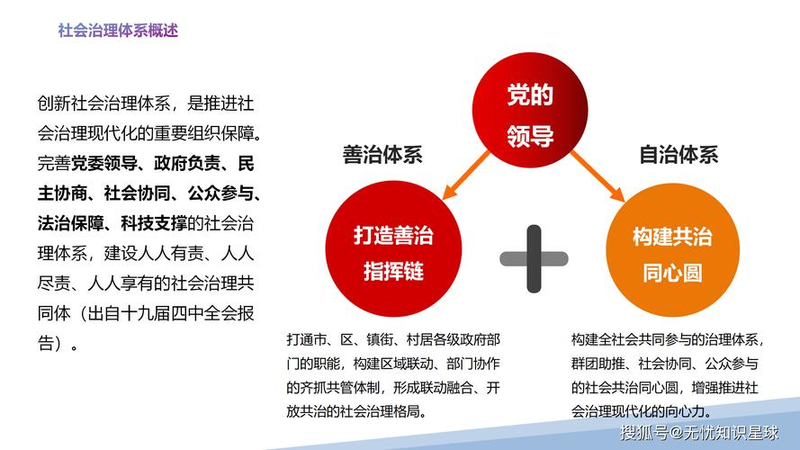
The “chemical industry chain + legal services” model is unique in taising city, where the chemical industry is concentrated. The town has incorporated 190 enterprises below the scale into 68 governance grids and established a pool of “legal experts” “lawyers' pool” to better match business needs through the “bills, billing, billing” mechanism. In response to the uav oversight gap, legal experts issued timely legal advice to complete the registration of 209 uavs。
The city of xinjiang has extended pluralist governance to the area of the protection of minors as the “national model city for the protection of minors”, which has introduced a four-colour management mechanism for the “red orange yellow blue” and has introduced “one-person-class” tutoring for 882 minors who have committed misconduct. Over $12 million of unicef funds were collected to provide emergency assistance to children in need, and nine schools have made their campus a safe haven。
In addition, thai municipal law authorities have been able to combine their efforts to optimize the business environment in various ways. The state department of justice has thoroughly deepened its “benefit laws” in relation to legal services and has set up the legal services centre for the great health industry to improve risk management for the biomedicine industry chain enterprises. The public security bureau of the city of thailand is working to create a new type of police-business relationship, with a strong 2. 0 version of the centre + outpost to provide high-quality services to enterprises. The thailand city law society has piloted the establishment of legal expert workstations in industrial parks where enterprises are concentrated, issuing “legal service vouchers” to help businesses to protect themselves from legal risks. It has served more than 2,000 enterprises and helped them to prevent and recover economic losses by contributing hundreds of millions of yuan。
Zhang xiaojun, secretary of the thailand city council and secretary of the political and law commission, said in an interview with the agency's correspondent that “the rule of law business environment is better and less than optimal, optimizing the rule of law business environment, and only when it is under way and not completed. Make the rule of law the core competitiveness of the thai business environment.”
From the sound of oars in the phoenix river to the sound of machines in the park, from the community mediation room to the production line of the enterprise, grass-roots governance innovations in thailand are immersed in every corner. Here, “one-stop” services allow people to run less, digital empowerment to make decision-making more precise, pluralist governance to bring more together and rule of law business environments to optimize. This is the code for thailand's rating of “a pilot qualified city for the modernization of social governance in the country's urban areas” and is a solid guarantee for the high-quality development of its economy. Thailand is on the bottom line of happiness with a higher level of safety and a higher quality of rule-of-law business environment, as well as economic development。