


Can't get a job report? I'll teach you four steps today to write a logical, in-depth report
What do they want to hear
The first step in reporting is to find out what the other party wants to hear. To whom is this report addressed? What is his core claim
For example, when you do the year-end debriefing, you first have to know who it will be for。
Is it a direct leader? Will hr and department head come
When you know who you're looking for, you have to think about what each of them wants to see in your report
I'm sorry.
Answer that question and you will know what the focus of this report is。
What do i do for myself
How can we test whether we can achieve our objectives through reporting
There are two methods:
The purpose of the report or communication is stated in one sentence。
If it's hard to extract it from your head at first, you can write down all the words you want, three words, even four sentences, and then extract one sentence。
Use 5 why to verify whether this is your fundamental purpose。
[initial refining]: feedback from the boss on the actual project。
[question]: why do you do this feedback? Is it 1%, 50%, 100% routine? Something unexpected
Answer: because the boss wants to speed up the project another week, but it's impossible
[continues to ask] why not
Answer: because one of the owners of this project is not aware of the major risks。
[purpose correction]: it was explained to the owner that because of the existence of a significant risk, it would not be possible to speed up the project by another week。
It's certainly a much better way to report to the boss with this purpose of communication than to "get the boss back on the project."。
What do i have to say
A multiplicity of taboos to fit the reporting framework into a vague focus。
Step: list everything you want to say
Recommended tools: mind maps
The first is to reduce the pressure for deep thinking and to be more willing to do it, first by recording the pieces。
The second is to prevent some key elements from being lost at the outset。
Step: match your purpose one by one
The elements listed in step 1 are matched, on a case-by-case basis, to the purpose of the present report or communication, the reservation consistent with the purpose, and the deletion or modification of the non-conformity。
For example, if your main objective is to change the capacity challenges associated with underperformance, you will have to pass on objective reasons and make an implementable plan focus for the next work plan that will enhance performance。
04 in what logical order
"what do you want to hear?"
In the third step, "what do i have to say?", you have listed all the things that are relevant to your purpose of communication or reporting。
But these are from your point of view, and at the end of the day, we have to amend the logical order of the content by the first step, "what the other side wants to hear."。
For example, it is not necessary to say that reporting to the boss that the project is not accelerating:
“boss, there is a risk that the project will not accelerate.”
Because the project's schedule is on hold, it's not what the boss wants to hear, or what is commonly called “bad news”。
You can say it again, let the boss know that you've been actively supporting the project for a week, but there's a risk that you won't get away with it。
The revised version is referred to as follows:
Boss, i have made a one-week implementation adjustment to speed up the project, one of which is at risk, and now two:
One is to invest more resources in trying to reduce this risk, but with low confidence
The second is to maintain the original project schedule。
In addition, the content of the report must be adapted to the nature of the boss, who, if he is a person of his own accord, is better informed, otherwise the boss will feel out of control。
If the boss is free of minor personality and the outcome is light, it is sufficient to report the three elements of the incident (who-what-whon) without having to describe the process in too much detail, but rather to influence the leadership's judgement。
Compare different logical sequence combination effects
The logical sequence to follow is four:
When you are not sure at the outset which logical sequence is more appropriate, you can try every logical sequence before choosing the most appropriate。
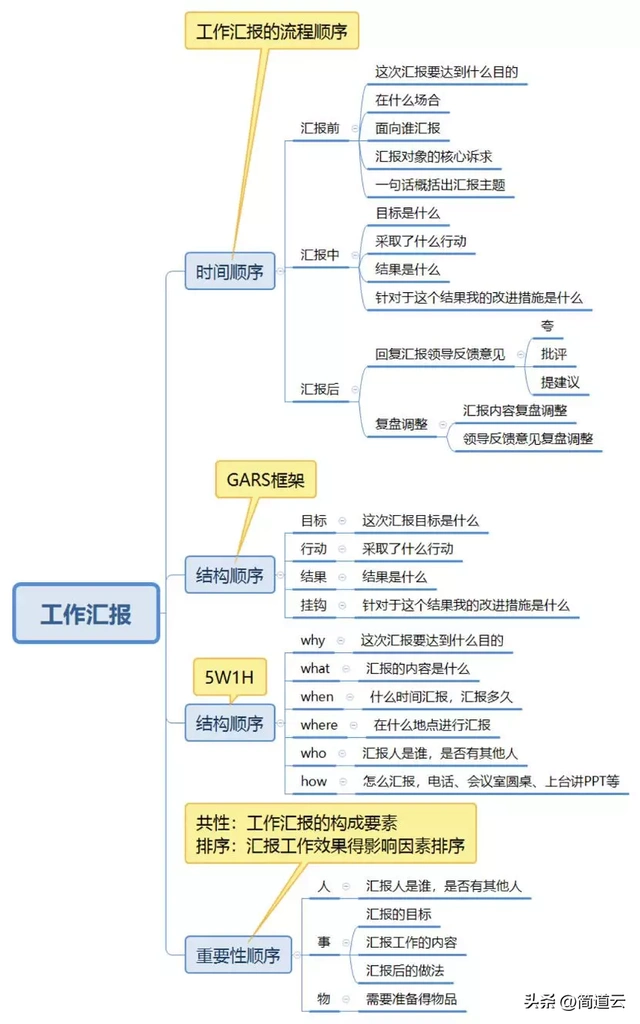
Tips: whatever logic is followed in reporting, remember eight words, not more words, not more figures, not more tables
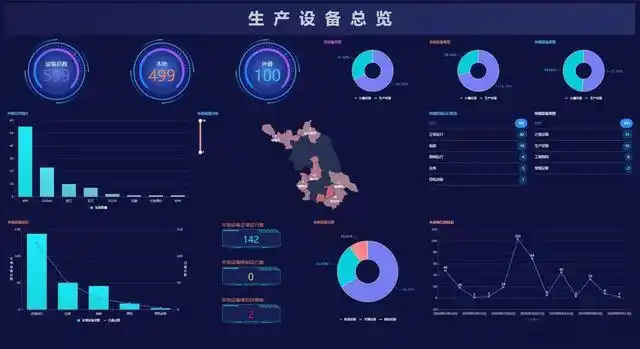
Here is an online graphic tool -- a simple drag that generates fine charts, a picture that contains more information than hundreds of words, adding flowers to your report




That's all that's been shared. If you feel useful to you, give me a compliment



