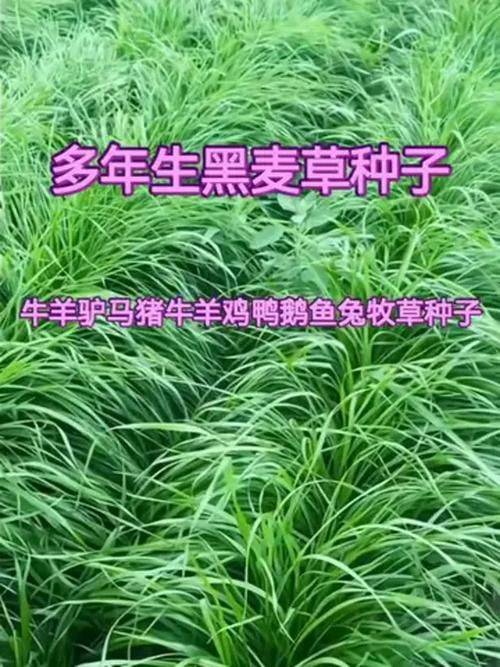
The (i) variety (1) is used to produce seed varieties that are multi-yearly selected with high technological content and high performance and are used specifically for seed expansion. (2) in order to avoid a multiplicity of varieties affecting the quality of seeds, the production area is required to remove all perennial rye, annual rye varieties and other varieties of grass that are likely to mix seeds before planting. & nbsp & nbsp & nbsp(ii) preparation of seed production sites: land used for seed production, seeding of grass in herbs, then weed eradication with herbicides. Ploughing and resting for a period of time to eliminate weeds. (2) the planting time: 15 september to 25 september. (3) seeding: depending on the fertility of the soil, the sowing rate is 0. 6, 0. 7 and 0. 8 kg per 0. 067 hectares. Based on actual area valid seed prices. (4) channel: 30 cm long and 20 cm wide. (5) bottom fertilisation: . 0. 067 hectares of phosphorus fertilizer 100-150 kg and potassium fertilization 50-75 kg per . After application of the bottom fertilization, seeds are sowed and the soil is 1~1. 25 centimetres thick. & nbsp & nbsp & nbsp & nbsp(iii) management & nbsp(1) for the purpose of preventing damage to livestock may be appropriate for setting up grid fences, biological fences, bamboo fences, stone fences, etc. (ii) fertilizing: depending on the fertility of the soil and the growth of the seedlings, if the soil is fertile or if the medium seedling is growing well, no fertilizer is applied; if the soil is poor, the seedling has yellowing, urea 10-15 kg per 0. 067 hectares per yellow. (3) after harvest, seed producers are prepared to remove surplus debris, control weeds and diseases in time for seed production in the coming year. Depending on soil fertility, 50-100 kg of compound fertilization per 0. 067 ha of nitrogen, phosphorus, potassium or 100-200 kg of fertilizer per farmer in autumn. (4) threading of regenerated grass: after a season of harvest of a season's seed, the regenerative grass lasts in the late autumn and cannot be cut for the rest of the time to ensure the full development of the plant. (5) disassembly: in the case of seedlings or other growth periods, other plants in the seed field should be removed in a timely manner, in particular those that produce the seeds. (6) pest and pest control: timely reporting of the discovery of pests in the production process, measures to combat them in a timely manner and to ensure smooth seed production. & nbsp (iv) seed time & nbsp(1) harvest time: 50-70% ready to harvest when seeds reach maturity. The ears are caught between two fingers, gently pulling, and most of them have one or two small ears to reap. Early harvest affects seed quality and yields. If harvest is too late, seeds can easily fall off the ground, affecting yields. Therefore, during the harvest season, field observation should be carried out at all times to collect in a timely manner and without undue care. (2) when seeding takes place, the plant is cut and other plants, especially those with seeds, are removed in time to increase the purity of the seed. (3) when seeding takes place, the plant is placed on a plant such as a tarpaulin in a timely manner, preventing the seed from falling off the ground and affecting seed production. It should be dried up for a few days before it is removed. Pre-cutting seeds should contain 35-40 per cent of the water and be tanned to 12 per cent so that they can be removed. (4) storage or continued dry storage。