Greening techniques for orange indoctrination in mountain hills
Wang xiao li, wait
The orange infarction is a multi-year herbivorous plant, which has a rooting effect of coughing, pulmonary acupuncture, impusion etc. Orange infests cool weather, cold, sunshine. The hill area of the vollow hills, at an altitude of about 1,000 m, is grown in large areas。
I. Cultivation techniques
1. Landing. Orange infarction is suitable for the selection of a border soil with sufficient sunlight, deep earth cover, perturbation, phosphorus-rich potassium fattening, well-watered sandy soil, with a semi-vaginal and half-sun on the hill slopes as suitable areas for cultivation, as well as in the plains. Orange infarction prefers a wet environment, but excessive moisture is perishable, affecting yields and quality, and it is desirable to select areas with better drainage. Orange infarction plants are prone to invertation, and planting in windy areas is carried out in a manner that is sensitive to the wind and avoids the damage caused by the fall。
2. Land as a whole. The field before orange infarction is fully covered with 1500~2000 kg per 667 m2 applied to rotive chrome fat, 30 kg per phosphate used as base fat, or 500 kg per commercial organic fat, 50 kg per three dollar compound fat, 20 cm or more deep ploughing, dredged flat, ladder rises, face width 1. 2~1. 4 m, height 15 cm, width 30 cm at the bottom, length depending on terrain and terrain。
Ii. Solution methodology
(i) seeding
Orange infarction is mainly seed-planted, and the main roots of seed are well developed, with few roots, good quality and high yield. At external temperatures of 18-25°c, soil is seeded at 60% water content, 10-15 d seedlings are seeded, and if temperatures are too low, the seeding time is prolonged. The seeding is done in the autumn and spring, and it is done in the early hours。
1. Autumn broadcasts. In late october and early november, the best time for orange yogurt. 0. 5 ~ 1 kg seedage per 667 m 2. Before orange infarction, seeds can be sowed with 0. 3% potassium permanganate solution 12-24 h, which is taken out and dried. On the right side, open a ditch around 15 cm, about 1. 5 cm deep, spread seeds into a ditch, level the ground, suppress it. One freezer before freezing, and the following spring gushed. When the seedlings grow four leaves of time. The 6-8 leaf is seeded at a distance of 7 cm or so。
2. Spring broadcasts. In the middle of march until the first half of april, china's region was the best time for orange indoctrination. In order to ensure that oranges are properly seeded, seeds are placed in warm water of about 50°c before seeding, they are constantly disturbed until the water is cool and continue to immerse, and 8h, with wet cloths wrapped around 25-30°c for seeding, covered with sheeting. In the meantime, the seeds are washed with warm water one time a day and another night, so that they can be sowed when the 4-5 d seeds turn white. This is how it's going to be broadcast. Water is then poured and soil moist before seeding。
(ii) cultivation
The seedling beds are organized in the same manner as seed seedlings, which are more dense than live in daejeon. Ten centimeters on the lid open the ditch, about 1 centimetres deep, and then spray water. Covering the surface with fur, intermittent water spraying to keep the hair wet, about 15 d seedlings. Saplings and seedlings are broadcast live in the same way as seeds. In the fall and winter of the year, the leaves of the orange incubation fell and were planted before the spring of the following year. The roots are dug up before planting, and the seedlings are graded large, medium and small, and are planted in subdistricts. When the plant is removed, the main root is thrown vertically into a ditch at a row distance of 15-20 cm and 5-7 cm on the side of the plume, and the root is crushed with fine earth, so that it stretches and pours water, and then the ground is slightly higher than the head. More than 50,000 seedlings per 667 m2 plant。
Iii. Field management
(i) cropping
No less than four weeds were removed in the year following orange infarction. First weeding after the seeding. The second weeding took place in the seedling 2-4 leaf. The third weeding took place in the four to six leaves. The fourth weeding took place after the fall of the 8-10 leaf. Weeding in the dark is preferred in the production, with the first two common hand-grassings, which should prevent the pineing of the seedlings and the injury to the roots。
(ii) fat pursuit
Orange seedlings are followed up with three-dollar compound fertilizer (n:p:k=15:15:15) at 10-20 kg per 667 m2. In late june, pre-flower fertilisation was followed by calcium phosphate 5 ~ 10 kg per 667 m 2 to prevent inversion. The seedlings are broadcast live, and after winterization and planting, more winter fertilisation is required, combined with fertilizing soil. The appropriate control of nitrogen fertilizer after the following summer, and proper follow-up of potassium phosphorus fertilizer, can lead to strong tubing and prevent inversion。
(iii) drainage
Orange infarction, though a wet crop, is unsustainable. Water drainage should be done in a timely manner during the summer rainy season to prevent the accumulation of roots。
(iv) extracting buds
In order to ensure that the root causes of the orange infarction are flourishing, prevent inverts and, in due course, pick the buds, each of which retains 1 to 2 of them and removes the rest. Seed fields do the same to ensure a concentration of nutrients that facilitates seed formation and abundance。
Iv. Main packages and protects
The main diseases and pests of orange infestations are rota, rota, anthrax, aphids, tigers, red spiders, and euphemisms。
(i) agronomy measures
The application of organic fertilizer to ground-based fertilisers during orange infarction improves soil and increases the resistance of plants to disease. Rotation, timely removal and destruction of disease strains and 10 per cent of lime water disinfection areas to prevent contagion. Low-lying plots should be raised or planted to prevent the root causes of flooding. The removal of weeds from the fields reduces the source base of winter insects. Triggered moths with insecticidal lanterns or sugar vinegar to kill worms。
(ii) chemical agent control
There are relatively few types of insects during orange infarction, and drugs are applied to the production of green foods to ensure their quality。
1. Root diseases. In the early stages of the orange root disease, each of the 667 m2 uses 100 billion sprouts g-1 sprouts. Bacterium wettable powder 1500 ~ 2,000 times the spray, 30% the fungus cream 2000 ~ 3000 times the root of the disease。
2. Rotal and anthrax. Orange rotaline and anthrax are prone to high-temperature, high-humid weather in the months of june to august, and can be treated with bordeaux (1:1:100) spray at the beginning of the outbreak, 65 per cent of the duration of the disease using the zinc zinc humid powder 600 ~ 800 times the spray or 50 per cent the methiosulphate humid powder 1,000 times the spray。
Aphids. The aphids of orange infestation are treated with an amphibian suspension of 25% of the aphids of 800 to 1,000 times the fluid or 3% with an amphibian microemulsor of 2000 to 2,500 times the spray。
4. Tigers. Per 667 m2 vaccination with 0. 3% bitter alkaline wettable powder of 7,000 g to combat tigers。
Red spiders. During the occurrence period, red spiders can be treated with 15 billion spores — g - 1 spherical filamentary powder, 300 g mixed with soil, or with 43 per cent phenylpropyl suspension, 2000 - 3000 times liquid spray, or with 240g l - 1 spheroid ester, 4000 - 5000 times liquid spray, or 5 per cent with emulsifiable emulsion, 2000。
6. 蛴螬. Per 667 m2 of octhion granular agent 3-5 kg, or 50% of octhion emulsifiable cream l000 times the fluid, were used to prevent the rooting of thorium at the beginning of orange insectation and seedling planting。
Harvesting and processing
The fall harvest lasted from late september to early october, when the orange-infested strains were dead and harvested. The spring harvest is usually in mid-april, before orange implants start. The premature harvest, the accumulation of nutrients in the roots, and the low rate of drying up; the growth of the plant and its subsequent harvesting can reduce the therapeutic content。
(i) harvest
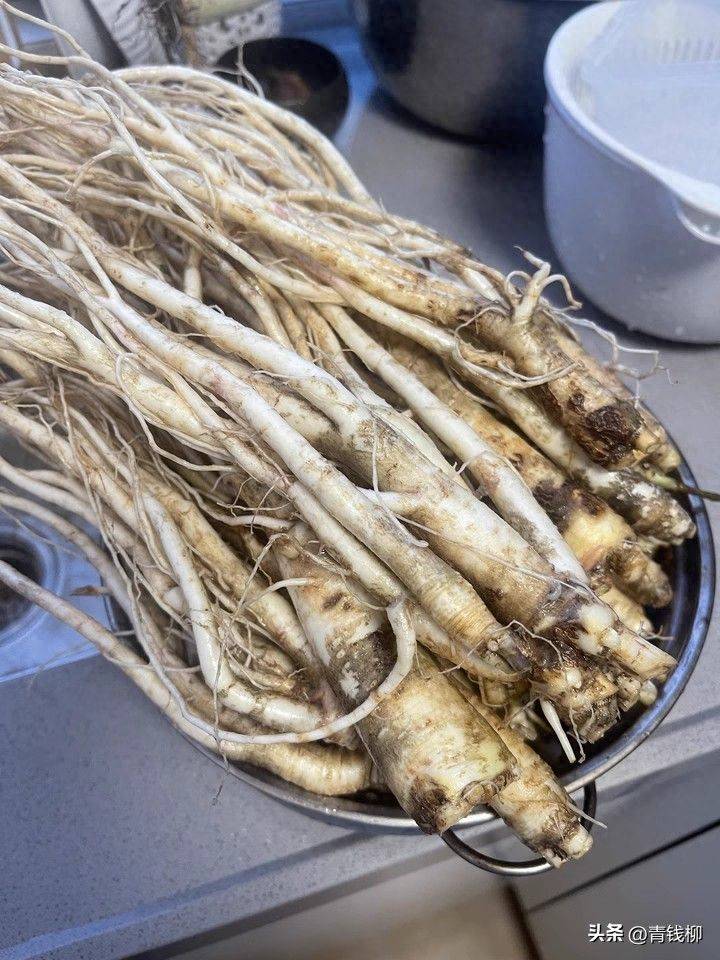
When the orange infarction is harvested, the leaves are cut off on the ground, and the excavation tools are used to dig deep in the direction of the root line, so that as little as possible do not break and do not hurt the skin, and then the whole root is extracted and the earth is shaken。
(ii) initial processing
After the harvest, the roots are cut, the roots are cut, the roots are cut, the roots of the disease are cut above the head of the cage and graded according to the length of the roots and the size of the roots. Orange roots collected, if at all, are used to clean the freezes with tiles while fresh. If the orange infarction is taken, the skin is not scraped, graded and washed directly, dry and sliced。
Vi. Retention
The orange infarction has a long period of time, with flowers drawn from the upper part, and the fruit matures from the upper part. Seeds from the late flowering results in the north, often infertile due to climatic effects, can be cut in early september by cutting the side branches and some grafts at the top, and concentration of nutrition contributes to the maturity of the upper central fruit, filling up the seeds and improving their quality. Orange seed should be harvested in a timely manner, otherwise the fruit will crack and the seed will scatter. In september-october, when the hysteria turns yellow, it is cut down with a fruit cut, which is prepared in the back of a dry, ventilated room at 2-8 d, then drys and removes the grain。
Wang xiao li