


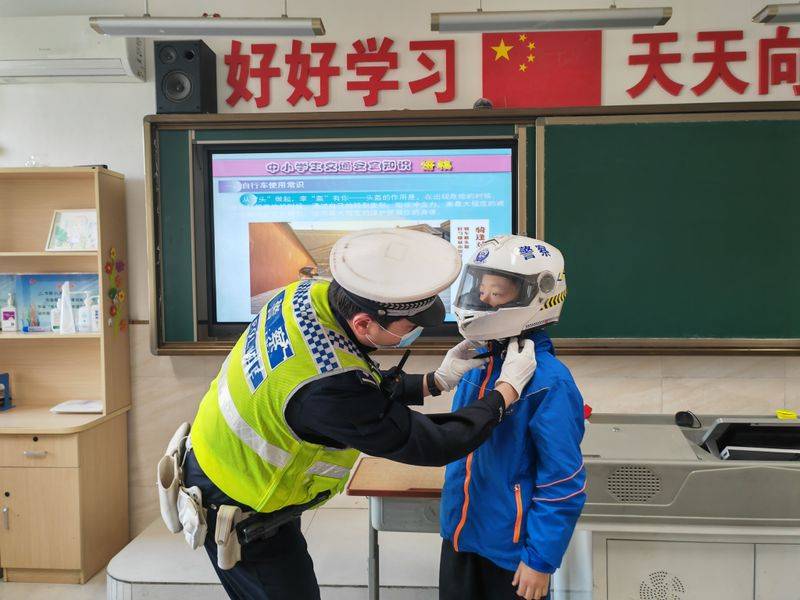
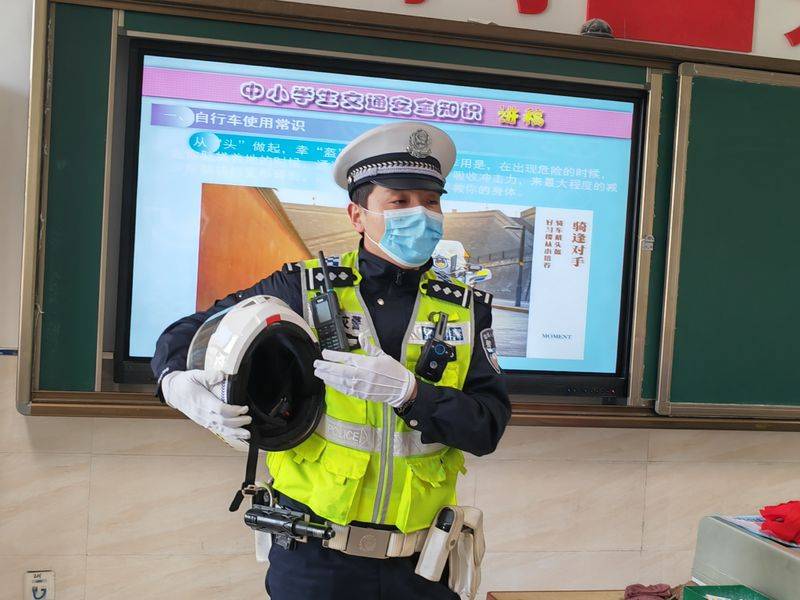
On 28 march, the 27th national day of safety education for primary and secondary students was held to effectively promote awareness of traffic safety among students and prevent traffic accidents. On 25 march, the primary school of the goose tower road, located in the corinthon forest district, invited traffic police from the corinthians to the school campus to carry out a traffic safety awareness campaign on the theme “national day of safety education for primary and secondary school students”, bringing traffic safety information to students。
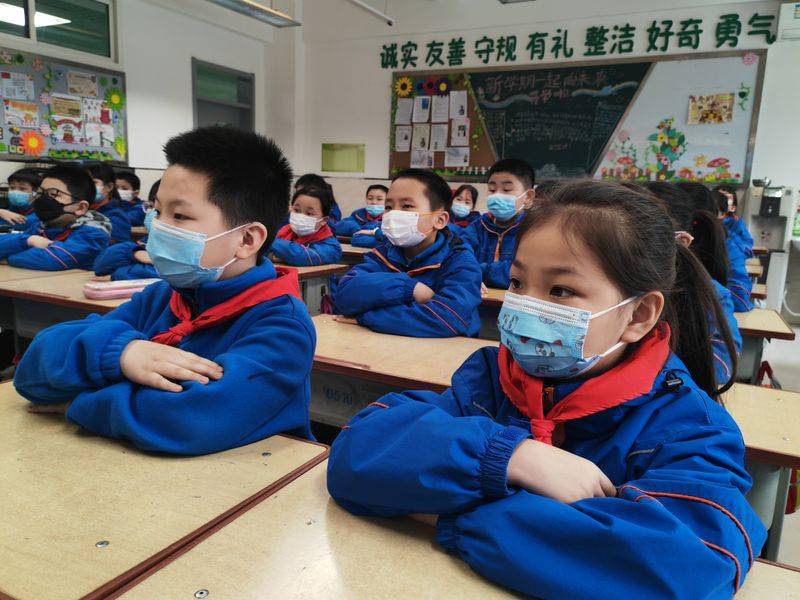
During the event, officer li, based on road traffic conditions and typical accident cases around the school, described in a common and understandable language the safety of travelling to and from school, driving, etc., and encouraged students to follow traffic rules with their parents, raise self-protection awareness and supervise parents driving in accordance with the rules of trade and civilized travel。
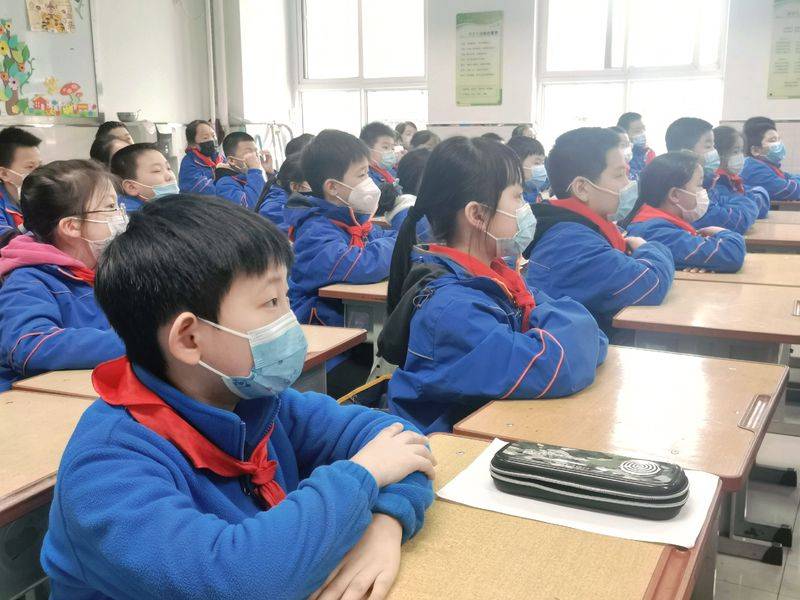
As a result of this campaign, students have become acutely aware of the dangers and consequences of traffic violations and have expressed their desire to promote self-protection and good mobility practices。
Today is the 27th national day of safety education for school students. Safety is nothing but the safety of the child, and on this special day, the safe “basket” will be put away so that the children can learn to better protect themselves。
I. Prevention of disease security:
1. To develop good hygiene practices, to be healthy and to gather less frequently。
2. During the epidemic, masks, hand-washing fluids, etc., must be kept on a permanent basis, and masks must be worn and protected on many occasions on the way to and from school。
3. The practice of detecting health conditions, such as body temperature, is to inform teachers and schools in a timely manner in the event of an anomaly。
4. A healthy diet must be guaranteed every day, without staying up late, and with proper exercise to improve immunization。
Ii. School security:
1. Do not bring to school materials such as matches, lighters, fireworks, alcohol, etc., which are flammable and explosive。
2. When cleaning, do not burn garbage at will. Evacuation corridors such as buildings, safe exits, etc. May not contain miscellaneous items。
3. Before leaving the school, remember to turn off electrical appliances and lighting switches in the classroom。
4. No open fires such as candles, mosquitoes, etc., are used in the school dormitories, and there are no irregularities in the use of electrical appliances or the unwiring of electrical wires。
6. School-friendly firefighting equipment is not moved or damaged at will。
Laboratory safety practices should be observed。
Laboratory equipment shall be used under the direction of the teacher。
The use of instruments should be preceded by a careful examination of power sources, pipelines, fire sources, auxiliary equipment, etc。
10. Be equipped with the required fire-fighting equipment to acquire a certain amount of self-help in fire-fighting。
Iii. Traffic safety:
1. Ride roads shall be carried out in a regular manner and shall pass through the road。
2. The junction is waiting for attention, and it is dangerous to turn big cars。
3. Roads are not playgrounds, pursuits are dangerous and no dangerous movements are carried out on horseback。
4. It is safer to get off on the right side and to cross the road and observe。
5. Safety belts and helmets should also be worn on electric bicycles。
It is only possible to ride a bicycle at the age of 12, to drive an electric bicycle at the age of 16 and not in the middle of the road。
Iv. Security at home:
No fire, no fire. If it is discovered that the fire is not going to work, it must be reported promptly to the teacher, the parents or to the fire alarm。
2. Learn to use all types of fire-fighting equipment under the guidance of professionals or parents。
Parents do not use gas, liquefied gas stoves, etc. When they are away from home。
4. No wet hands or wet cloth to touch power plugs, plugs, etc. In the event of a thunderstorm, it would be preferable not to use electrical appliances and to remove power plugs。
5. Do not climb the balcony, reach out to what is outside the balcony or say hello to children on the balcony and downstairs, and do not rely on the exposed balcony and railings。
6. Do not blindly imitate the dangerous movements of flying warriors in theatres and animations。
It should be noted that once a chair helps, a couch gap, a balcony to guard against window theft and a wall sew is stuck, ways should be taken to ensure that the body remains intact and to seek help。
8. If the fingers, toes, etc., are caught by screw hats, lock holes, rings, key rings, etc., and do not pull hard to avoid injury, they can be slowly removed by trying to lubricate with cooking oil, soap water, etc., and if they cannot be removed by themselves, immediately turn to adults or to the police for help。
V. Traveling on security pages:
1. When entering densely populated sites, be careful to observe security exits and evacuation routes, bearing in mind the direction of evacuation indicated by the arrows, and refrain from using elevators when fire escapes。
2. Do not reverse the flow of human beings or bend over and tie the shoelaces。
3. Do not be separated from parents in the crowd, bearing in mind the family address, the parent's telephone number and the full name of the workplace。
Swim in private and without permission。
5. No swimming without a parent or teacher。
Swimming in waters without safe facilities, without rescue personnel or familiarity
7. Students who are not familiar with the water have no unauthorized access to water。
Vi. Search risks
1. In the classroom and in the library, you shall hide from the wall or under the desk, far from the windows and the bookshelves。
2. In the auditoriums, canteens and gymnasiums, it is advisable to hide from the walls, the corners of the walls, secure seats and sports equipment。
In the dormitories, sheltering in small spaces or the walls of heavy walls。
Outside the house, far from the wall, the glass curtain wall, buildings that may collapse and large objects dumped。
These emergency calls
Please keep the child in mind
Fire alarm number 119
Medical emergency call 120
Call 911



