"constructing china's autonomous knowledge system"
The subject of disciplinary monitoring is a comprehensive study of the theories, institutions and practices of the party and the state oversight system, party integrity building and anti-corruption, with a distinct political and temporal character. In the contemporary chinese political system, party and state monitoring systems are important institutional safeguards for the party's self-purification, self-improvement, self-renovation and self-improvement under long-term conditions of government; disciplinary and inspection are important in regulating the party, advancing the system of state governance and modernizing its capacity. The monitoring of discipline is guided by the development and improvement of the socialist monitoring system of chinese identity, providing theoretical support to address such important issues as the promotion of self-revolution by the party under long-term conditions of government, the sophistication and purity of the yongjing party, the integrity of the party and the state monitoring system, and the effective supervision of public power. In the context of the rule of law in general and the ruling party in general, the construction of an autonomous knowledge system of discipline and inspection with chinese characteristics, chinese style and chinese style is an inherent requirement for the modernization of the country's governance system and capacity。
Our ancient inspection system and culture of integrity have provided historical lessons for the construction of china's autonomous knowledge system for disciplinary monitoring. China's ancient rule of government and governance is an important principle. Over the ages, governance has been a key factor in political governance. The inspection system has been an important component of china's political and legal system. During the period of tong tang, we established a three-chamber monitoring system covering legislative, administrative, economic and judicial oversight, which was largely legal and regulated. The mingqing period was the highest stage of china's monitoring of the development of the rule of law in its ancient times. Its system was complete, its content was extensive and its implementation was detailed. These deep historical and cultural accumulations are a source of cultural resources and ideas for discipline surveillance, which should be creatively transformed and developed under new historical conditions to highlight the historical foundations of science surveillance knowledge systems。
The marxist concept of power and its latest achievements provide theoretical guidance for the construction of an autonomous knowledge system for monitoring discipline and discipline. Monitoring of power is one of the key propositions of marxist theory. According to marxism, the absence of oversight power inevitably leads to corruption, which is an iron law. Max engers has said that all public officials must “work under public supervision” so that they “reliably prevent people from pursuing promotion and special interests”. In september 2010, comrade xi said at the opening of the fall 2010 school year at the central party school: “the marxist concept of power is summed up in two words: power is vested in the people and power is used by the people.” since the 18th congress of the party, the centre of the party, with comrade xi at its core, has made a series of important statements about its commitment to self-revolution, its self-monitoring, its promotion of a comprehensive approach to the rule of the party, and its systematic answers to such important questions as why the party should revolution itself, why it should revolution itself, how it should advance its own revolution. This is a scientific review of its 100-year history of governing the party, as well as an in-depth contribution to the theory, practice and institutional innovation of censorship and the construction of an autonomous knowledge system for monitoring and discipline in china。
The institutionalization of an autonomous knowledge system for disciplinary and inspection studies has provided extensive practical experience in the fight against corruption and corruption. In the early days of the communist party of china, the party's disciplinary process was initiated. The party's five major elections marked the creation of the party's disciplinary system by electing the first central disciplinary oversight body in the party's history, the central monitoring board. From the outset of the establishment of the new china, the central committee of the communist party of china issued the decision on the establishment of disciplinary inspection commissions at the central and party levels, which promotes disciplinary inspection at the institutional level. After more than a hundred years of evolution, the party-led disciplinary monitoring system has been improved, with significant achievements and experience accumulated. In particular, since its eighteenth anniversary, the party's central focus, centred on comrade xi, has been on resolving the major party's unique problems, integrating the party's full-fledged rule into the “four-round” strategic landscape, continuously improving its overall system of discipline and discipline, serving with its mission of “insulting hundreds of people and not under the cost of 1. 4 billion”, making it a historic and groundbreaking achievement from the party's full-scale and deep-rooted influence, and making it stronger in revolutionary exercise. The practical exploration of power supervision and discipline since the party came into power, particularly in the new era, has provided a source of energy for the construction of an autonomous knowledge system for discipline and monitoring。
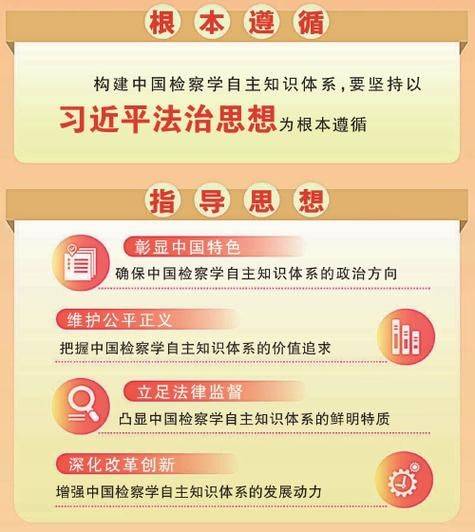
The monitoring of discipline, with its theoretical and talent-building mission, has an important place and role in the promotion of a fully democratic and rule-based state. In parallel with the steady development of disciplinary monitoring practices, there is a need to further enrich, develop and refine in theory the scope, concepts and theoretical system of disciplinary monitoring, and to refine, in a timely manner, the great practices of the party's self-revolution, academic interpretation and discipline. China's autonomous knowledge system for discipline and inspection should be built around a system of disciplines, academic systems and linguistic systems, in which the building of a system of disciplines is an essential element, the building of an academic system is a necessary condition and the formation of a linguistic system is an expression。
A well-established system of discipline and discipline monitoring has been established. The discipline is the basis for theoretical research and human capacity development. First and foremost, the institution-building of the discipline-monitoring system is to insist on combining the principles of marxistism with china's specific reality, with the traditional culture of excellence in china, with me as the principal, co-recognizing and giving prominence to china's traditional culture. In this context, it follows the practical characteristics of the discipline-monitoring system, the logic of the knowledge system, and the experience of building higher-education disciplines. It establishes the discipline-monitoring theory, party discipline, law-monitoring, integrity-monitoring, etc., under the discipline-monitoring level, a well-structured system of discipline-monitoring disciplines. At the same time, the basic framework of china's autonomous knowledge system for discipline and inspection has been further clarified on the basis of the classification of disciplines, and a system of special teaching materials and curricula for the discipline and inspection profession has been established, with a view to establishing a high-quality, diversified system for the training of professionals in disciplinary and inspection, guided by the demand for talent。
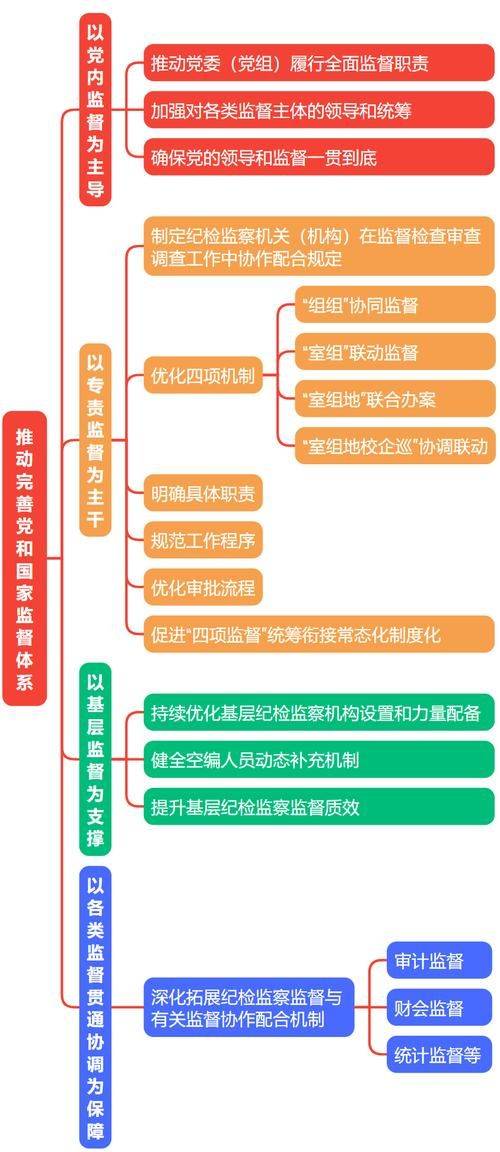
Building an academic system of discipline and inspection of scientific norms. The effective implementation of disciplinary inspection practices requires mature theoretical support. The theoretical study of discipline and inspection should focus on the new era's practice of comprehensively governing the party and strengthening its powers and oversight. The establishment of an academic system of discipline and inspection should be aimed at developing an in-depth theoretical analysis of the country's system of oversight of power and monitoring practices, based on scientific philosophy and methodology. The monitoring system, which is party-led, has the advantage of comprehensive coverage, authority and efficiency, and therefore theoretical research is closely focused on its positioning in the party and the state-supervised system, the relationship between the party's disciplinary inspection and the state-supervised system, the fundamental issues of the inspection bodies and the prosecutor's office, the division of responsibilities and the interface of work between the courts, and the quality of their output, resulting in a systematic programme that provides a strong intellectual basis for a sound system of party leadership, comprehensive coverage and effective supervision。
It has developed a distinctive system of screening and monitoring of speech. In its long history of party rule and power monitoring, our party has introduced many original new concepts in the field of disciplinary monitoring. How to interpret these new concepts in a scientific, academic and institutional manner is an important task in the construction of the clerical system of disciplinary monitoring. To that end, researchers should be good at distilling core concepts and marking elements from the theory and practice of china, building a system of discipline and inspection linguists with a distinctive chinese character, developing chinese anti-corruption stories in academic languages, continuously increasing the international influence and recognition of china's anti-corruption cause, enhancing the country's voice in international cooperation against corruption, promoting the international dissemination of its distinctive anti-corruption experience, contributing chinese wisdom to the international cause of anti-corruption and providing chinese programmes。
(by zhang hong chul, associate professor, school of disciplinary and inspection, chinese university of political science and law, and research fellow, centre for research and research on china's specialist socialist thoughts in the new age of xi jinping, beijing city)