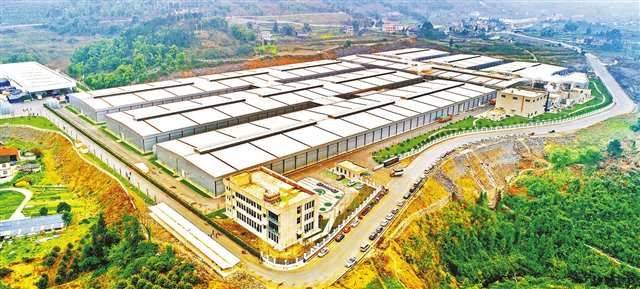
Intelligent mushroom factory in the greenwater village of jungletown, manchuria. I'm a correspondent
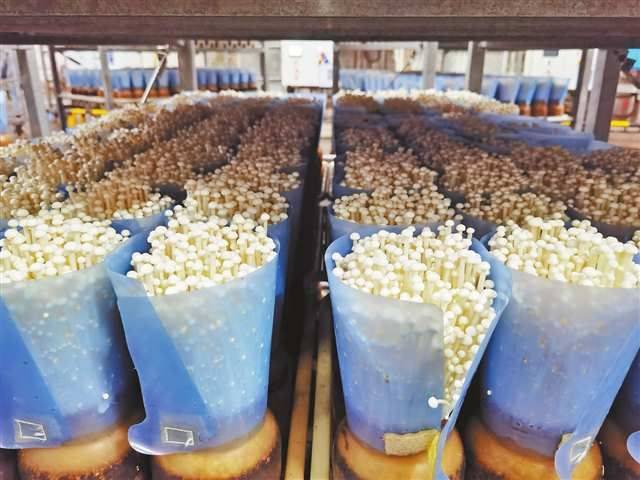
A mushroom factory, full of white gold needle mushrooms. Zhao wei ping
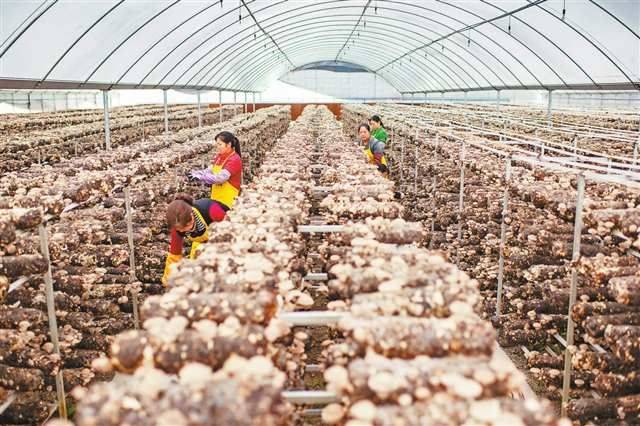
Workers collect edible bacteria in large sheds. (pages for interviewees)
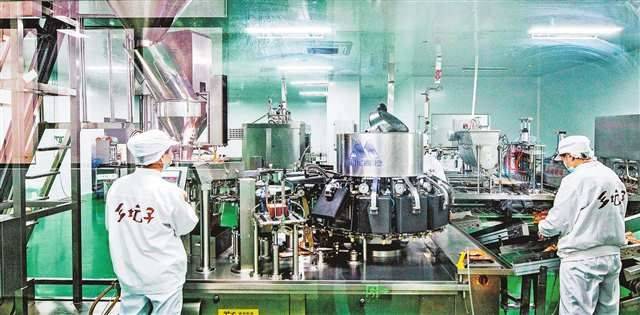
A modern mushroom sauce production workshop. (pages for interviewees)
It is now the spring season of mushrooming, also known as mushrooms。
Under the great food view, mushrooms not only enrich the chongqing citizens' “basket” but also represent a feature of the increased income of the rich in the mountain areas。
However, a survey of journalists found that the mushroom industry in my city currently represents only 10 per cent of the vegetable industry, with a 45 per cent supply and demand gap. Chongqing has unique mountain stereoclimatic and under-forest resources and has great potential for developing food bacteria. Last year, our city focused on 16 growth-oriented clusters that feed bacteria into the “36316” industrial cluster system。
How many more ways do we have to get past our little mushrooms to grow up? In the days ahead, journalists entered the main production areas of mansheng, fong fong and banan to explore the problem of the rise in industry。
It's difficult
Response
On 11 march, the head of the vegetable institute of the municipal agricultural institute, wei ji-yee, examined the show mushroom test site, where the mixed-chosen mushrooms were stable and performing well, and she was pleased to say, “we will have our own bacteria in no time!”
A year ago, a small collection of micro-breeds was stopped at the soo-jen mushroom pilot base, located in the village of new bay in yongtown, bangan district, where luo shuk-kung, who had returned to set up an intelligent mushroom factory。
Luo shuli, a native-born successor, and his friend at sichuan tried to grow the fungus. The market had a good resonance. At the end of 2023, he decided to go home and start a mushroom factory。
"what i want to do is to be technocratic, clean modern plants, not traditional sheds." luo shuli's thoughts coincided with those of jilong town. The town's road village cadre volunteered to come to the house and invested $2 million in farm money as equity. In april 2024, 10 acres of land, with an investment of $5 million, was put into operation in a smart plant。
Under the plant-based production model, high-quality mushrooms quickly walked through the market. In that year, the factory produced 1,000 tons of mushrooms per year, valued at $13 million, leading to an increase of $2 million for villagers。
The industry's red fire, and luo's writing power has been weak. "our first-stage factory is a high-class mushroom house." he states that the plant's core bacterium pack was purchased from outside the country and that “the culture of the fung culture, the technique of making the bacterium bag, was in the hands of others, as if it had been strangled. As a result of fluctuations in the supply chain, the other party's supply is cut off, and we have to stop production.”
This is not just an enterprise's dilemma, but a general problem for the whole celebratory industry. There was a breakout around the fungus, and it sounded。
In april 2025, with the support of the municipal agricultural and rural councils, a strategic collaboration was signed between the company and the institute of vegetables of the municipal agricultural institute to carry out a scientific and technical campaign on bacterial species. In the summer of that year, the jilong township corporation, working in depth with luo sook, invested a total of 120 million yuan to launch a second-phase smart-chemical plant, covering 150 acres of land, from bacterial breeding, to smart mushrooming, sorting and packaging, and to keep the entire core in their hands。
Soon, good news came from the municipal institute of vegetables: after thousands of breeding experiments, in january this year wei ji-yee and the team made a phased breakthrough, with 10 mushrooms showing excellent performance. “the production of several of these materials is 30 per cent higher than that of the previously used bacteria, and the mushrooms are more beautiful and better sold.” vee jie-yee can hardly hide the excitement。
At present, the team has selected two of the 10 materials for hybrid breeding, with the goal of producing a new species of mushrooms that are more productive, better-looking and well suited to the circulatory climate, with autonomous intellectual property rights. "in the near future, we will have our own seed." wei jie said。
Standing in front of the monitoring screen of phase 2 plant, roscoe has clearer plans for the future. The plant is expected to produce around 10,000 tons of mushrooms per year, with an annual production value of 150 million yuan, 10 times the capacity of the first period, once the autonomous species are fully produced. It will then become the largest smart factory in the city。
♪ the accent ♪
According to the head of the clii team, there are currently only three municipal platforms for the development of food bacteria throughout the city and a large number of bacteria still need to be purchased from the provinces. In order to take ownership of development initiatives, in recent years our city has stepped up its efforts to produce more indigenously appropriate basunella species, through a survey of wild resources, seed collection and selection, in order to break the limits of the mushroom industry。
Weaknesses in industrial development
The response
Recently, zai chihua, secretary of the greenwater village branch in the manchurian region, found an interesting phenomenon: the number of cooperatives and self-employed farmers in the village engaged in edible culture has declined from more than 20 in the past to more than 10 in the present period. Although production is half as small, the production of mushrooms is increasing year by year, with increasing quality。
Why
Previously, mushroom cultivation in the green water village was closely linked to coal mines, and the villagers planted edible bacteria for sale to local coal miners, all of whom lived in the red fire。
Around 2009, local coal mines were closed down, local markets were reduced, mushroom farmers tried to sell out, but traditional artificially planted edible bacteria lacked competitive advantage - – the variety is dominated by “road goods”, with low production and high seasonality of mushrooms, and high market prices. A number of villagers abandoned cultivation and chose to work abroad。
The chance to turn around in 2016. In cooperation with the local government, the jiangsu festeria market company, which looks at the climate advantages of the greenwater village, has been building an intelligent mushroom factory for the development, production and sale of a collection of bacteria。
In 2018, 234 acres of land, the largest mushroom plant in the south-west monomer, were officially operational. In 176 smart air-conditioning rooms, the golden needle mushrooms are growing in a warm and wet environment. - the swirl of mushrooms is even, the mushrooms are full of hats and soldiers in line await inspection。
“traditionally grown in the past, solid strains were used to spread and become susceptible to infection. The general manager of the plant told the press that “it is now converted to liquid bacterial species, automating the entire process and reducing the growth cycle to less than 52 days. The mushroom room is equipped with a sensor that monitors the temperature, humidity, light, carbon dioxide content in all real time and is protected 24 hours a day and of guaranteed quality.”
The greenwater village has established a “landhead enterprise + professional co-operative + family farm + farmer” development model. Today, there are more than 10 mushroom producers in the village, of which 2 are factory-based leading firms, with annual production of fungi increasing from 2,000 tons to 60,000 tons, products irradiating south-west china, china and south china, and exporting neighbouring countries such as korea, viet nam and thailand, with annual mushroom production exceeding $600 million。
♪ the accent ♪
According to the director-general of the municipal agricultural rural commission, the development of the food industry in our city is still dominated by traditional farming practices, and the overall size of our city is small compared to the rest of the preponderant regions, with few leading enterprises in industrial production and lower levels of industrial development. In order to change the industry's “smuggling” situation, the city is focusing on the districts of mansheng, namchon and yoonchon, and is building a safe base for the production of fresh food bacterial plants, with an annual production of 50,000 to 100,000 tons of mushrooms to be expanded to five districts to underpin the high-quality development of the mushroom industry。
Weak industrial chain
Responsiveness
During this time, chairman wang liping, chairman of the green food development co. Ltd., chongqing city (hereinafter referred to as "the foodstuffs" ), had a full schedule: on 5 march, a brand strategy programme was finalized with the planning company for the processing of mushroom sauce products; on 12 march, several waves of off-site visitors visited the enterprise; on the morning of 16 march, several supply-chain companies were approached for cooperation on the distribution of mushroom sauce; and on 26 march, the team was brought to chengdu to attend the sugar and wine fair
With the introduction of new mushroom sauce, a growing number of customers threw olive branches at her。
In 2001, wang liping aimed at the “sorture of the country” and set up the ting food to make pickles。
“we have no brand and price advantages compared to the head, and businesses must develop differently if they are to survive.” wang li-ping attended the national outreach conference and found a business opportunity... - good edible fungus can be dried to make mouths or gifted products, with slightly poor appearances processed into shroom sauce and shroom vegetables. In 2011, she put the focus of the company's production on edible fungi processing。
“the quality of small-scale production is good, but once on the production line, the taste is either to send wood or to suffer and the colour is uneven.” wang liping has brought specialists to supervise the plant and has set up a technology research and development centre, which has invested more than $16 million in upgrading production lines。
In response to oral problems, enterprises use non-removable techniques to make sauce, which is more subtle and smooth, and in response to the problem of the shelf life, which is extended by the combination of traditional pickles and modern microbicide techniques. In that year, the mushroom sauce products successfully opened up commercial channels in the east, south, north and south-west regions. In 2017, dry mushrooms and shroom sauce were exported to countries such as the united states and canada, resulting in an export gain of $4. 38 million。
In 2022, the company also developed a series of food products such as low salted deer mushroom beef sauce, mushroom beef sauce and apricot mushroom beef sauce。
Entering the tinglai food marketing centre in phuong dynamite, the lobby was full of mushroom sauce products. On the wall, more than 20 medals, such as “chongqing city specialized new enterprise” and “chongqing old” were made. "i've got this bottle of mushroom sauce, and i've chosen chongqing's industrial consummate. The list is not only best sold throughout the country, but also exported to singapore and canada.” wang liping is proud of his words。
At present, the company has made a complete transition from pickles to fungi processing, resulting in over 30 products in the four main series of mushroom sauce, fungus beef sauce, fungus culinary foods, more than 60 per cent of the 8,000 tons of finished foods sold last year. In comparison with the initial processing of mushrooms, the process has increased product value five to eight times。
♪ the accent ♪
According to the head of the processing unit of the municipal agricultural rural commission, there are currently more than 110 chromosomes processed throughout the city, but annual processing capacity accounts for only 2 per cent of the city's total mushroom production, mostly primary processing, such as drying, and the industrial chain is weak. In order to increase the value added of the industry, our city is accelerating the upgrading of the food-bacterium industry and is supporting enterprises to constantly extend the mushroom industry chain and increase their premium capacity through sophisticated processing for the development of health-care foods, biological products, experiential leisure tourism products, etc。
The news
Chongqing integrates edible bacteria into the growth-specific industries group
It's worth $4. 3 billion by the end of 2027
The reporter was recently informed by the municipal council for agriculture and rural development that, in order to promote efficiency gains in rural niche industries, our city has focused on eating bacteria in 16 growth-oriented industry clusters throughout the city, with a total value of 4. 3 billion yuan by the end of 2027。
Eating bacteria is the fifth largest agricultural product in my city after vegetables, fruit, rice, oil. At present, there are more than 8,000 food-bacterists throughout the city, leading farmers to close to 153,000 people. However, our city produces less than 400,000 tons of fungi per year and needs to transfer about 300,000 tons of mushrooms annually from sichuan and guizhou, with a subsistence rate of only about 55 per cent。
In response to this situation, our city has included the consumption of bacteria in the industrial cluster, building a differentiated development structure: the muxi region has focused on the areas of yongchon, mansheng and namchon, and has created a production base for the popular food plant, such as the golden fungus and the sashimi mushrooms; the north-east and south-east have focused on the zhuang, the city's mouth, the yunyang, and the development of rare species, such as mushrooms, black muir and the sheep's belly, and the golden ear。
At the same time, our city will strengthen the whole chain of culture, break core techniques such as bacterial selection, intelligent cultivation, and build the fungi-fertilizer-field cycle. For example, a number of leading firms and industry alliances will be developed, based on the “china west bacillus valley” and banan soo-kulshu wisdom production bases, which will further enhance the influence and market competitiveness of the celebratory brands and promote the expansion of the consumption industry from scale to quality efficiency and transformation。