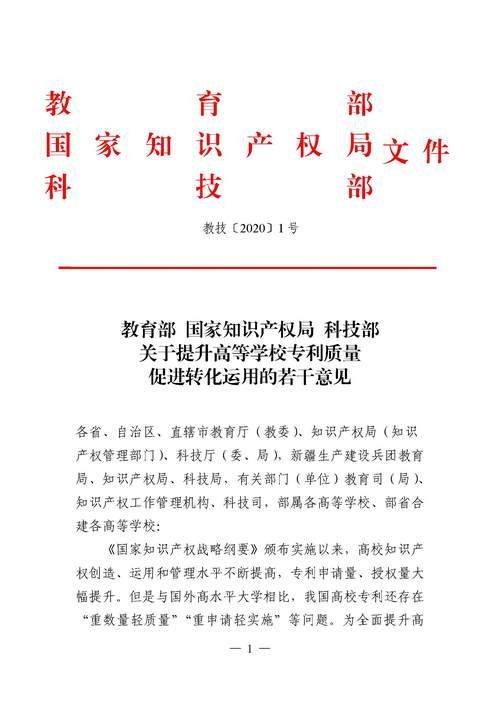
Teaching [2016] number 3
The provincial, autonomous and municipal education departments of the central government, the science and technology department, the xinjiang production and construction corps education department, the science and technology directorate and the ministry of education's institutions of higher education:
In order to follow up on the recommendations of the central state council of the communist republic of china concerning the reform of institutional mechanisms for deepening and accelerating the implementation of innovation-driven development strategies, the central committee of the communist republic of china's observations on the reform of institutional mechanisms for the further development of human resources and the circular of the central office of the communist republic of china on the programme for the further reform of the science and technology system, and to promote the accelerated transfer of scientific and technological results in higher education, the following observations are made under the law of the people's republic of china on the promotion of the transformation of scientific and technological results, the state council's implementation of certain provisions and the programme of action for the promotion of the transfer of scientific and technological results of the office of the state council, in conjunction with the practical aspects of higher education:
I. A comprehensive understanding of the transfer of technological results to higher education institutions. The transformation of science and technology is an important element of the science and technology activities of higher education institutions, which need to link scientific research more closely with the needs of economic and social development in order to provide continuous and effective results to support the transformation and upgrading of economic development. Higher education institutions need to reform and improve science and technology evaluation mechanisms and promote the transformation of scientific and technological results. The transfer of scientific and technological results to higher education institutions focuses on the transfer of scientific and technological results to enterprises in the form of trade in technology, equity and the like; the intensification of the integration of productive research and studies and the support of scientific and technological personnel in the development of technological development, technical services, technical advice and technical training for enterprises; and the organization of innovative scientific and technological research programmes and programmes aimed at the country's needs and economic and social development, the active participation of scientific and technological personnel in the construction of national and regional innovation systems and the provision of technical support and policy advice for economic and social development。
Decentralization encourages the transfer of scientific and technological results. The scientific and technological achievements held by higher education institutions may be transferred, licensed or invested at a price on their own initiative, without approval or filing, except in the case of state secrets or national security. Higher education institutions are entitled by law to recognize shareholding and contribution rates in the form of holding of scientific and technological results, to make explicit agreements on ownership, value for money, number of discounts or percentage of contributions to scientific and technological results, through, inter alia, sponsor agreements, investment agreements or company charters, and to designate their professional departments to manage the share or percentage of contributions to the equity. The scientific and technological results of higher education institutions may be translated into a contract with the school, in accordance with the regulations of the school, and they enjoy the same rights. The proceeds of the transfer of scientific and technological results to higher education institutions are reserved for schools, included in the unit budget and not paid to the public treasury; they are used mainly for scientific and technological research and the conversion of results, after providing incentives and remuneration to those who have made important contributions to the completion and transformation of scientific and technological results。
Iii. Establishment of sound mechanisms for the transfer of scientific and technological results. Higher education institutions should strengthen the management, organization and coordination of the transfer of science and technology results, establish a steering group for the transfer of science and technology results, establish a system of collective decision-making among the leadership groups on key issues in the transfer of science and technology results, integrate results-based management, technology transfer, asset management, law, etc., and establish a platform for managing the transfer of results; identify institutions and functions responsible for the transfer of science and technology results, and implement those responsible for the reporting of results, intellectual property rights protection, asset management, etc., and optimize and publicize the transfer of scientific and technological results。
Higher education institutions should establish procedures and rules for the use and disposal of scientific and technological results in accordance with national regulations and in practice in schools. In the transfer of technology conversion results to enterprises or other organizations, prices can be fixed through listings, auctions, etc. In technology trading markets, or by agreement. Agreement pricing should be made available on a web site, office systems, publicity boards, etc., for at least 15 days, for the publication of names of scientific and technological results in schools, basic elements such as profiles and proposed transaction prices, price formation processes, etc. The use and disposal of scientific and technological results in institutions of higher education are subject to a publicity system in schools, with clear and open procedures and procedures for handling disputes. Where state secrets and national security are involved, they are implemented in accordance with the relevant provisions of the state。
In the process of converting scientific and technological results, the university leaders, who set prices through listings, auctions, etc. In the technology-trading market, or by agreed pricing and duly publicized in schools, are exempt from decision-making responsibilities arising from changes in the value of the conversion of scientific and technological results in the pricing of scientific and technological results, in accordance with their due diligence obligations and without making illegal gains。
Strengthening capacity-building for the transfer of scientific and technological results. Higher education institutions are encouraged to set up specialized institutions responsible for the transfer of science and technology results or to commission independent sti services to carry out the conversion of science and technology results through training, market employment, etc. (c) to develop a market-based system for the transfer of scientific and technological results through the development of technology and market demand interfaces, investment in technological and risk-based investments, and the development of national technology transfer institutions with flexible operating mechanisms, a pool of professional staff and a high level of capacity to provide services. Higher education institutions should take full advantage of information platforms on scientific and technological results established at all levels of government to enhance the dissemination and exhibition of results; and encourage scientific researchers to engage enterprises in horizontal cooperation in technology development, technical advice and technical services, and joint implementation of scientific and technological transformations with enterprises。
V. Sound revenue allocation policies oriented towards increasing the value of knowledge. Higher education institutions are required to develop incentives and distribution of benefits for the transfer of scientific and technological results, in accordance with national regulations and school practice, and are open to students. In developing incentives and distribution of benefits for the transfer of science and technology results, the views of school scientists should be fully taken into account, taking into account the interests of all parties involved in the transformation of science and technology, such as schools, faculties, practitioners and professional technology transfer agencies。
In accordance with the law, higher education institutions award incentives to those who have completed their scientific and technological work and others who have contributed significantly to the transformation of results, in accordance with the following provisions: those who have converted their scientific and technological results in the form of technology transfer or licensing shall receive not less than 50 per cent of the net income they have received from the transfer of technology or authorization to do so; those who have invested in the conversion at the price of scientific and technological results shall receive not less than 50 per cent of the share of the equity or contribution they have made to the investment; and those who have contributed primarily to research development and the transformation of scientific and technological results shall receive no less than 50 per cent of the total. The proceeds of the conversion of results, after deducting incentives and rewards for the above-mentioned persons, should be used primarily for work related to scientific and technological research and development and the transformation of results, and support the operation and development of technology transfer institutions。
The leadership of institutions of higher learning and of the independent corporate entities to which they belong is a major contributor to the results of science and technology or an important contribution to the transformation of results. Cash incentives may be given in accordance with the results transfer incentives and the distribution of benefits established by schools, and in principle no equity incentives may be given; other science and technology personnel in leadership positions are the main contributors to the results of science and technology or have made a significant contribution to the transformation of results, and can be rewarded in the form of cash, shares or percentages of contributions, in accordance with the results of the schools. Publicity and reporting on the distribution of the benefits of scientific and technological transformation among science and technology personnel in leadership positions, with clear indications of their contribution to the completion or translation of results and of the incentives to be allocated, their share, etc。
Cross-cutting cooperation activities involving technical development, technical advice, technical services, technical training, etc., are carried out by university science and technology personnel and are an important form of technological transformation in higher education. They are governed by contract law and the law on the conversion of scientific and technological results; higher education institutions and cooperative units are required by law to conclude contracts or agreements on the division of tasks, the investment and use of funds, the attribution of intellectual property rights, the distribution of entitlements, etc., and the expenditure is to be carried out in accordance with contracts or agreements, and net income is to be rewarded and rewarded for the scientific and technological personnel who have completed the project in accordance with the incentives for the transfer of scientific and technological results and the distribution of benefits established by the school. Horizontal research programmes for science and technology personnel are treated equally in the performance appraisals, as are government programmes for science and technology。
Expenditure on incentives and remunerations for the transfer of scientific and technological results is included in the unit's total wage for the year in question, not subject to the unit's total wage for the year in question and not included in the unit's total wage base。
Vi. Improving personnel management systems conducive to the transfer of scientific and technological results. In the performance of their duties and in the performance of their duties, they may, with the agreement of the school, work part-time at the enterprise for the conversion of their scientific and technological achievements, or maintain their personnel relations for up to three years. In principle, the national science and technology programme and fund projects undertaken by scientific and technical staff during the period of their absence may not be suspended, and the procedures for such suspension should be followed. Higher education institutions are required to establish and improve the system of part-time employment, start-up and return of scientific and technical staff, to regulate part-time work and the manner in which they are paid for part-time work, to regulate their rights and obligations during and after the period of their start-up, and to publicize the conditions of return. Part-time management of scientific and technical staff in leadership positions is carried out in accordance with the relevant central regulations. Higher education institutions are encouraged to set up specialized science and technology conversion posts and to establish a system of evaluation. Higher education institutions are encouraged to set up a certain percentage of mobile jobs, employing entrepreneurs with experience in innovative practices and scientific and technological personnel from enterprises to work part-time in teaching and research. The ministry of education will organize higher education institutions to pilot business experience as a necessary condition for newly recruited engineering teachers, and will increase the exchange between applied undergraduate and higher-level university professional teachers。
Vii. Support students ' innovative entrepreneurship. Explore the establishment of innovative entrepreneurship-oriented talent development mechanisms and improve the model of co-morbidity in productive research and development. Support for the joint establishment of academic and scientific bases for students ' practical training and postgraduate scientific practice in higher education and enterprises, and institutes of research to enhance students ' capacity to innovate in entrepreneurial practice. The national university science and technology park is being promoted to provide students with the space, information networks and commercial and legal services they can to create innovative entrepreneurship, to establish microinnovation laboratories, innovative entrepreneurship clubs, etc., and to develop new incubation models such as creativity, crowdsourcing, crowd support and crowd-funding spaces. The national university science and technology park is encouraged to organize volunteer initiatives by entrepreneurs, university technologists and angel investors with practical experience in entrepreneurship, to provide entrepreneurship coaching and technical development cooperation assistance to students in innovative entrepreneurship, to prepare success stories on innovation entrepreneurship for students and teachers in higher education as complementary materials for innovation entrepreneurship in higher education and to support innovation entrepreneurship education in higher education. (c) strengthening the professional development of intellectual property-related disciplines and providing students with educational training on the laws and regulations governing intellectual property protection. Higher education institutions are encouraged to authorize students to use the results of science and technology through pro bono patenting, leading students to participate in the transformation of science and technology。
8. Promote open sharing of scientific facilities and instruments. Encourage universities and enterprises, research and development institutions and other organizations to establish joint research and development platforms, technology transfer institutions or alliances for technological innovation, for research and development, application and dissemination of results, standard research and development. Support for the establishment of joint laboratories and large-scale instrument-sharing platforms in universities and local and joint enterprises to accelerate the promotion of scientific facilities and instruments in higher education to be open to social users, such as other institutions, research institutes, enterprises and social research and development organizations, in order to guarantee the basic needs of their teaching and research. Research and development platforms such as the national priority laboratory, the national engineering laboratory, the national engineering (technology) research centre, the large scientific instrumentation centre and the analytical testing centre, which are based on the institutions of higher education, are functionally designed to establish mechanisms that are effectively open to enterprises, especially small and medium-sized enterprises, to increase their openness to society and to provide support for the transfer of scientific and technological results. Scientific research facilities and equipment are opened on a reimbursable basis, strictly in accordance with the requirements of state business, price management, etc., and income and expenditure are integrated into the financial management of schools。

Establish annual reporting on the transfer of science and technology results and performance evaluation mechanisms. In accordance with the requirements of the national system of annual reports on scientific and technological results, higher education institutions are required to submit to the competent authorities, on a regular basis and in a prescribed format, annual licences for scientific and technological results, transfers, investments at a price and promotion of cooperation in research and development, performance and incentives for the conversion of scientific and technological results, and to take stock of the overall results and problems encountered in the transformation of scientific and technological results throughout the year. Higher education institutions need to establish mechanisms for evaluating the performance of science and technology transfer results and to provide incentives to institutions and personnel that have performed well in the transfer of science and technology results. Higher education authorities are required to evaluate the results of the transfer of technological results in higher education on the basis of annual reports on the transfer of technological results in higher education and to use the results as an important basis for supporting higher education institutions. The results of science and technology transfer in higher education have been integrated into the system of evaluation and evaluation of world-class universities and leading disciplines。
10. Effectively strengthen leadership and organize implementation. The provincial departments of education, science and technology, and the higher education institutions, must carefully learn to implement the profound meaning of “innovation as the first driving force for development”, integrate ideas and actions into the major strategic deployments of the party's central and state councils, and take effective measures to accelerate the transfer of scientific and technological results, in accordance with the requirements of this opinion and its own reality. Effective protection against moral hazard, integrity risk and legal risk; enhanced oversight of the transfer of scientific and technological results, serious accountability for acts of omission and misconduct, and serious investigation and prosecution of infractions and offences involving the use of opportunities for personal gain or profit. The ministry of education will organize an action plan for the transfer of scientific and technological results to higher education institutions, will guide them to further refine the institutional mechanisms for the transfer of scientific and technological results and will provide scientific and technical support and intellectual support for economic and social development。
Please provide feedback in a timely manner to the science and technology department of the ministry of education and the innovation development department of the ministry of science and technology on the problems encountered in the implementation of this opinion as from the date of its issuance. If the previous provision is inconsistent with this opinion, it shall be implemented in accordance with this opinion。
Ministry of education
3 august 2016