It will soon be at the onset of the northern greenhouse grapes, and it has recently received private letters from a number of grape growers: “how can it be managed to promote later plantings and high yields of fruit?” pre- and post-premature management is the difficulty and focus of raisin cultivation in the large sheds, and the quality of the premature will have a direct impact on the quality and production of the fruits of the year. The paraplegic team reminds you that at this stage, the temperature outside the facility is relatively low and varies considerably, and that a slight lack of attention can lead to problems such as sprawling, poor growth of the raisins and even the loss of the raisins。
I. Temperature management
The first half of the pre-emergence period was one of the most temperature-sensitive periods for plants, so temperature management was the highest priority during that period. Temperatures are too low to act as a catalyst for warming; however, if the temperature is too high, it leads to the continued division of leaves and sequences, requiring more nutrient consumption. At this time, however, the nutrient sources of the plant are concerned to rely on accumulation within the tree body, the nutrients that the roots can absorb, the nutrients produced by the leaves are not as much as they consume when they grow, and they are also in a state of negative nutrient accumulation. Taken together, these conditions give rise to problems of inadequate availability of growing nutrients and poor quality of leaves and sequences, as evidenced by thin leaves and yellow, early ageing and degradation of the sequences. So, the temperature before and after the grapes are budding must be strictly controlled。
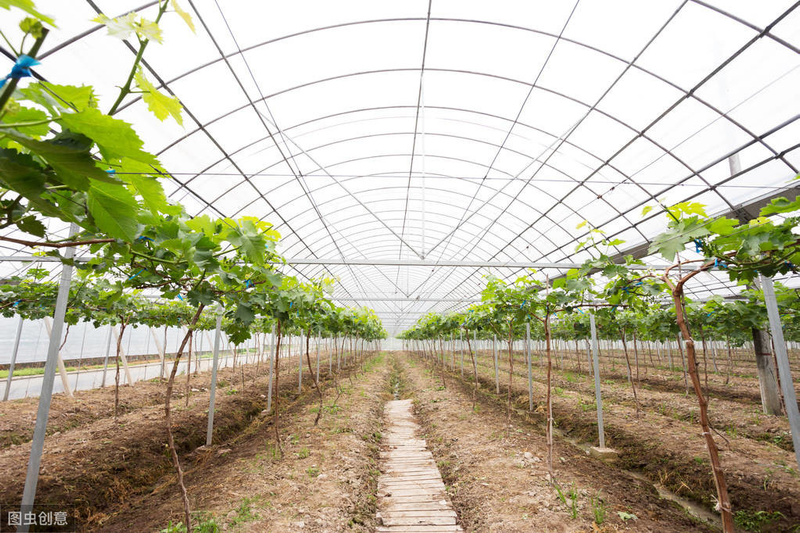
After years of testing and summation, we generally believe that the pre-emergence day temperature should be within the range of 26°c ~ 28°c. If the tree is weaker or the temperature in the room is lower, the temperature is better kept below the lower limit, i. E. 26°c. Conversely, in the case of strong trees or high temperatures, temperatures in the greenhouses are best kept at the upper limit, or 2°c. Night temperatures are dynamic. We are usually covered from 15:00 to 15:30 p. M., at a temperature of between 22°c and 25°c. If the temperature is high, the temperature in the temperature room is high and low, which can lead to booming and negatively affect tree growth. When the cover is covered, the temperature begins to decline after a period of time, and at about 22:00 p. M., the temperature in the room is generally kept at about 18 °c-20 °c and at 12 °c ~ 15 °c before the cotton is lifted in the morning。
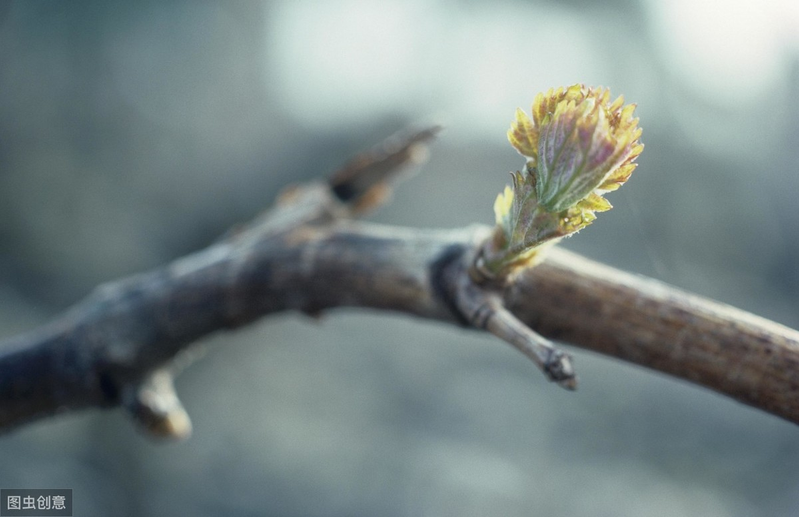
In order to ensure that the grapes are bulging, the whole tree can also be flattened to warm up, thus breaking the top advantage of the plant, with a more balanced nutrition for each eye. The front-end buds of the premature buds can be erased, provided that a sufficient amount of winter is available。
When the grapes sprouts, new plants enter a period of rapid growth. Controlling temperature in the greenhouses at about 26°c is also required in order to prevent new wavelengths and to promote cycling. A weak or low-temperature tree is controlled at 25°c and a strong or high-temperature tree is controlled at 27°c. Stay at 12°c-15°c. The practice is to open cotton cover at morning temperature between 12°c and 15°c. The temperature in the shed will then undergo a short drop and increase, but the shorter the temperature falls, the better, which requires us to determine the timing of the exposure, usually between 8:30 and 0900, depending on the specific temperature of the greenhouses. When the temperature rises to about 28°c, it opens the air. In order to avoid the cold wind pouring in to cause damage to the tree body in the wind mouth, the wind vent will be opened smaller until the temperature increases further
There are also current use of electric ventilator, a method that saves both human resources and is more effective in temperature regulation, but some of the users are wrong. The temperature detector of the electric wind protection device should be placed between the second and the third grape trees in the greenhouses on the south side of the wall, not on the middlemost and high-temperature side of the wall. The temperature of these locations is not representative and the electric ventilator cannot effectively control the temperature in the greenhouse。
At night, the hot wind should preferably be transported and the temperature kept constant at about 15°c, depending on the direction of the tree in the shed, which is slightly higher than 1°c ~2°c. Warmed with a coal furnace, it is possible to hang a sheet of film in the place where the stove is located in order to avoid the burning of nearby tree bodies by heat。
In the dark days of insufficient sunlight, if the cotton is exposed to inadequate temperatures in the back sheds, you can appropriately delay the exposure of the cotton, depending on the specific temperature of the greenhouse. Only a few microlights open the greenhouse as much as possible so that the tree body is exposed to sunlight for the benefit of growth. After successive snowfalls, the cotton is revealed in due time, because the cotton is unopened in the snow, and the shed is always in a state of lightless, low temperature. If we excrete the cotton after the snow, as usual, the temperature in the greenhouse suddenly rises and the light suddenly increases, it stimulates the tree body, which is not conducive to its growth。
Ii. Utility management
Before the gestation, the greenhouse grapes require a high degree of humidity to avoid stem damage to tree bodies and buds. At this point, the humidity in the shed should be more than 90 per cent, and the most intuitive test is that when we enter the greenhouse, we feel clearly bored, and of course it can be measured by flying air moisture meters. Upon arrival, rapid reduction of moisture levels in the shed is to be achieved through membranes, ventilation and water intake control in a timely manner. It is important, however, that hot greenhouses that are adhesive to the soil do not pre-lay the membrane, and that the soil can be activated with functional fertilizers such as algae and corrodic acid。
It should be noted that we have already had a watering in the greenhouses at the beginning of the warming, so that the whole sprouts of grapes, including before and after the sprouts, do not require a whole shed of water, especially in greenhouses where the soil is thicker or condensed. This period, when water is watered in large quantities, can cause a cool drop, hindering the development of the roots and, in serious cases, even causing the death of the roots, which we usually call “the roots”. The two types of soil must therefore be ploughed with small amounts of water, and more arid soils or sandy lands with severe leaks can appropriately increase irrigation。
There is also a situation in which soil moisture in the shed is high but air moisture is slightly lower, when the fruitlings are able to spray water to the ground with their hands on the kettle to increase moisture, which is appropriate at a level of 60-30 cm below the surface of the earth, with a water content of 60-70 per cent, so as to ensure both air moisture and no further increase in soil water content, which is a good two-part solution。

Water is much more important than fertilization in the management of grapes during the gestation period, and many people are losing to water when they fail to manage. For example, it is totally wrong for some of them to be more extreme in their belief that they will not be able to water themselves any longer after the temperature rises in the shed. Gravity systems grow well when the soil is 60-70 per cent water; less than 35 per cent are slow to grow and new or atrophy is difficult。
Iii. Tree management
Precipice of grapes can effectively kill winter insect eggs and fungi by spraying tree bodies with thiomers and mineral oils. Spraying is usually carried out on staggered green blades, with premature application, with poor efficacy, and with late application, with a high risk of poisoning. If no thioperate is sprayed before gestation, one degree of thioperate can be sprayed once before fracturing to thioperate, be careful that the concentration is not too high and should be reduced to 0. 2 ~0. 3 degrees of thioperate fluid once the green leaf is exposed。
When the temperature is low, it is a good time for asymptomosis, especially when the freshness of grapes is soft and resistant to disease. In the case of asymptomosis, we have to focus on prevention, reducing the humidity of the shed in a timely manner, and preventing the early spraying of amphibian, amphibian, fungus, etc. Upon detection of signs of corrosive disease, 50% amphibians, 40% amphibian, 43% cormoride, 80% acetyl? The spraying takes place from 9 to 11 a. M. In the clear weather, so as not to cause harm due to high humidity or heat。
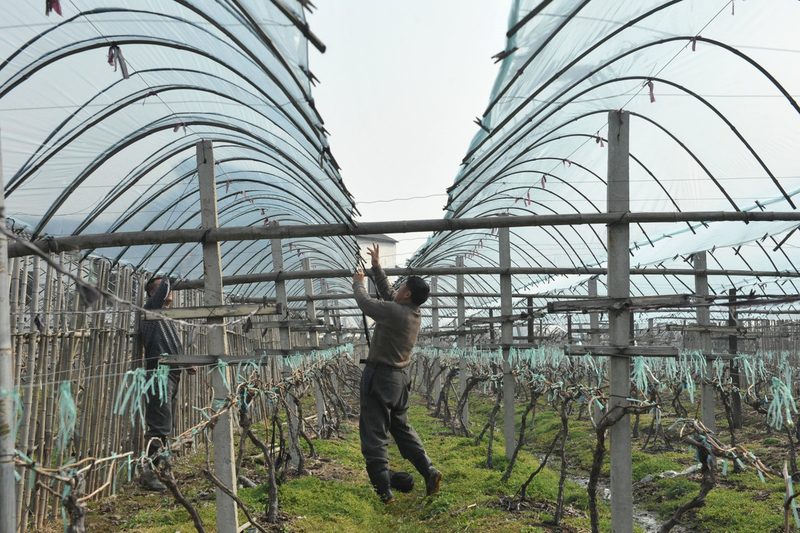
In the bud, soil and air moisture levels in the shed were relatively high, and chickens were prone to severe runoff or excessive urea dichloride fertilizer application. To this end, the fruit friends, with the control of air moisture and soil moisture in the shed, can spray calcium + boron + on the leaves with a good effect, not applying nitrogen fertilizers, but increasing the application of calcium and potassium fertilizers。
While some greenhouses are exposed late in the morning, the cotton is exposed to subsequent temperature rises in a straight line, and the leaves are exposed to strong light for direct photocosm, but the root function is not restored to work, resulting in a evaporation of the leaves and water-absorbing disorders in the root system, resulting in severe daily burning of the leaves. In response, the highest temperature of the day was not more than 26°c when you were taking drugs, and the cotton was exposed as early as possible in the light. The leaves are normally supplemented with calcium fertilizer, increasing the accumulation of dry matter and increasing the thickness of the leaves。
Prior to the bud, excessive water levels in the greenhouses could easily lead to a serious magnesium deficiency in the first leaf of the bud, which is exacerbated by the higher the temperature and the greater the water. The remedy is to care for the maintenance of the root system and, in the event of a serious situation, to root it in the form of a fungus + root agent + magnesium corrosive acid。