The promotion of “two-in-one” development is an important enabler for high-quality manufacturing development. To this end, the general office of the ministry of industry and communications has recently issued a circular on the organization of the declaration of pilot demonstration projects for the “two-in-one” manufacturing platform in 2018. By insisting on a double-wheel drive between “platforms” and “platforms”, we are accelerating the development of our manufacturing “breeds” platform。
How is the pilot development of the “two-in-one” platform in manufacturing? What are the outstanding problems in our manufacturing industry? How should the next step be to move our manufacturing industry towards manufacturing power? In the context of these issues, the chinese economic times journalist visited the department of industrial and economic research of the state council's centre for development studies and research (dirc) at their request。
China's economic times: manufacturing is the mainstay of the national economy and the main battleground for the “two-in-one”. What is the specific meaning of promoting “biz” in manufacturing
Call: the determination of the level of economic performance and the combined strength of the country lies essentially in the level of manufacturing development. The main areas of recent trade friction between china and the united states, as well as between the united states and japan, the european union and others, are where competition is focused on protecting and developing home-grown industries, such as manufacturing, where the united states has been the first to suffer, for example, from steel aluminium, automobiles, and tariff concessions, for which it has been discussed。
In fact, the share of manufacturing in many countries is already low, for example, in the united states, where it was only 11. 6 per cent in 2016, in japan, 21. 2 per cent, and in china and korea, where it was close to 30 per cent, but manufacturing is the basis for the development of many other services, many of which are based on manufacturing, such as r & d design, transport, wholesale retail, etc.; manufacturing is a core area of r & d innovation and efficiency upgrading, and its technological progress is much faster than that of services; and manufacturing is also the main product of countries participating in international exchanges, and the main source of foreign exchange earnings for countries to exchange other resources. Therefore, there is a general focus on manufacturing development and every effort is made to support manufacturing progress。
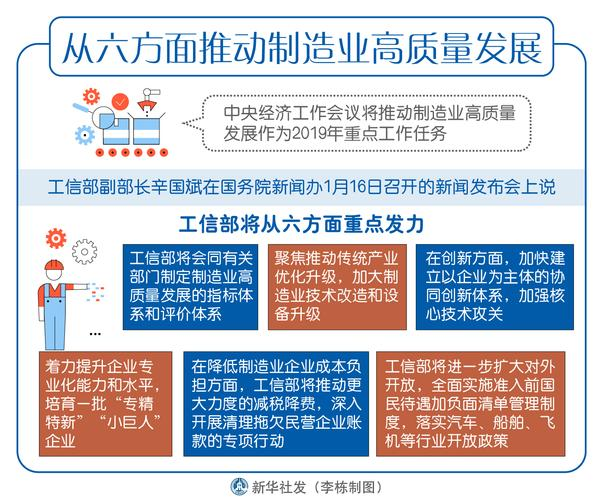
The difference between a “dual” in manufacturing and a “dip” in services is that a “dip” in manufacturing not only solves employment and economic development problems, but is also an important link in improving the core competitiveness of manufacturing. The country is currently in a critical period of transformation of the manufacturing sector towards a medium-to-higher stage, with the pre-existing low-cost competitive advantage being eroded and the urgent need to foster and develop new competitive advantages, particularly in terms of innovation capacity, product quality and industry. We have seen that, in recent years, despite a number of cases of diversion to low-cost countries such as south-east asia, the trend has not yet become universal, one of the major reasons being the country's good industrial ecology and supporting capacity. The construction of a “two-in-one” platform for manufacturing can play an important role in enabling innovation in manufacturing, promoting the growth of manufacturing enterprises and enhancing complementarities。
China economic times: how to pilot manufacturing development through a “two-in-one” manufacturing platform
The call: the construction of a “two-in-one” platform for manufacturing is more in line with the latest trends and inherent requirements in manufacturing and can be seen as an upgrading of our “public innovation, multi-dimensional entrepreneurship” in the manufacturing sector. At present, the focus of the country's manufacturing upgrading development is to be broken in three ways, and the twinning platform can do important work in those areas。
One is to promote innovation in research and development. Innovation is an inexhaustible driving force for the development of manufacturing in modern societies and an asset for manufacturing access to international markets. The country's potential for innovation is enormous, but in previous stages of development, the country's manufacturing sector was dominated by introduction, digestion and absorption. The demand for original innovation was not urgent, and the collaboration of innovative parties, such as enterprises, scientific institutions and universities and colleges, was weak and the potential for innovation was not fully realized. An important element of this “two-in-one” platform for manufacturing is to promote the convergence of innovation elements, bringing together online the resources and capacities of relevant stakeholders, including upstream and downstream enterprises, universities, research institutes, developers, and so forth. Through the creation of the “two-in-one” platform, it should play a role in building up innovative resources and harnessing the potential of innovation。
The second is to provide better complementary services that both contribute to the development of manufacturing through better division of labour and reduce the difficulty of innovative entrepreneurship. The continuous division of labour and specialization of industries is a very important force in manufacturing upgrading. The first chapter of adam smith's national richness was about division of labour, when he gave the example of a small workshop where a person could not do a needle a day, but as a line of water, as an industrialization, a person could do thousands of needles a day on average, which was the great power of specialization and division of labour. At this level, manufacturing still has potential for specialization and division of labour. An important element of the “two-in-one” platform plan for manufacturing is supporting manufacturing enterprises to accelerate the digitization, networking and networking of manufacturing resources, such as “production equipment, metrology testing, warehousing logistics”, and to upgrade the networking, optimization and sharing capabilities of all types of manufacturing resources, which can further contribute to the development of the manufacturing division of labour in the country and create a better environment for innovative enterprises。
Thirdly, it promotes the accumulation and steady upgrading of productive knowledge. We often see a phenomenon in which chinese enterprises that produce the same product are perhaps more advanced than foreign firms, but the production of the product is less than that of others, one of the major reasons being human capacity, especially the “worksmanship spirit” and the fact that many manufacturing enterprises abroad, whose employees have been working for decades, are fine-tuned and the quality of the product is naturally better. One important aspect of the country's efforts to close this gap is the promotion of craftsmanship and the upgrading of the skills of its employees, as well as the implementation of industrial technology software projects. The “hidden knowledge” previously held in the minds of employees is consolidated and upgraded through industrial software. This is also an important aspect of reducing staff demands and improving job comfort. The first important element of the plan for the creation of a “two-generation” platform is the implementation of the industrial technology software project and the acceleration of the online accumulation and sharing of all types of r & d resources, which would undoubtedly be of great help in improving the quality of our manufacturing industry if it were to advance significantly。
The chinese economic times: what are the outstanding problems with the “dual creation” of our manufacturing industry that is still in the exploratory phase
Call: the experience of how to build a dual platform is not readily available for direct learning, and needs to be summed up in a timely manner and continually refined, with three main points of focus。
The first is the synergy of interests among the various actors involved. In order for the platform to be dynamic in all its aspects, it is essential that the participants have a common interest in order to continue to attract inputs into platform-based collaboration that benefits all. At present, many of the demonstration platforms rely more on government-led funding to bring the parties together and do not yet have a good market-driven and endogenous mechanism。
The second is to address the competition between core and industry enterprises. Many of the “two-in-one” platforms in manufacturing are built around large and core enterprises, but the state wants them to serve not only these major enterprises, but more so small enterprises, which often have competitive relationships with core enterprises, and therefore need to develop good collaborative mechanisms to leverage the sharing and co-benefits between large and small enterprises of innovative resources and innovations。
Thirdly, the platform's service functions need to be further deepened. Most of the “two-in-one” platforms now focus on providing universal information, with insufficient basic research, data accumulation and sharing of results, and low-end, specialized and customized services. This is related to the initial phase of the exploration and development of the platform, but without sustained progress over a longer period of time, it is easy to reduce the motivation and initiative of the participating parties and ultimately not to perform well as the demonstration role of the platform。
China economic times: what should be the next step in moving our country forward to manufacturing power
The call: as our manufacturing industry begins to develop from the middle to the lower end, competition with the developed countries begins to outpace cooperation, and manufacturing development faces new difficulties, more so from the external environment under pressure from the developed countries, for which we also need to adapt our development strategies to changing circumstances。
The first is to maintain openness and cooperation. High-end manufacturing is characterized by innovation, which needs to take full advantage of global intellectual achievements and not be isolated. The united states has a strong capacity for innovation, a large part of which attracts and accumulates the leading scientific talent globally. The development of our manufacturing sector also requires greater integration into the global economy, especially in the developed countries, and the insistence on integrating global resources through a variety of forms, including foreign investment cooperation and the development of transnational corporations。
The second is to further enhance the potential and unleash innovation. There is a great deal of human resources in the country, but the quality of higher education still needs to be improved, and there is still a long way to go before higher education can provide a continuous stream of highly creative talent to enterprises. There is also a need to further optimize the scientific research mechanisms and create a liberal research environment for researchers and researchers in various fields。
The third is to optimize the business environment, particularly by significantly reducing the cost of enterprises. It will take a longer period to see the upgrading of innovation capabilities, and against the backdrop of a rapid decline in traditional low-cost advantages, it will be necessary to maintain the international competitiveness of our enterprises by significantly reducing the burden on enterprises, optimizing their services to them and creating time and space for deeper capacity enhancement。