


China economics weekly, journalist guo zhiqiang, reporting from beijing
“small and medium-sized enterprises need finance, while banks choose the ipr pledge financing market as an entry point for new business, to reserve future bankable high-tech business clients, with a win-win outcome and a positive outcome for all.” in late april, the product manager of the general welfare finance department of the bank of guangdang stated in an interview with a journalist for the chinese economic weekly。
In the context of the new coronary pneumonia epidemic, small and medium-sized enterprises (smes) that are economic development “cracker vessels” have come under great pressure, and there has been a steady increase in the number of smes that serve the real economy with intellectual property pledge financing。
A pledge financing of intellectual property is an application for financing from a bank by an enterprise or an individual that has a legally owned patent, trademark, copyright or property right that is assessed as a pledge, with the aim of helping science- and technology-based small and medium-sized enterprises (smes) to solve their financing difficulties。
Several intellectual property pledge financiers told journalists that, as a way of capitalization of intellectual property, while there are still “short-sets” of mechanisms, a growing number of smes are on the path of intellectual property pledge financing, which promotes the conversion of intellectual property rights to equity benefits, while also highlighting the importance of innovation and the market value of intellectual property rights, which can lead to innovation in small and medium-sized enterprises。
"purpose pledge loans are also an immediate relief."
In the context of the new coronary pneumonia epidemic, msmes are under great pressure and face many difficulties, particularly in the form of start-up science and technology enterprises, with strong innovation and growth capabilities, and are eager to obtain financing for better development with “light assets” such as patents and trademarks。
In 2021, as a result of the epidemic, funding for the start-up of new production lines was delayed for enterprises in the central region, which, in order to start production as soon as possible, secured a loan of $4 million in intellectual property mortgage financing for 5 patents, such as “wheel filters”, and 13 new practical applications。
“this pledge financing of intellectual property rights has enabled companies to address their immediate needs, brought valuable development finance, saved cash flows and provided strong support for the growth of company production and marketing.” in recent days, the above-mentioned producers of filtering machines have spoken to journalists in the chinese economic journal。
Previously, the national intellectual property administration, in conjunction with the china bank insurance supervisory board and the national development and reform commission, in its programme of action for preferential investment in intellectual property mortgage financing (2021-2023), had stated that it was exploring cooperation on “government and silverfield investment” to encourage banking financial institutions to provide value-added services such as reasonable credit lines and loan renewal facilities to white-listed enterprises in parks; and to encourage banking financial institutions to work with professional investment institutions to share high growth dividends from technology-based enterprises。
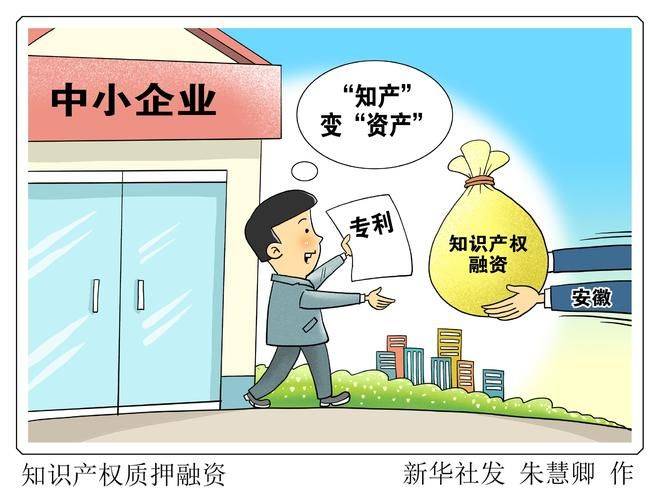
In addition to benefiting enterprises, intellectual property pledge financing has opened up new lines of operation for banking and financial institutions, and more banks have joined the “empretec” initiative, looking at intellectual property “light assets”。
On 22 april, u qin, director of the centre for intellectual property exchanges of hunan province, told a journalist in china's weekly economic journal that the “enterprise for parks” initiative had allowed intellectual property pledge financing to reach out to the grass-roots networks of parks, enterprises and financial institutions, serving the real economy, effectively alleviating the financing difficulties of innovative msmes and financing costs and stimulating innovative entrepreneurial activity throughout society。
“before undertaking the financing of pledges of intellectual property rights, we will fully communicate with the provincial intellectual property trading centres, based on the patent data available to them, with a view to targeting customers and establishing a white list of customers. Upon receipt of the white list, we will promote intellectual property pledge financing at the branch offices and encourage one household at the grass-roots level to visit clients on the white list.” bear manjiang told a journalist in the chinese economic journal: “we will judge more about the multidimensionality of the company's patented products, market patterns, industry trends and risk points to see whether they meet intellectual property pledge financing requirements.”
In october 2021, banco pufa found in its practice that science- and technology-based small and medium-sized enterprises (smes) and niche new enterprises were mostly light-asset customers and that, in order to resolve the contradiction between traditional trusted products and the actual needs of their clients, banks quickly streamlined their intellectual property pledge policies and took over from the intellectual property regulatory authorities。
In january of this year, the governor of the bank of pufa published the small microenterprise intellectual property mortgage management (temporary) scheme, which clears policy barriers to subsequent intellectual property pledge lending。
“in promoting intellectual property pledge operations, we need to judge whether the enterprise has the capacity to grow rapidly, not only in terms of the value of the intellectual property rights of the financing enterprise, but also in terms of the future of enterprise development, which imposes specific requirements on practitioners for professional capabilities such as intellectual property, financial operations and business management.” on 22 april, chen su, general manager of the small business financial services centre (gsf) of the baofa bank, told the chinese economic journal that, in order to reduce the impact of the epidemic on small and medium-sized enterprises, major banks, including the bank, have been promoting intellectual property pledge financing since the beginning of the year, turning the “patent” of an enterprise into a “reward” and “assets”。
How to excavate the intellectual property value of stacks in warehouses
One of the country's first state-owned platforms for intellectual property pledge financing was the hunan intellectual property centre, which is located in u. K., in 2015. It relies on the financing of intellectual property pledge risk compensation mechanisms (i. E., hunan province intellectual property facility facility, hunan province intellectual property centre, bank triangular shares the risk of loss of principal of loans at a rate of 50 per cent: 5 per cent: 45 per cent) to import financial elements into the intellectual property services market, improve the liquidity of intellectual property rights, and promote government, banks, guarantees, and the assessment of multi-stakeholder financing risks。
At present, trading platforms such as the hunan intellectual property centre are leading more smes to convert their intellectual property values。
“in 2021, the national intellectual property system maintained a steady and steady pace of progress, continued reforms and innovations, improved intellectual property workloads throughout the year and the successful completion of the indicators, providing a strong guarantee of a better life for the population.” in mid-january this year, hu wenhui, deputy director of the national intellectual property agency and head of the office, was introduced at the 2021 conference on the publication of statistics on intellectual property-related work。

The data show that, in 2021, the total amount of national patent and trademark pledge financing amounted to rmb 30,09. 8 billion, and the total number of financing projects reached 17,000, benefiting 15,000 businesses, an increase of about 42 per cent over the same period。
Previously, a series of policy “portfolios” had been implemented to provide policy support for sme ip pledge financing in areas such as financial empowerment, conversion and service optimization。
In august 2019, the notice on further enhancement of intellectual property mortgage financing made it clear that banking insurance agencies were encouraged to increase their support for the application of intellectual property rights and to expand intellectual property pledge financing. Bank insurance agencies are encouraged to actively pursue intellectual property pledge financing and support innovative (scientific) enterprises with development potential。
In june 2021, the national intellectual property authority, in collaboration with a multi-sectoral initiative, launched a three-year initiative on “enterprises in parks” for intellectual property pledge financing, further expanding the coverage of small and medium-sized enterprises in intellectual property pledge financing services, and promoting the benefits of intellectual property pledge financing for “100 million enterprises”. This is intended to help solve the financing difficulties of smes by expanding collateral financing of iprs。
As a result of a combination of policy measures, the market environment and business demand, central and local incentives for intellectual property pledge financing have been greatly stimulated, and for the first time the amount registered for patent and trademark pledge financing has exceeded 300 billion yuan。
The evaluation report on the development of intellectual property in china 2020 (hereinafter referred to as the report), published in october 2021, shows that the index of intellectual property pledge financing services increased by 42. 0 per cent in 2020 compared with the previous year。
According to the report, in 2020, the total amount of patent pledge financing in zhejiang, guangdong, shandong and jiangsu was among the highest in the country, with total patent pledge financing in zhejiang and shandong provinces exceeding 40 billion yuan and 30 billion yuan respectively。
At the beginning of february 2021, the national intellectual property agency (inip) reported national data on intellectual property pledge financing, with a total of rmb 40,107 million, representing an increase of 13,229 per cent over the same period in the province of zhejiang in 2020. According to statistics, during the period of “1355”, zhejiang province secured a total of 79,891 million yuan in patent pledges, 13,903 pledge patents and 3427 contracts for the registration of patent pledges, benefiting 3181 small and medium-sized enterprises。
It was also reported by the department of intellectual property of guangdong that during the “13th five-year” period, guangdong mortgage financing totalled 92. 1 billion yuan, the highest in the country. By 2025, guangdong will have added 250 billion yuan to its new intellectual property pledge financing, more than 5,000 new projects, annual import and export fees for intellectual property totalling 110 billion yuan, and the added value of patent-intensive industries to 19 per cent of total regional production。
Wu qin told a journalist in china economics weekly that “many small and medium-sized technology enterprises hold large amounts of `light assets' such as patents, which are stacked in warehouses and have no value. To allow enterprises to reclaim the value of intellectual property rights by way of intellectual property pledge financing can channel the cash flow needed for enterprise development and provide a path to address the difficulties and costs of financing the enterprise.”
`small' visible: small pool size, pledge process long

In 2020, hunan super robotics technology ltd. (hereinafter referred to as “the ultra robot”) purchased a healthy old-age robot for production and development by its partner in shenzhen, but after returning to shenzhen, the partner imitated a healthy old-age robot that resembled a similar super-power robot prototype. Although the products of super-manufacturing robots had been patented in advance, the imitators had also applied for the appearance patent six months later and had led the product to the market。
“intellectual property protection for robotic enterprises is a priority issue for industrial development.” shao xianjiang, chairman of the ultra-manu robotic council, said to a reporter in china economic weekly。
The “challenging” of patent infringement suffered by shaw jiang is a reflection of the protection of domestic intellectual property rights, which is an issue of greater upstream and downstream consideration of intellectual property pledge financing and an impediment to bank lending。
In late april, wang zhongqing, a head of the sme finance department from commercial banks, told china's economic weekly that “some commercial banks are currently not interested in intellectual property pledge financing for a number of reasons: first, the domestic intellectual property protection system is inadequate and patent frauds are occurring; second, the intellectual property technology content of smes is low and the value of intellectual property is difficult to assess; and third, the pledge of intellectual property rights is difficult to realize, and once it enters the chain of transactions, it becomes `valueless'.”
“banks finance smes with little or no profit.” wang zheng suggested that, in order to motivate financial institutions to undertake intellectual property pledge financing, the state should increase incentives to support “light asset” pledge financing, such as intellectual property rights, and greater incentives for commercial banks and agricultural comptoirs。
With regard to financing risk management, chen sei told journalists in the chinese economic journal that it would be difficult for financial practitioners to shift their identities and horizons away from traditional lines of credit and to distinguish between customers from those of investment agencies. Particularly during the credit life cycle, there is a need to enrich post-credit management tools, provide access to sectoral information on islands, collect business-related information in a variety of ways, and assist risk managers in identifying potential risks of intellectual property loans。
In advancing the financing of the pledge of intellectual property rights, the close to 30-day pledge review chain has affected the efficiency of approval of the pledge financing of intellectual property rights, in addition to the higher incidence of errors in the processing of pledges on the internet of intellectual property rights. “some small and medium-sized technology enterprises that are in dire need of funds may be bankrupt because of the breakdown of their financial chain, due to a longer pledge approval process
“the amount of provincial and municipal intellectual property pledge financing available for windfall financing is no longer sufficient to meet the financing needs of smes.” wu qin made an account for journalists, based on the total size of the 42 million hunan ipr pledge financing risk compensation pool, and the 10-fold magnification of the project pledge financing totalled only 480 million yuan, with the platform meeting the financing needs of up to 90 businesses at the rate of 5 million per household。
According to u qin, “as the windfall financing of intellectual property pledge finance expands its reach and depth in hunan, it is expected that the demand for intellectual property pledge financing for small and medium-sized technology enterprises in hunan will continue to expand during the `1455' period. To serve more small and medium-sized enterprises, it is necessary to augment the risk compensation pool and expand the scope of risk compensation pledge financing”
♪ it's the name of the king ♪



