Last month, a friend of mine in a dress found me。
He stated that the monthly visitors to the shop fell from 50,000 to 35,000, that the direct rpi was down from 1:3 to 1:1. 5, and that the owner was staring at the data boards every day, and that the company was rushing like an ant on a hot pot。
What is more, they did all the "standard moves": optimising the master map, adjusting the keywords, scaling up the input — the results? The more expensive the flow, the lower the conversion rate。
I told him, "you're not making a diagnosis, you're making a diagnosis'guidance game'"""""
Instead of looking at the data and drawing conclusions, the true electrician diagnosis is to use a systematic method of conducting an intimacy like a doctor。
Today i'm going to spread out the diagnosis that was validated by 300+ shop。
I. Pre-diagnostic cognitive traps
A lot of people think that "wilder's diagnosis" is to read backstage data, calculate conversion rates and write recommendations for optimization。
But it's just "look at the data", not "diagnosis"。
There are four questions to answer:
What happened? Why did that happen? What is the impact? What is the next step? How
Ninety percent of the cards are in the second step -- knowing that the flow is falling, but not finding out why。
They took the "regime" as a diagnosis:
These are not diagnostics, they are excuses。
The true diagnosis begins with controllable factors: goods, pages, traffic, services, supply chains。
Ii. 3-step diagnosis: the first step in the closed circle from data to action: dismantling the business with "mathematics in primary school" hmm
It sounds too simple, but 90% is useless。
Turnover = traffic x conversion rate x passenger unit price
Open it down:
Flow = natural flow + pay flow + private traffic conversion rate = hits x additions x payment rate = average unit price x associated rate
You'll find that the reason for the decline in turnover must be in these three links。
What happened to my girl friend:
Monthly sales fell from 500,000 to 350,000, a decline of 30 per cent。
After dismantling:
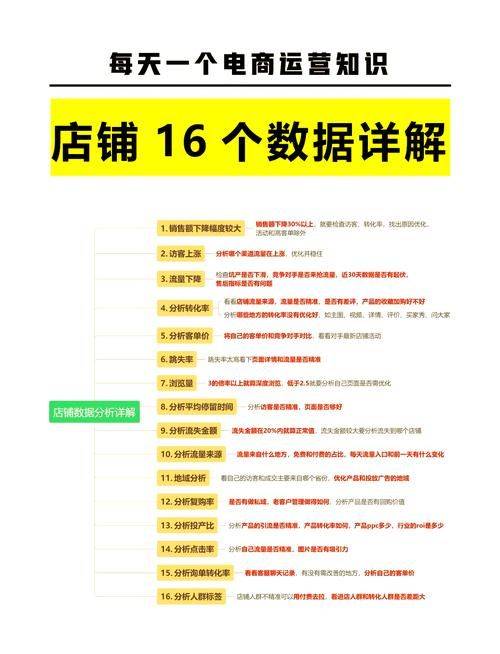
The problem is clear: both traffic and conversion rates have fallen, and the impact of the single price of passengers has been marginal。
Dig down:
Natural search traffic: 20,000 (50 per cent) paid traffic: 20,000 (25 per cent) private traffic: 10,000 (05 per cent)
Diagnosis:
Natural search flows are cut off, indicating that the rights of the commodity have fallen, that the flow of down payment in the keyword is rising, and that the flow of private territory to fill the natural flow gap in the "buy-for-money" is falling, and that there is a big problem with repurchase
Next move
See the difference? Diagnosis is not "analysing reasons," it's "direct to action."。
Step two: use funnel analysis to locate the loss point
There's traffic, but where's the user going
The electrician's funnel is:
Exposure click on add-on bill pay
Each layer has a loss rate, but the point is to find the anomaly。
To give an example of a 3c shop:
The rate of hits was 2. 5 per cent (3 per cent industry average), the increase was 8 per cent (10 per cent industry average) and the payment rate was 90 per cent (92 per cent industry average)。
What's the problem
Low number of hits low number of master charts/titles with low additions low rate of payment of detailed page questions prices/ coupons/guests
The addition rate for this store is only 8 per cent, well below the industry average of 10 per cent。
Opens the details page heat and finds:
Diagnosis: detailed page information is in disarray, users are unable to find core selling points and are losing quickly。
Next action:
Seven days later:
Click rate: 2. 5% – 3. 1% (up 24%) plus purchase rate: 8% – 11% (up 37%) gmv: 350,000 – 450,000 (up 29%)
That's it。
Step three: three-dimensional comparison
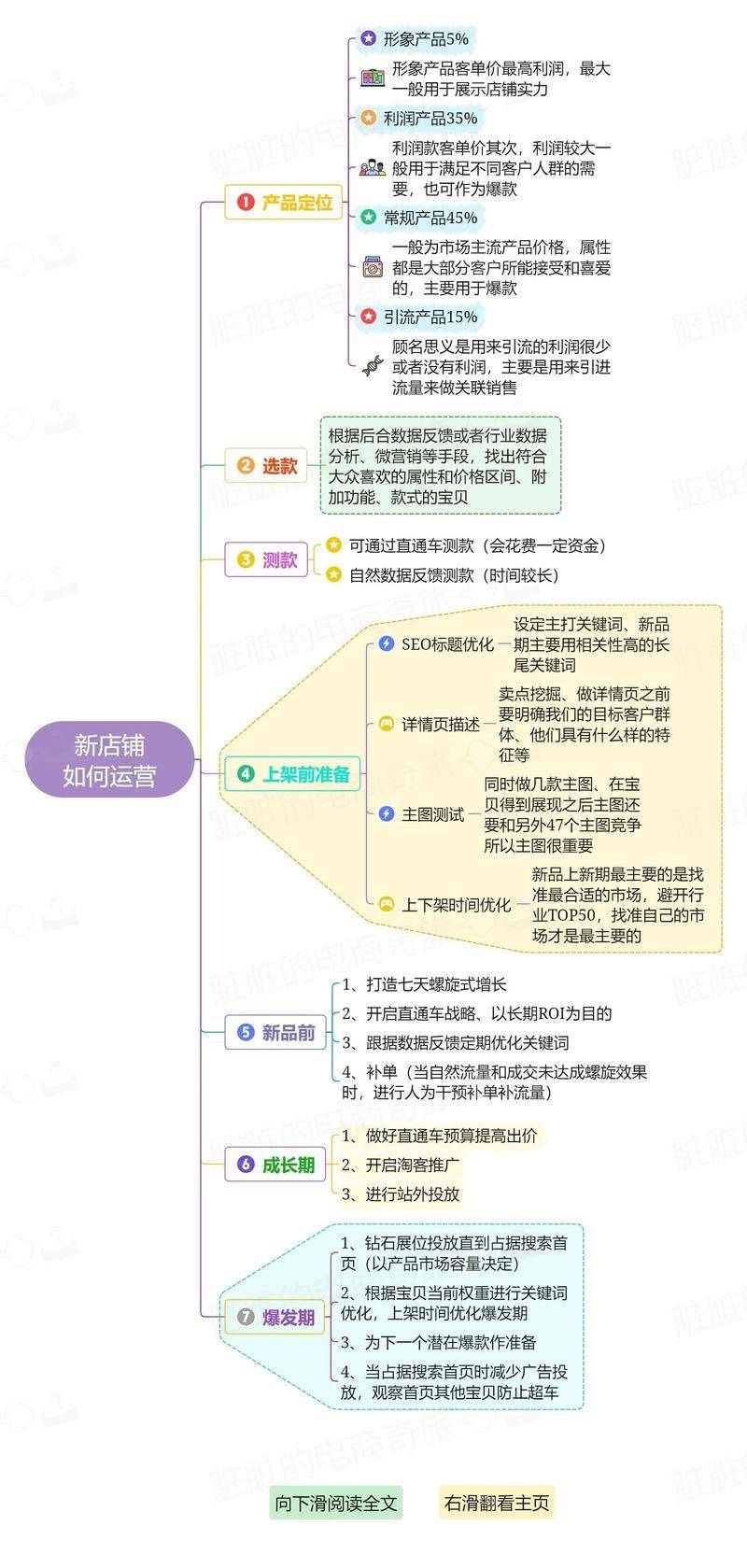
There are three aspects to the diagnosis:
Longitudinal comparisons: horizontal comparisons of self-vs own historical data: self-vs industry/competition target comparisons: own vs target values
By way of example, a cosmetic shop has a repurchase rate of 22 per cent, an industry average of 30 per cent and its own target of 25 per cent。
Longitudinal comparison: repurchase rate of 28 per cent in the same period last year fell to a horizontal comparison of 22 per cent this year: competition a repurchase rate of 35 per cent, competition b repurchase rate of 32 per cent against target: target 25 per cent, actual 22 per cent, gap of 3 percentage points
Diagnosis: repurchase rates have declined significantly and old people are suffering from serious problems。
In-depth diagnosis:
Reason locked:
As a result of the upgrading of the membership system, the perception of rights and interests was weakened and the frequency of access of older persons was reduced, from two competitions per week to one competition per month, increasing the rights of older persons and increasing their strength from 100-20 to 100-30
Next action:
Results 30 days later:
Repurchase rate: 22% 26% (18% increase) repurchase cycle: 60 days – 48 days (20% reduction)
Iii. Accelerating diagnosis of ai tools: from 2 hours to 2 minutes
Traditional diagnostics require the export of data, the production of excel forms and the drawing of charts for at least two hours。
Now use the ai tool, two minutes。
A recent friend of a home shop found that traffic had declined by 15 per cent over the past seven days and was diagnosed using the ai data analysis tool。
First step: upload the 7-day data of the store (including source of traffic, conversion rate, per capita price, commodity performance)
Step 2: questions in natural languages
"analyzing the causes of my recent seven-day drop in traffic, identifying the core issues and giving me three concrete optimisation options."
Step 3: ai automatically generates diagnostic reports
Core reasons:
Specific programmes:
Optimizing the main push title within 24 hours, adding an inefficient key word to suspend cpc >2 for high search words such as "value for money" and budget to test short video tapes with high conversion rates, target conversion rate 5%, expected roi 1:4
Expected effects: 10 per cent increase in natural search flow after 7 days and 1 in 3 payments for roi
Seven days later:
Natural search traffic: up 12% (over 10%) to pay roi: up to 1:3. 2 (over 1:3)
The ai tool is not a substitute, it is an acceleration。
You know diagnostic logic, ai understands data analysis, and the combination of the two is 10 times more efficient。
Four, three pits guide pit 1: gmv, no structure
There's a store gmv growing by 15%, but when it was dismantled:
Surface growth, actual overdraft。
Real healthy growth is structurally sound growth:
Pit 2: total, not single
A shop has an overall conversion rate of 3 per cent but has been dismantled to a single product:
What's the problem
Not overall optimization, but rather elimination/optimization of long-tail commodities。
Policy:
Pit 3: only results, no process
Gmv increased by 50 per cent during the period of a major disruption, but:
Short-term explosion, long-term injury。
A truly effective activity that balances short-term performance with long-term health:
V. Final key perceptions
Electrician diagnosis, not technical work, cognitive work。
Level one: look at the data, know what's going on. Level two: find out why
Ninety per cent are stuck in the first level, 9 per cent in the second level and only 1 per cent in the third。
After reading this article, you've been standing at the third level of the door。
Do these three things tonight, pull out the traffic, conversion, single price data of your shop for the last seven days, open up the business staff again with the turnover = flow × conversion rate x single price, find your conversion funnel data, find the highest loss rate, choose one of the main thrusts, make a comparison of the key words, and find the core of your loss. Word
In three days, you'll find out: the diagnosis was so simple。
Have you recently experienced a drop in traffic and a reversal of the team? How? Talk to the comment section. It might help。