The “fifty-five” period in beijing on january 23rd (journalist wang) was a crucial stage in the overall upgrading of the engineering and machinery industry to a high level, intellectualization, greening and accelerating the globalization landscape. Its core objective is to move away from dependency on scale towards quality leadership and to build modern industrial systems. The three groups, as industry-led enterprises, have received considerable attention in terms of their sti pathways and industry configurations. Representatives of the beijing municipal assembly, vice-president of the trinity group and director of the industrial development agency, zhong weihua, received a visit from yang guang network to elaborate on the strategies and practices of the trinity group around the core breakthroughs in the field of engineering and machinery, policy synergies and industry proposals。
Innovation breakthrough: globalization, intellectualization, low-carbon “triple”
“current breakthroughs in science, technology and innovation in engineering and machinery are concentrated in three main directions: globalization, intellectualization, and low carbon.” chung waihua said, “this is not a slogan, but a practice that the trinity group is advancing at its best.”
In the context of globalization, jong weihua stated that “more than selling products, we must create a `ground'”. Plants and r & d centres have been built in indonesia, germany, the united states, etc., to tailor products to regional needs and to match technologies, and overseas revenues now account for half of the group's revenues。
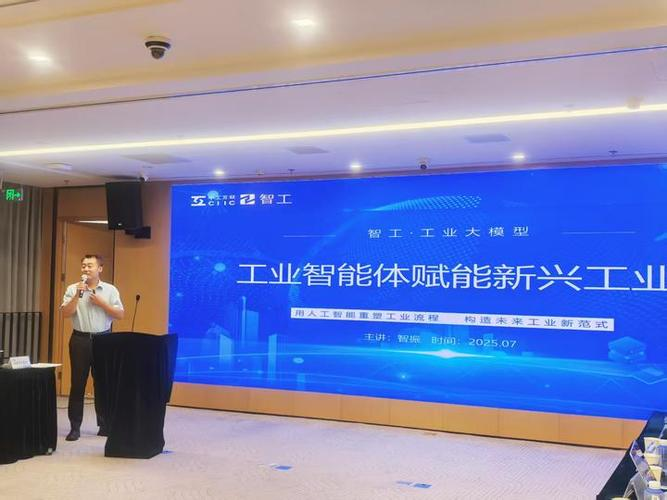
Ideology is considered a “war of survival”. Thirdly, smartness is promoted through the construction of several world-class “lighthouse plants” and the introduction of products such as the first global 5g remote-controlled excavator, the pure electron unmanned concept excavator and so forth, from production to production。
Low carbon is not only an environmental responsibility, but also a new growth path. Three new energy equipment, such as electric weight cards and electric excavators, have been deployed and extended to clean energy areas such as wind power, hydrogen and hydrogen, with a commitment to providing integrated green solutions。
Policy synergy and integration with productive research: lighting innovation “accelerators”
In response to the question of how national policies can contribute to the core technical challenge, chung waihua stated that “the precise policy is `pointing firearms', the efficient co-operation in production is `accelerator', and those who land are `realizers'”
She suggested that the policy should be more focused on supporting leading firms and leaders who had achieved results in practice, “investing resources where they could be most productive”. For example, support for the flow and application of industrial chain data promoted by national data authorities is seen by enterprises as an example of a policy that is “precision and effective”。
Zhong weihua, in the context of research and development in the field of productive sciences, has said that he still faces the twin challenges of “demand-to-demand” and “brain-to-brain”. In her view, it was important to promote closer integration of scientific research in higher education with practical industrial challenges and to establish clear intellectual property and benefit-sharing mechanisms. In addition, what businesses urgently need is “on-site engineers” who can solve complex engineering problems, rather than just scientists who stay in laboratories。
At present, sanichi has established the “three modern industries institute” with the hunan teacher training university, and is promoting the creation of a specialty laboratory in beijing in cooperation with the university of beijing, to deepen the “school federation”. In particular, zhong weihua noted that mechanisms such as a pool dedicated to “government hiring” talent could help alleviate the shortage of high-level talent in private enterprises。
The representative of the people's republic of china made a statement: promoting a green transition and a “first set” application
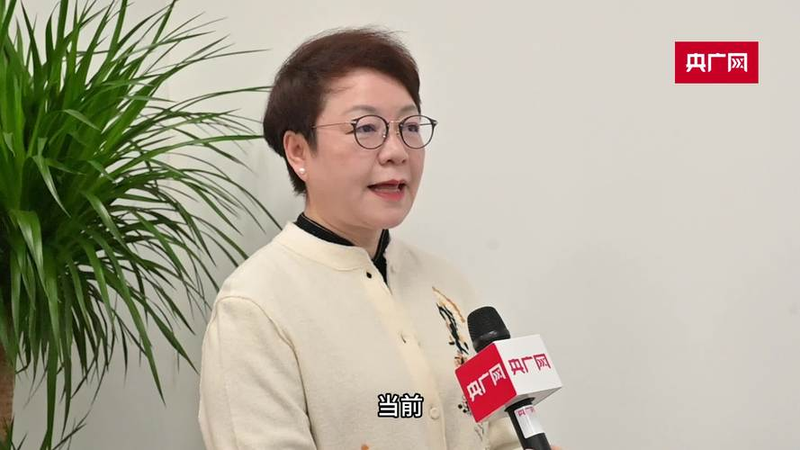
As the beijing people’s assembly, jong weihua will focus on such topics as high-tech industrial clustering, green low-carbon transformation, full-chain innovation services, and integrated development of science and technology in education during the two sessions of the city。
She referred in particular to the breakthrough in renewable energy. In october this year, the industry's first-ever, land-based, field-based wind-appropriate power unit si-242 series was released to achieve full coverage from ultra-low to high-wind speed and to be able to withstand the 63 m/s maximum wind speed. The aircraft is expected to declare “first major technical equipment” in beijing and at the national level in 2026。
“we want to contribute to the optimization of national energy structures and the development of high-end equipment by promoting a safe and low-carbon transformation of the industrial chain through more self-developed `first set' equipment. "bong waihua indicates。
In the current process of profound change in the engineering and machinery industry, the trinity group, anchored in technology, policy-oriented sails and human-patterns, is working hard towards a new course of globalization, intellectualization and low-carbonization。