There are two interesting rules in the stock market:
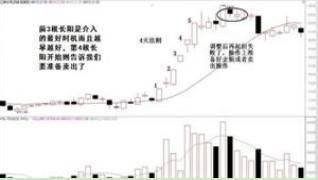
The first four days
The four-day rule: the four-day rule that victor sperandeo proposed in his book " the principles of professional speculation " is also his preferred model when mid-level trends change. The act is that, in a medium-term trend, the trend is likely to change when the market reverses at a high (or low) point and falls (or rises) for four consecutive days. This law is the result of victor sperandeo's examination of trends in the dow jones industry average index from 1926 to 1985, which defined a “four-day inference” variable. In a middle trend running. The top or bottom of a change in trend is often represented by a four-day (or more)-time ranking, followed by a reverse trend on the first day。
Simply summed up, for the vast majority of powerful shares, the number of days in which neutral and long-term rays appear in small-band rises is three to five days, that is, on average around four days, so we call it the four-day rule。
The law of the second and third bands
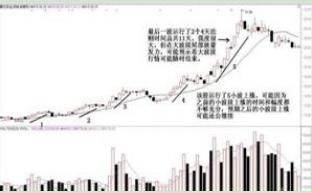
The rise in the small band generally lasts about three waves from the time the large band rises are established. That's what we're talking about, the three-band rule。
If the first two small bands are already operating at a very large scale and time, it is difficult to continue with the third wave of small bands or not very strong. And let alone expect a fourth small band, because the buying gas in the market has diminished considerably over time and with the increase, and even the turnover has not kept pace. But if the small band that starts running is not strong, but it appears to be staggered, the small band will operate relatively more often, and that is what we have repeatedly referred to as the very durable large band cattle。
How can the diaspora use these two laws in actual combat for profit?
In fact, it was simple: one, three-band method to determine whether stocks were in an operational area. If only one or two waves are taken and the cycle is short and small, this means that the unit is in an operational area, and the bulk can add the unit to the self-selected unit for continued observation. 2. The four-day rule is to seize short-term trading points and maximize benefits。
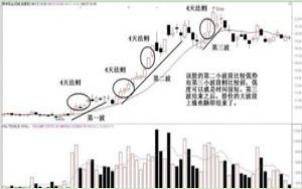
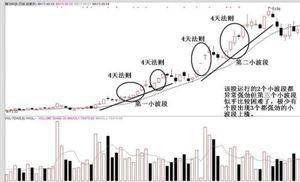
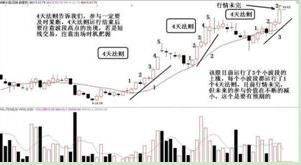
The four-day rule and the three small band rule can be used not only to judge the beginning of the line, but also to determine the end of the line. And it's very important for investors to judge the end of the line, no matter how high your stock is, it's only when you sell it that the money really belongs to you。
And the principle of selling is simple: selling without moving. The “swing-off” here is divided into small bands that are still rising and large bands that are still rising, while the small bands are still rising by reference to the four-day rule and the large bands by reference to the three small bands。
The following types of signals usually end in small bands:
1. The trade volume releases the natural mass and the stock price shakes significantly。
The stock price was long, and it began to fall the following day。
The four-to-five-day closing of the stock was unable to achieve a new high or to create a continuing upward trend and was weaker than other shares。
The stock price rise was weak and the next day's harvest was negative。
5. Stock prices have been running for some time, generally divided into 6-8 days and 10-15 days in accordance with trends, and longer if there is a frequent emergence of a small yang, etc。
The end of the wave band should be marked by a sufficient increase in the wave band to meet the operational rules of three small waves. It was generally divided into two situations:
One is the apparent weakness of single-wave movements, which are limited in volume, far less than those of previous waves, and the inability to reach even the height of the former small band。
In another case, single waves are fully operational, and stock prices accelerate jetting, and when large bands end. This is a signal of the end of the small band and the end of the large band。
A simple description is one of strength and weakness, one of weakness and strength, and finally of madness。