In addition to the relatively extensive cultivation of rice, maize and wheat, the gradual cultivation of potatoes has begun to increase and to diversify the processing process because of its nutritional richness. What is the current status of potato development with respect to the growing space for potato cultivation? This is followed by a specific analysis of the future of potato cultivation and the profit of planting an acre of potatoes。
Status of potato development
(i) steady increase in area production
According to the national statistics institute, the annual average area of potatoes grown during the “fifteenth” period was 7,0159,000 acres, an increase of 7,872,000 acres, or 12. 6 per cent, over the “ninety five” period. In 2007, the area under potato cultivation amounted to 66,455,000 acres, or 4. 2 per cent of the country's total food area, an increase of 1,041,000 acres, or 18. 6 per cent, over the 1996 period. The average annual production of fresh potatoes during the “fifteenth” period was 7,0196,000 tons, an increase of 1,0764,000 tons, or 18. 1 per cent, over the “ninety-five” period.
(ii) rapid dissemination of good practices
Over the past 10 years, the pace of the selection of good varieties and the application of detoxified potato varieties has accelerated, with more than 110 new varieties with autonomous intellectual property rights throughout the country, and more than 50 varieties are currently widely promoted in production. By 2007, approximately 400 million micro-chips of potatoes were produced, and the expansion of detoxification is about 20 million acres, representing 25 per cent of the total potato cultivation.
Many farming models and planting techniques adapted to local natural, climatic, soil and economic conditions have been explored, such as high-yielding farming techniques in the north, as well as a combination of high-quality potatoes, potato processing, balanced fertilization, integrated pest management, dry cultivation techniques such as membrane drip irrigation, etc., have been expanded from year to year; co-cropping techniques such as pre-cooked potatoes and food, cotton, melon, vegetable, fruit-covering, small archaebranchs, large plaque cultivation, etc., have been promoted in the middle to south-west, with medium or maize or potatoes being grown one year after harvest in the south-west, with potato-crop cover/crop-free, spring potatoes/crop-crop, maize/crychip-chip-drive, etc., have been promoted in the middle to medium-crop rice, maize or potato-croping in the south-west and long-cry crops, and with a strong promotion of rice-creted seeding and grass-crop techniques such as rice-breading。
(iii) initial development of regionalization patterns
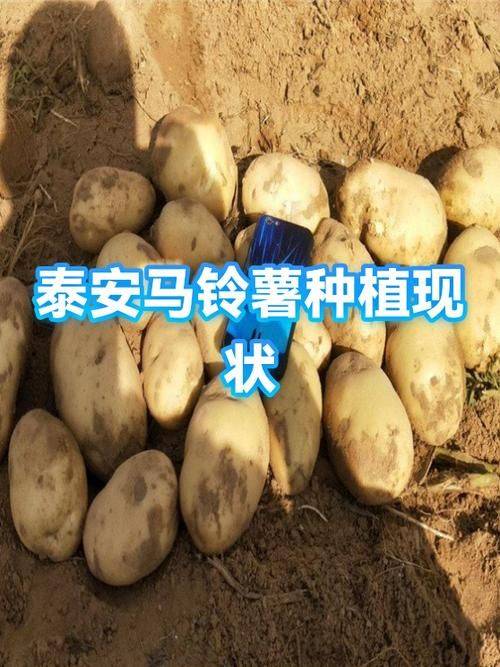
Our potato cultivation forms the four main areas of relative regional concentration, with the distinctive northern season zones, the central two season zones, the south-west one or two seasons mixed with the southern winter zones. The northern quarter comprises mainly the north-eastern provinces of heilongjiang, jilin and liaoning, with the exception of liaodong peninsula, the north-north of the north-west of the river, the north-west of the mountains, the whole of inner mongolia and the north-west of the north-west, ningxia, gansu, the whole of the qinghai and the north of xinjiang. The zone, which is the primary production area of our potato, covers some 49 per cent of the country and has become the country's main farm and production base for the processing of raw materials. The 2nd zone of china comprises mainly the southern provinces of liaoning, hebei, shanxi, henan, shandong, jiangsu, zhejiang, anhui and jiangxi. The region accounts for about 5 per cent of the total area under potato cultivation. The sub-seasonal areas include the provinces of yunnan, guizhou, sichuan, chongqing, tibet (districts, cities), hunan and the western part of the lake, and the city of ankang in shaanxi. This region is one of the areas of production of our potato area, which is growing rapidly, with around 39 per cent of the country's area under cultivation. The southern winter zones consist mainly of the provinces (regions) of south-west gang, hunan and north-east of hubei, guangxi, guangdong, fujian, hainan and taiwan. The region has been able to grow potatoes from crops such as rice in the post-harvest winter fields, which have had significant benefits in terms of exports and early and fresh food. The area under cultivation has expanded rapidly in recent years and has greater potential, accounting for about 7 per cent of the country。
(iv) process storage capacity and technological breakthroughs
As our potato production expands year by year, the processing industry is developing rapidly and the capacity to store and to organize the production, processing and sale of stocks is increasing。
At present, there are about 5,000 potato processing enterprises in the country, of which nearly 140 are deep-scale. More than 70 enterprises with capacity of more than 10,000 tons per year are located in the 14 northern provinces of heilong river, inner mongolia, ningxia, gansu and the south-west of yunnan and guizhou (districts); around 100,000 tons per year are processed throughout the year in nearly 10 processing enterprises, mainly in the interior of mongolia, gansu and shanxi; 250,000 tons per year are processed for chips and chips, and nearly 40 are processed in the eastern coastal areas and major cities of beijing, harbin, shanghai, guangdong and jiangsu; and more than 80,000 tons are processed per year for pollinators, with processing enterprises scattered in the north-east, north-west and south-west regions。
In order to supply markets and improve the quality of storage, the main potato-producing areas of inner mongolia, the heilong river, hebei and gansu have established a collection of seeded potatoes with a total capacity of more than 2 million tons; the construction of a fresh potato-storage in the north has begun, with all types of storage accounting for more than 50 per cent of fresh potatoes; and large-scale raw material-based potato storage facilities have been established mainly by enterprises with a total capacity of about 1 million tons。
In recent years, the main potato-producing regions have been actively developing professional cooperative economic organizations, using the “companies-cooperative organizations-farmers” route to train farmers, provide marketing information and order production, and promote effective links between potato production and sales. In 2007, there were more than 300 professional cooperative economic organizations in the country, with orders of over 15 million acres。
Analysis of the future of potato cultivation
(i) market supply and demand analysis
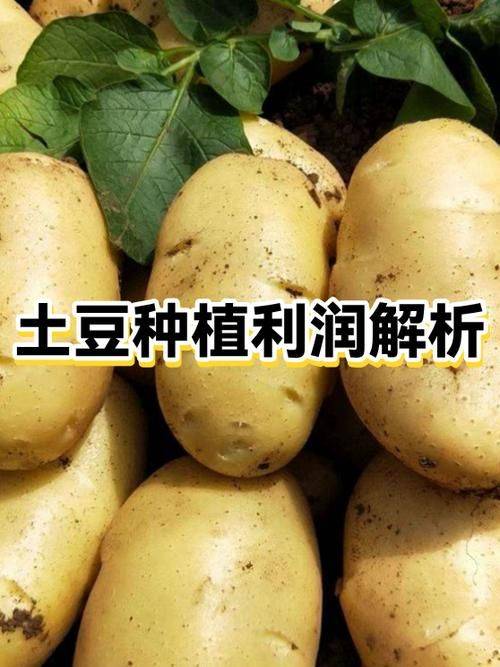
1. Domestic markets: increased demand for consumption, future demand and supply. With the growing awareness of the nutritional value of potatoes, the perception of food consumption among our population is gradually changing, with the consumption of potatoes increasing year by year. Annual per capita consumption of fresh potatoes increased by more than onefold, from 14 kg in 2000 to 31 kg in 2005. By extrapolating our future per capita consumption of potatoes to the world average of 50 kg, the annual consumption of potatoes will increase by 10-12 million tons。
Potatoes are used extensively in food processing, textiles, printing, etc., in addition to food, fodder and vegetables. In recent years, our potato processing industry has grown rapidly and demand for raw materials has increased rapidly. In 2007, some 1. 576 million tons of raw potatoes were processed, representing a gap of 10. 4 million tons or 66 per cent of total demand. Of that total, 14 million tons of raw potatoes were processed with starch, representing a shortfall of 10 million tons or 71 per cent of demand. In 2007, less than 70,000 tons of frozen fries were produced nationally, representing a shortfall of around 60,000 tons。
The area under potato cultivation in our country has increased over the years, especially with the spread of detoxification and the rapid increase in demand for potatoes. With 66,455,000 acres of potatoes grown in 2007, some 9. 5 million tons of potatoes are required for detoxification, and only 3. 5 million tons are actually available, leaving a shortfall of about 6 million tons. In 2015, our potato cultivation is expected to reach 120 million acres, and the demand for seeding will exceed 15 million tons。
2. International markets: rapid growth in trade and prospects for exports. Currently, world trade in potatoes occurs mainly between developed countries in western europe and north america. According to the world food organization (fao) data, world trade in potatoes increased from $7,742 million to $11,524 million in 2005, an increase of 48. 85 per cent. Trade in refrigeration products increased from 4. 02 billion to 8. 4733 million tons and from 3. 102 billion to 6202 billion dollars, an increase of 110. 41 per cent and 99. 94 per cent, respectively; from 2000 to 2006, our average annual imports of potatoes and products increased from 45. 39 million tons to 648,000 tons, an increase of 42. 76 per cent. According to customs statistics, 856,000 tons of potatoes and products accounted for 3. 44 per cent of world imports, mainly from the united states, canada and the european union, and 532,000 tons or 23. 4 per cent of world exports, mainly from malaysia, russia, japan and south korea, increased from $111 million in 2000 to $91 million in 2006, with an average annual increase of 42 per cent。
(ii) competitiveness analysis
1. Resource advantages are clear and there is great potential for productivity growth. The size of the country is vast, the climate is diverse, the potatoes are characterized by short reproductive periods, a high degree of adaptability and drought resistance, and they are grown four seasons from the south to the north. The potential for increased potato cultivation in the north is more than 50 million acres through the restructuring of cultivation structures, the development of winter fields in the south, seeding between south-west development and the expansion of early spring cultivation in china. At the same time, our potato acre production has been hovering for a long time at 1,000 kg, below the world average of 1116 kg, even more so than in developed countries (around 3,000 kg), and can rise to more than 1250 kg through technical measures such as good seed practices。
2. More efficient and potentially more productive. The net and 66. 45 per cent return on our potato acres in 2005 was higher than the crops of rice, wheat, maize and soybeans, respectively, $310. 32 and 27. 39 per cent higher than the more productive rice. In particular, the early ripe potatoes in china, south china and south-west china were on the market at a time of poor vegetable supply, with clear price advantages. At the same time, production costs and prices of our potato products are lower than international market prices, with clear cost, price and efficiency advantages。
3. The locational advantage is significant and the export potential is high. Japan, the republic of korea and the countries of south-east asia around the country have been importers of potatoes, fresh potatoes and potatoes processing products, due to constraints such as the availability of land and climate. According to incomplete statistics, only viet nam and thailand import 30,000 tons of potatoes per year, while japan imports 270,000 tons of fries per year. These are all potential markets for our potato exports, and our country has a distinct locational and geographical advantage compared to the major potato-exporting countries of western europe and north america。
(iii) analysis of constraints
1. Natural factors. In our country, where the main potato-producing areas are poor land, lack of water resources and poor agricultural production, more than 60 per cent of potatoes are planted in unirrigated mountainous and arid and semi-arid areas, weak resilience to natural disasters is a major cause of long-term low and unstable levels of single production, while limiting the widespread use of agricultural machinery。
2. Technical factors. The area used for detoxification is small, with national detoxification applications covering only about 25 per cent of the area under potato cultivation, with more than 90 per cent in developed countries. The level of cultivation management is lagging behind and the farming methods in our northern potato-producing areas are widespread, and the application of modern farming and management techniques is quite different from other crops, such as the mechanization of our potatoes at 1 per cent, as compared to over 80 per cent in developed countries. There is a shortage of high-quality specialty varieties, with our potatoes based on fresh food, with only about 6. 5 per cent of our specialty, compared with more than 50 per cent in developed countries. Storage technologies and methods are lagging behind, with storage losses exceeding 15 per cent, while developed countries control them by less than 8 per cent。
Social factors. Since potatoes have long been regarded as “smuggling food”, there is a marked lack of emphasis and policy support, weak science and technology support systems, and low productivity transformation and technology penetration. The traditional “small, scattered, weak and low” production situation is a serious constraint on the industrial development of potatoes, their low organizational level, their small size and their inefficient production. The system for monitoring the quality of seeding is inadequate, it does not form a standardized production, industrialization and certification system, and it is difficult to produce the quality。
Acre of potato profits
The production of potatoes per acre is around 3,000 pounds, seeds require 150 pounds * 5 yuan = 750 yuan, fertilizer requires about 300 yuan, and other agricultural resources amount to 200 yuan, with a total investment of 1250 yuan, if at 1. 0 pounds, the net profit of the acre is about 1700 yuan
Potato cultivation may be a good planting project for ordinary growers, with high profits in the development space and growing market demand both at home and abroad. I'm sure you all know more about the analysis of potato development prospects and the profits of growing an acre of potatoes