As a former mid-level accountant of the job, i am well aware of the challenges and difficulties of this examination. However, the adoption of three subjects within a year is not a distant dream, as long as the choice of subjects is matched and the correct learning methods are in place. And i'm going to share some practical strategies with you in my own experience。
I. Component quality: strengthening strengthening
For most of the time-limited candidates at the level of staff and mothers, i strongly recommend that in the first year, the two sections, " secondary accounting practice " and " economic law " , be chosen to match, and that in the second year, focus on financial management. This combination is well balanced and makes the preparation for the examination more acceptable。
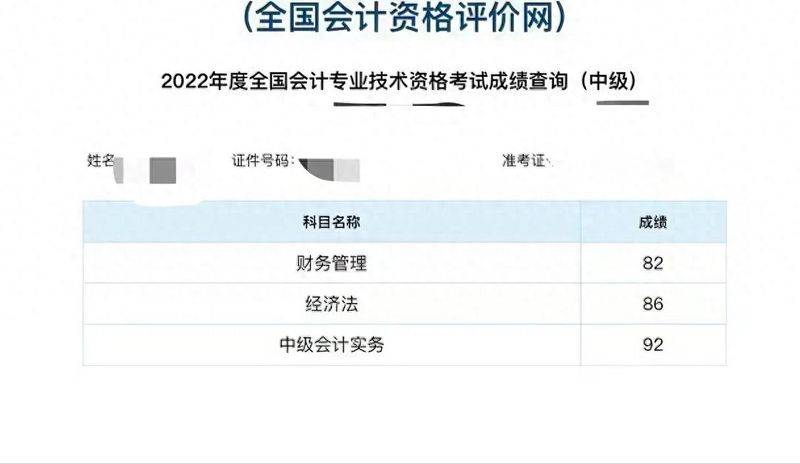
Why does this match
A more balanced allocation of time: medium accounting practice is complex and difficult and requires considerable time; while the economics act is relatively simple and memory-oriented and takes less time. Combining a “hard” and an “easy” combination avoids overloading of learning tasks in one year and over-easiness in another year, making the procrastination more logical。
Learning experience is smoother: learning both arts and literature can alternate between different regions of the brain and avoid the sense of fatigue and frustration caused by long periods of study of difficult issues. This combination of effort allows for a more stable mindset and more efficient learning。
Other matching options
Weak foundations or very little time: the first year of the examination for the financial management act and the economic act may also be selected if the accounting base is weak or the time for preparation is very tight. The abstract thinking of the financial management act, combined with the memory recitation of the economic act, is also an effective balance that reduces the difficulty of preparation。
A good, well-timed candidate: if you're a full-time candidate, or if you have a solid foundation, you can try three a year. One-time passage is possible as long as sufficient time is guaranteed to follow the curriculum carefully。
Need to avoid a match
To the extent possible, the first year should not coincide with the examination of " secondary accounting practices " and " financial management " . Both subjects are more difficult and demanding in terms of understanding and computational skills, while the pre-screening will be laborious and easy to ignore and increase the risk of abandonment。

Ii. Strengthening the secretariat: effective learning music
Whatever mix is chosen, scientific learning is key to success. I have three main stages of preparation:
Step 1: solid basics (teach + web lessons)
The foundation is half the success. It is not recommended to simply learn to eat books because it is less efficient. I recommend a combination of official teaching materials and online courses。
Mid-accounting practice: this is one of the most difficult of the three sections, which is rich and abstract. It is recommended that learning begin in this section and devote the most time. Learning should be guided by teaching materials, accompanied by presentations by teachers, with a focus on understanding core concepts and accounting entries, and reinforced through the development of topics. For example, difficult elements such as long-term equity investments and consolidated financial statements need to be explored over time to ensure real ownership。
The economics act: it is a multiplicity of content and requires a great deal of memory. It is possible to read the teaching materials first, then listen to the teachers, and finally to make the impression by doing the questions. For easily confused points, they should be summarized in a timely manner. For example, the scope and conditions of application of different legal provisions should be clarified and confusion avoided。
Financial management: multiple formulas and large numbers of calculations are “points of pain” for many. It is suggested to listen to teachers while reading teaching materials and to listen to abstract concepts until they are understood. The most important part of the course is to do more and to familiarize itself with the use and calculation of formulas。
Step two: consolidation and upgrading (brush + summary)
It doesn't mean you can do it. Having acquired basic knowledge, learning must be tested through extensive practice。
Good-use repository: apps such as the “accountant gang” can be used to encapsulate debris time and consolidate knowledge at any time and place. For example, on the way to and from work, lunch break, etc., mobile phones are available for a few questions。
Query the real question: the real question of the last three years must be done twice in its entirety. The real problem is that you get familiar with test styles, problem patterns and high frequency points. Once done, the errors are carefully analysed and the knowledge points are consolidated. For example, the analysis of frequently examined knowledge points in the real issues focuses on enhancing learning。
Create a wrong book: organize the wrong subject into the wrong book, analyse the wrong cause and review it regularly. The wrong question is your "knowledge blind map," and the score comes up. Mistakes can be grouped according to knowledge points and can be easily traced and reviewed。

Step 3: sprint simulation (over + machine test)
The pre-test sprint phase focuses on gaps and adaptation to the examination environment。
Turning back to the wrong question: instead of writing it blindly, the focus is on the wrong book and the true question of the calendar. Try again to make sure it's done. For knowledge points that still go wrong, there is a need to learn once again in depth until it is fully understood。
Conduct machine test simulations: the intermediate accounting examination takes the form of a machine test. It is important to have several authentic simulations prior to the examination, familiar with the computer answering process, calculator and shortcut, which saves you valuable time in real examinations. For example, familiarization with calculator operations in advance avoids waste of time during examinations due to lack of proficiency。
Iii. Attitude and time management: invisible wings for success
Rational planning, use of efficient time periods: at least 3 - 4 hours of efficient learning time per day. The four physiologically effective periods (morning, 8-10 a. M., 6-8 p. M., bedtime) can be used to combat the serious problem, which is more than successful. For example, the law on economics is recited in the morning when the mind is clear, and the financial management is calculated at an efficient time。
Focusing on efficiency, working together: the preparation is a long-term battle, focusing on learning efficiency rather than on mere accumulation of time. It is only by keeping a good schedule and getting up early that learning can be robust. When weary, it is much better to take a proper break before making up for progress than to hold on to inefficient learning. For example, every time you study, you can rest for 10 - 15 minutes, exercise your body, relax your brain。
In conclusion, i would like to say that, despite the difficulty of preparing for the examination, every step is counted. I hope my experience will light you a light that will help you to reach the other side of success